Tag: animal rights

  • Video Captures Men Mishandling Sea Turtle in Chlorakas

    Video Captures Men Mishandling Sea Turtle in Chlorakas

    Footage has surfaced of four men filmed throwing and kicking a sea turtle in Chlorakas, raising concerns about animal welfare and local practices. The incident, which occurred on a beach, reportedly involved employees of the Chlorakas community council.

    According to philenews, the community council stated that the turtle was already deceased when the staff were directed to collect it for burial. Eyewitnesses reported seeing the men mishandling the turtle, leading to widespread outrage among locals and tourists alike.

    A representative from the fisheries department was called to the scene to assess the situation. They confirmed that the turtle was dead and in an advanced state of decomposition, dispelling any initial concerns about its condition prior to being filmed.

    In an effort to clarify the actions taken by the community council staff, a spokesperson explained that the turtle was placed on the ground to remove sand from its body before burial. This explanation, however, has done little to quell the public’s anger over the apparent treatment of the animal.

    The local community council has since filed a report with the animal police, who are now investigating the incident further. The police have taken possession of the turtle’s body, and an autopsy is scheduled to determine the exact time and cause of death.

    It is important to note that sea turtles are protected by law in Cyprus, with legislation in place since 1971 to safeguard these creatures and their eggs. Cyprus is home to two species of sea turtles: the loggerhead (Caretta caretta) and the green turtle (Chelonia mydas), both of which nest on local beaches from May to July each year.

    The video, which has circulated widely on social media, has prompted discussions around the treatment of wildlife and the responsibilities of those working within community roles. As the investigation unfolds, many are left questioning the protocols in place for handling such situations in the future.

  • Police Investigate Reports of Cat Consumption in Nicosia

    Police Investigate Reports of Cat Consumption in Nicosia

    cat consumption — Authorities are investigating alarming reports of cat consumption in Nicosia, prompted by witness accounts shared by Animal Party Cyprus. These accounts highlight a troubling pattern of cat disappearances in certain areas of the capital over recent weeks.

    This morning, the police confirmed that their Animal unit, alongside representatives from Veterinary Services, conducted searches at two apartments in a Nicosia suburb. The searches were carried out with the consent of the residents, yet no evidence was found that could substantiate the claims of cat eating.

    In light of these developments, police have urged the public to report any instances of animal abuse or neglect immediately. The authorities emphasised their commitment to investigating all complaints thoroughly and responsibly.

    “We will investigate all complaints with responsibility and diligence,” a police spokesperson stated, underlining that allegations alone are insufficient for launching an investigation without tangible evidence.

    The ongoing situation has sparked concern among animal welfare advocates and local communities. As the police continue to monitor the situation, they reiterated the importance of collaboration between citizens and relevant authorities to ensure the safety and well-being of animals.

    Animal welfare is a communal responsibility, and the police have called for vigilance in protecting the vulnerable. “Animal welfare concerns everyone, and through citizens and competent bodies cooperation we can secure their safety,” the statement concluded.

  • Cyprus Faces Challenges with Upcoming EU Dog and Cat Welfare Regulation

    Cyprus Faces Challenges with Upcoming EU Dog and Cat Welfare Regulation

    eu dog — Cyprus is unprepared for the new EU dog and cat welfare regulation set to take effect in the coming months. The European Union has mandated its member states to implement a comprehensive framework aimed at enhancing the welfare and traceability of pets, following the European Parliament’s approval of strict measures on 19 June 2025.

    Photo: in-cyprus.philenews.com

    This regulation introduces rigorous standards for breeding, housing, and handling of dogs and cats, alongside universal microchip identification. The goal is to improve transparency for consumers and foster fair competition among breeders, sellers, and shelters without imposing undue burdens on existing pet owners.

    Photo: in-cyprus.philenews.com

    Eu dog: New Standards for Pet Welfare

    The measures under discussion focus on establishing minimum welfare standards for animal facilities. These include requirements for adequate space, proper lighting, sufficient ventilation, and access to food and water. Additionally, regular inspections and annual veterinary visits will be mandated to ensure compliance and proper record-keeping.

    Identification is a central aspect of the new regulation; every dog and cat must have a microchip and be registered in a national database prior to being sold or adopted. This database will be interoperable across the EU, allowing for easy tracing of each animal’s origin and ownership history.

    Implications for Cyprus

    For Cyprus, the passing of this regulation necessitates the establishment of a unified national registry for dogs and cats, linked to the broader European database. The Veterinary Services are designated as the competent authority, responsible for conducting inspections, licensing facilities, and performing annual veterinary checks. Sanctions for non-compliance will need to be effective and proportionate, while clear guidelines for online advertisements are essential.

    Concerns Over Preparedness

    Despite the lengthy discussion surrounding these regulations within the EU, Cyprus has yet to make significant preparations for their implementation. Charalambos Theopemptou, the president of the Environment Committee, expressed concerns about the country’s readiness. He pointed out that while identification for dogs has been in place since 2002, many dogs remain unregistered, and the challenge of identifying the owners of the estimated one million cats in Cyprus remains unresolved.

    Theopemptou emphasised that the regulation will automatically come into force without needing parliamentary approval. “The government has known about it since 2022,” he stated, noting that other countries have been proactive in their preparations. He reiterated that the regulation’s final text is pending a vote in the European Parliament, expected later this year.

    Call for Action

    The situation calls for immediate action from the government, municipalities, pet shops, and breeders in Cyprus. They must evaluate existing legislation, organise their records, and enhance facilities to comply with the forthcoming standards. The urgency for coordination between the national registry and the European system cannot be overstated, as the timeline for implementation approaches.

    The new regulations represent a significant shift in how pets are treated across the EU, aiming to combat illegal trade and improve animal welfare standards. As the deadline looms, the need for effective preparation in Cyprus becomes increasingly critical.

  • Stray Cat Sterilisation Campaign Launched in Cyprus

    Stray Cat Sterilisation Campaign Launched in Cyprus

    Animal welfare commissioner Antonia Theodosiou has announced a seven-year action plan aimed at the mass-sterilisation of the island’s stray cat population, which exceeds 1 million. This initiative is part of a broader effort to manage and control the escalating number of strays.

    During her announcement, Theodosiou highlighted the existing national programme funded by the ministry of agriculture, which allocates €100,000 annually for cat sterilisation. However, she suggested that this budget is inadequate for effectively managing the stray cat population. “We support the mass sterilisation of cats [and] there is already a national program with a budget of €100,000 provided annually by the ministry of agriculture,” she stated, calling for an increase in funding.

    The action plan, developed in collaboration with various animal welfare organisations, outlines a systematic approach to address the issue over the next seven years. Theodosiou emphasised that thorough sterilisation efforts are necessary to curb the ever-growing population of stray cats.

    Concerns regarding the current funding were echoed by Charalambos Theopemptou, a member of the House environment committee and part of the Greens party. He pointed out that Cyprus may have the highest stray cat population globally and underscored the insufficiency of the current budget. “Without proper planning, we are simply spending money without getting any results. This has been proven, as we’ve been doing it for many years,” Theopemptou remarked, criticising the lack of a concrete plan to manage the spaying of strays.

    Theopemptou raised questions about the allocation of the 2025 budget, indicating that discussions regarding the next year’s budget are set to begin in the upcoming weeks. He expressed concern that the government is likely to maintain the same budget allocation, which he believes has failed to yield effective results in past years.

    Elena Loizidou, head of the animal welfare organisation Cat Alert Nicosia, also addressed the committee, noting a lack of substantial political interest in managing the stray cat population. “While the population of stray cats is increasing to unprecedented numbers (we may have reached two million) and while the responsibility for all stray animals falls under the jurisdiction of the state, the burden seems to have been placed on volunteer animal lovers,” she commented, highlighting the critical situation.

    Loizidou pointed out that the majority of strays are sterilised at private veterinary clinics, with costs borne by individual rescuers. With a budget of €100,000, only about 2,000 cats can be sterilised, which she argues does little to alleviate the growing problem. “If the state continues to be theoretically present but practically absent in this matter, thousands of kittens will die every season before they have time to open their eyes,” she warned, emphasising the urgent need for action.

    She further advocated for comprehensive legislation focusing on the treatment of stray cats, suggesting that pet owners should also be encouraged to sterilise their pets to prevent abandonment. “A prerequisite for this would of course be access to sterilisations at zero cost, so that this is achievable and a large number of sterilizations can be carried out,” she concluded, asserting the necessity for a coordinated and effective approach to the rising stray cat population.

  • Animal abuse — Limassol Woman Receives Suspended Sentence and Dog Ownership Ban for Animal Abuse

    Animal abuse — Limassol Woman Receives Suspended Sentence and Dog Ownership Ban for Animal Abuse

    animal abuse — A 77-year-old woman in Limassol has been handed a suspended prison sentence after being convicted of animal abuse involving dozens of dogs. The Limassol District Court has also imposed a three-year ban on her owning, maintaining, or supervising dogs.

    The court delivered various prison terms for multiple charges related to her treatment of animals, with the longest sentence set at three months. However, all sentences were suspended for three years, taking into account her age, clean criminal record, and the context of the offences, particularly the lack of malicious intent.

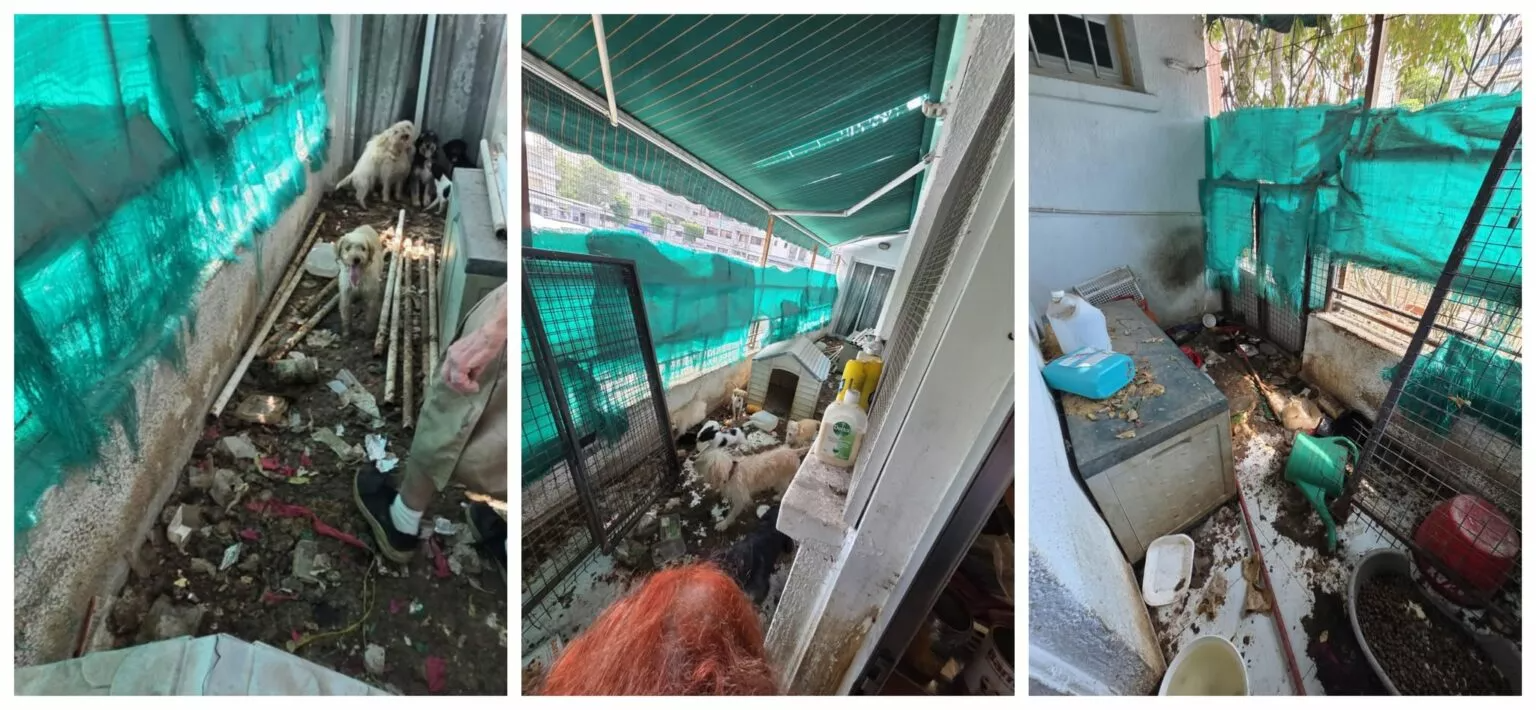
    The case against the woman began on 17 July 2020 when a complaint was lodged with the police by state veterinary services. An initial raid uncovered three dogs in horrific conditions on her property. The animals were found severely dehydrated and suffering from chronic ailments, with one dog being bedridden.

    Despite immediate veterinary care, one of the dogs did not survive. The other two were discovered locked in a toilet. The distressing findings prompted authorities to escalate their investigation, leading to a secondary search in early August 2020. This search revealed an additional eight dogs, all of whom were also living under appalling conditions.

    During the court proceedings, the judge took into consideration several factors, including the elapsed time since the offences and the absence of any prior convictions. The decision to suspend the sentences was made to prevent future incidents, reflecting a balance between accountability and compassion given the defendant’s circumstances.