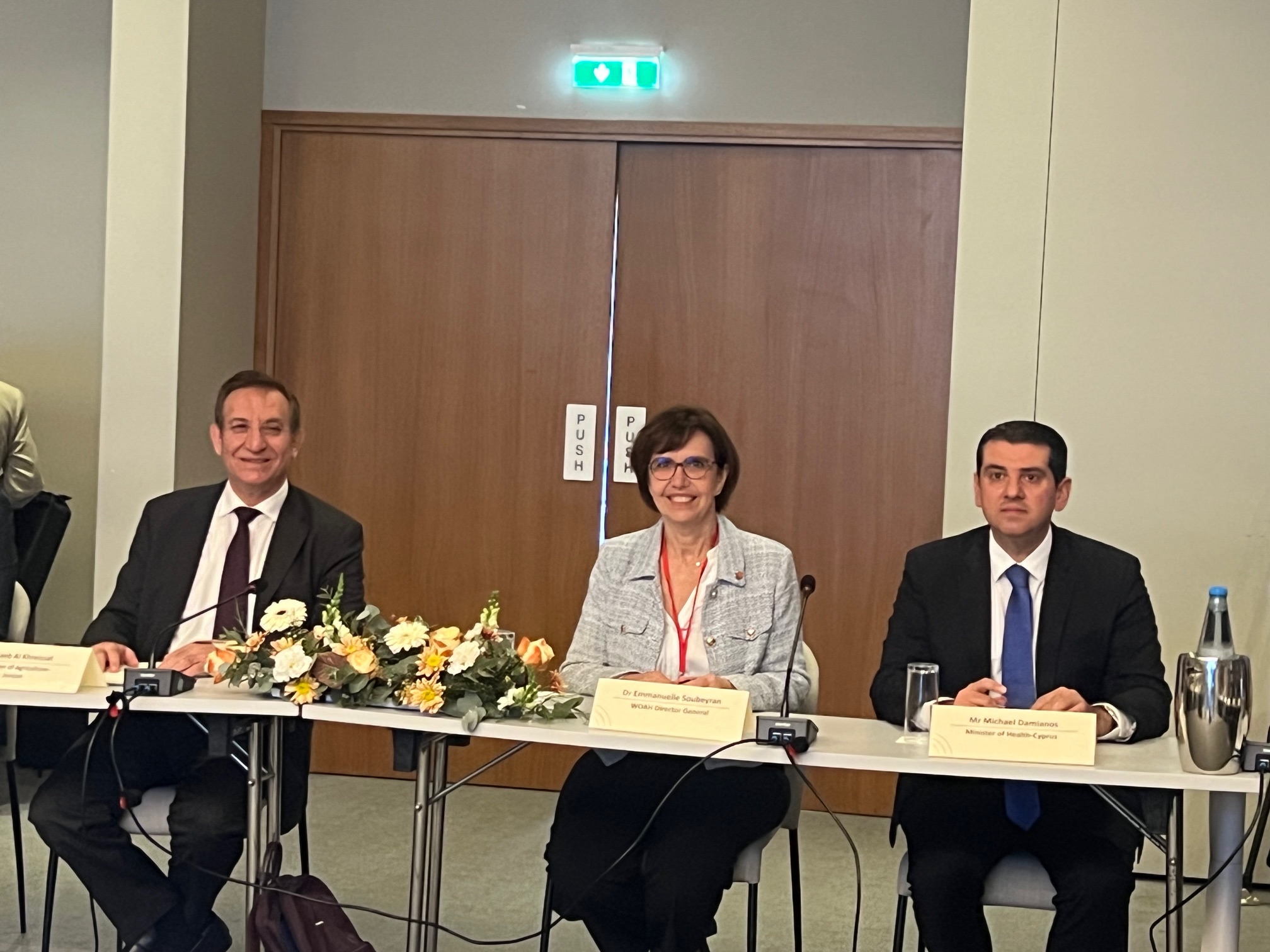
Animal health is crucial for public health and food safety, emphasised Health Minister Michael Damianos at the 18th conference of the Middle East regional committee for the World Organisation for Animal Health (WOAH) in Larnaca. The conference, which convened on Monday and Tuesday, gathered experts, policymakers, and stakeholders committed to enhancing animal health standards across the region.
Focus on Animal Health and Public Safety
During his address, Damianos underscored the integral role of animal health in building resilient societies. He noted the relationship between animal well-being and food safety, highlighting that effective animal health measures are essential for ensuring the safety of food products consumed by the public. The conference aimed to address the challenges of zoonotic diseases—those transmitted between animals and humans—emphasising the need for comprehensive strategies.
Climate Change and Animal Diseases
Damianos also addressed the impact of climate change on animal health, noting that rising temperatures and changing weather patterns lead to the proliferation of various animal diseases. The health minister pointed out that these environmental shifts require the implementation of effective measures to manage animal populations and safeguard public health. “The distribution of animal diseases is expanding due to climate change, and we must adapt our strategies accordingly,” he stated.
Proposed Measures for Improvement
To combat the challenges posed by animal diseases, Damianos proposed a series of measures aimed at enhancing animal health and food safety. These include:
- Robust Biosecurity Systems: Establishing strong biosecurity protocols to prevent disease outbreaks.
- Early Warning Detection: Implementing systems for early detection of animal diseases.
- Harmonised Field Surveillance: Enhancing surveillance and monitoring systems across the region.
- Real-Time Molecular Diagnostics: Investing in advanced diagnostic technologies for quicker disease identification.
- Risk-Based Vaccination Programmes: Developing vaccination strategies tailored to specific risks.
- Cross-Border Information Exchange: Facilitating communication between countries to manage disease threats effectively.
These initiatives are seen as vital for maintaining a healthy animal population and ensuring the availability of safe animal products for human consumption.
Addressing Antimicrobial Resistance
Damianos warned about the growing threat of antimicrobial resistance, which undermines both veterinary and human medicine. He advocated for the promotion and implementation of a national Antimicrobial Resistance action plan, stressing its importance for the effective management of this pressing issue. “Antimicrobial resistance poses a silent modern threat that we must address with urgency,” he said.
Enhancing Veterinary Practices
The minister also highlighted plans to bolster laboratory capacities and implement an e-prescribing platform for veterinary medicines. This initiative aims to ensure that all veterinary medications are prescribed by qualified animal health professionals, thereby improving the management of animal health and reducing the misuse of antibiotics.
Collaboration and Shared Commitment
Despite the complexities of the challenges ahead, Damianos expressed confidence in the collective expertise and commitment of the participants at the conference. He stated, “Although the challenges we face are complex, our collective expertise, shared values, and commitment to the principles of WOAH provide us with the necessary tools to overcome them.”
A Regional Perspective on Animal Health
Emmanuelle Soubeyran, the Director General of WOAH, echoed Damianos’s sentiments, highlighting the interconnectedness of animal healthcare and public health. She noted that many diseases affecting humans originate from animals, reinforcing the need for a unified approach to animal health. “Animal healthcare also concerns public health, given that many diseases can be transmitted between humans and animals,” she remarked.
International Cooperation in Animal Health
The conference also saw contributions from various regional leaders, including Jordanian Agriculture Minister Saeb Khreisat. Khreisat reaffirmed his commitment to improving animal healthcare and promoting safe international trade. He underscored the importance of collaboration, stating, “Diseases know no borders, and cooperation in times of need strengthens international ties.”
As the conference continues, participants are expected to discuss further strategies and solutions to bolster animal health in the region, reflecting a strong commitment to ensuring public safety and food security across the Middle East.