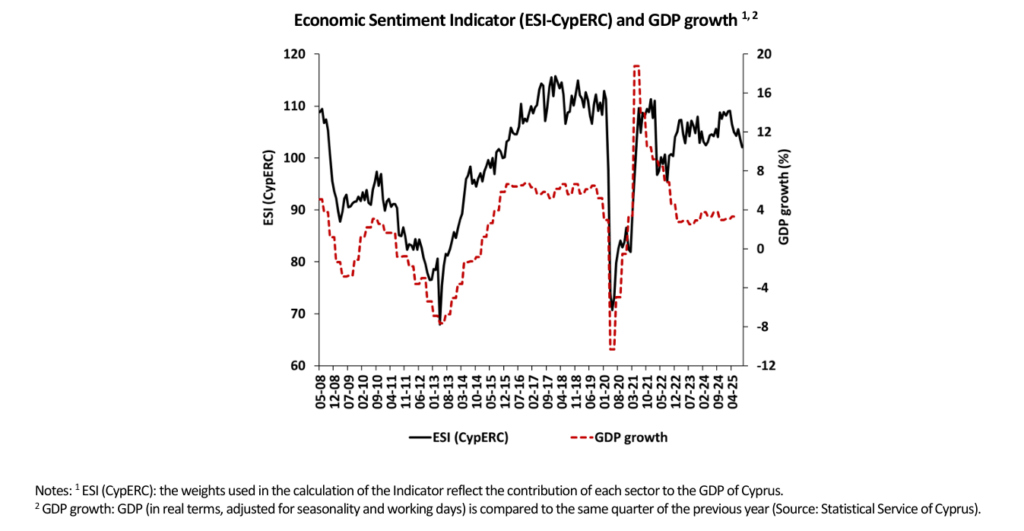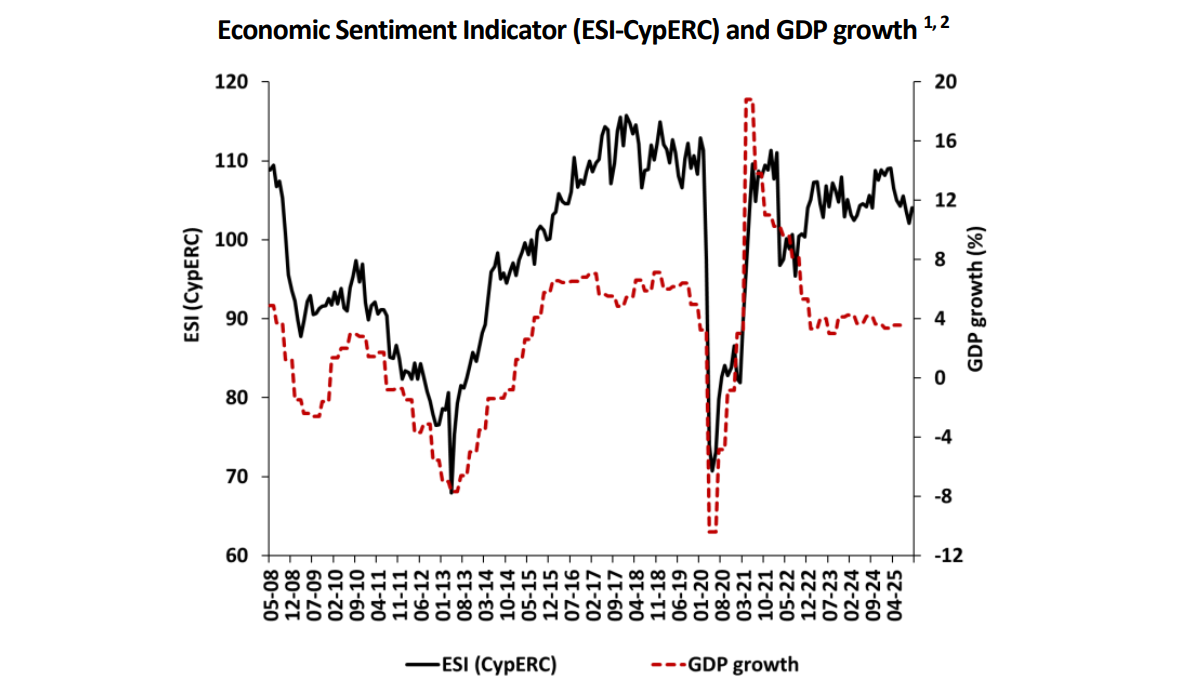
Economic sentiment in Cyprus recovered in October, with the Economic Sentiment Indicator (ESI-CypERC) rising by 2.0 points. This increase follows a downturn in September, when the indicator fell to 102.1 from 103.7 in August.

Photo: financialmirror.com
- Similarly, the Construction Confidence Indicator also rose, buoyed by better order book levels and a positive shift in employment expectations among firms in this sector.
- The Industry Confidence Indicator experienced a small decrease, primarily due to less favourable assessments regarding current order books and lowered production expectations.
- Furthermore, expectations regarding the overall economic conditions in Cyprus have also deteriorated among consumers, reflecting a more cautious outlook.
- The report from the University of Cyprus highlights these mixed signals in economic sentiment, indicating a complex landscape as the nation navigates its recovery.
Economic sentiment: Business Confidence on the Rise
The Economics Research Centre of the University of Cyprus attributes the uptick in overall economic sentiment to a rebound in business confidence, particularly within the services and construction sectors. These areas had previously experienced significant declines over the last two months.
Improvements in Services and Construction
In October, the Services Confidence Indicator saw a notable increase, reversing the downward trend of the last two months. This improvement was driven by enhanced assessments of the recent business situation and more optimistic views on past and expected turnover.
Similarly, the Construction Confidence Indicator also rose, buoyed by better order book levels and a positive shift in employment expectations among firms in this sector.
Retail Trade and Industry Indicators Shift
<pConversely, the Retail Trade Confidence Indicator recorded a decline. This drop was attributed to deteriorating views on recent sales and stock levels, alongside further downward revisions in sales expectations.
The Industry Confidence Indicator experienced a small decrease, primarily due to less favourable assessments regarding current order books and lowered production expectations.
Consumer Sentiment Takes a Hit
While business confidence has improved, the Consumer Confidence Indicator saw a decline in October, reversing the positive trend of the previous two months. Consumers reported a worsening assessment of their financial situations and a weaker intent to make major purchases.
Furthermore, expectations regarding the overall economic conditions in Cyprus have also deteriorated among consumers, reflecting a more cautious outlook.
Economic Uncertainty Eases
<pOn a more positive note, the Economic Uncertainty Indicator decreased to 11.7 points in October, down from 15.8 in September. This decline suggests a reduction in business uncertainty across most sectors, with the exception of industry, where uncertainty rose slightly. Although consumer uncertainty did increase, it remains relatively low across all income groups.
The report from the University of Cyprus highlights these mixed signals in economic sentiment, indicating a complex landscape as the nation navigates its recovery.