
Tag: disability rights

  • Slur — Fidias Panayiotou Faces Backlash for Slur Against Paralympic Athletes

    Slur — Fidias Panayiotou Faces Backlash for Slur Against Paralympic Athletes

    slur — slur — MEP Fidias Panayiotou has issued a public apology after using a derogatory term to describe Paralympic athletes with intellectual disabilities. This incident, which took place during a podcast recorded on 29 November with para-athlete Loizos Chrysanthou, has sparked widespread condemnation from various organisations.

    In the podcast, Panayiotou referred to athletes in the S14 category as “pellous”—a term that translates to fools or madmen. The remark quickly drew criticism, prompting the Cyprus Psychologists Association to respond strongly. On Wednesday, they condemned the comments, stating that they represent a clear example of devaluing human existence.

    In a follow-up video, Panayiotou acknowledged the outrage, saying, “They all rushed to eat me. To tell you the truth, this time they were right to do so.” He admitted that he should not have used such a term to describe any disability or illness, framing his apology as a sign of strength. However, the Psychologists Association rejected his defence, asserting that the excuse of unawareness should not be tolerated. They emphasised that respect stems from upbringing and character, criticising Panayiotou for shaming his office and constituents.

    Furthering the dialogue, the association pointed out that the terminology used by the MEP reflects a deficit in personal values and a shallow personality. Their statement highlighted the unacceptable nature of such comments coming from someone in a high-ranking political position.

    Adding another layer to the controversy, Panayiotou suggested that the backlash may be politically motivated, citing recent polls indicating that his party, “Direct Democracy”, has surpassed 10 per cent support. This claim was met with further criticism from the Cyprus Confederation of Organisations of the Disabled (CCOD), who issued an urgent press release labelling his assertion an insult. They emphasised that the outrage over his comments is a matter of human rights rather than political manoeuvring.

    The CCOD also represented para-athlete Marios Philippou, who has made it clear that he does not consent to his image being used in Panayiotou’s apology video. They articulated that attributing political motives to those advocating for fundamental human rights indicates a serious democratic deficit.

    In light of the backlash, Panayiotou has expressed a willingness to support individuals with disabilities, announcing plans for his next visitor group to the European Parliament to include people with disabilities. He has invited suggestions on how to better support this community, hoping to shift the focus from the controversy to constructive action.
  • Assistance dogs — Cyprus Takes Steps to Ensure Legal Rights for Assistance Dogs

    Assistance dogs — Cyprus Takes Steps to Ensure Legal Rights for Assistance Dogs

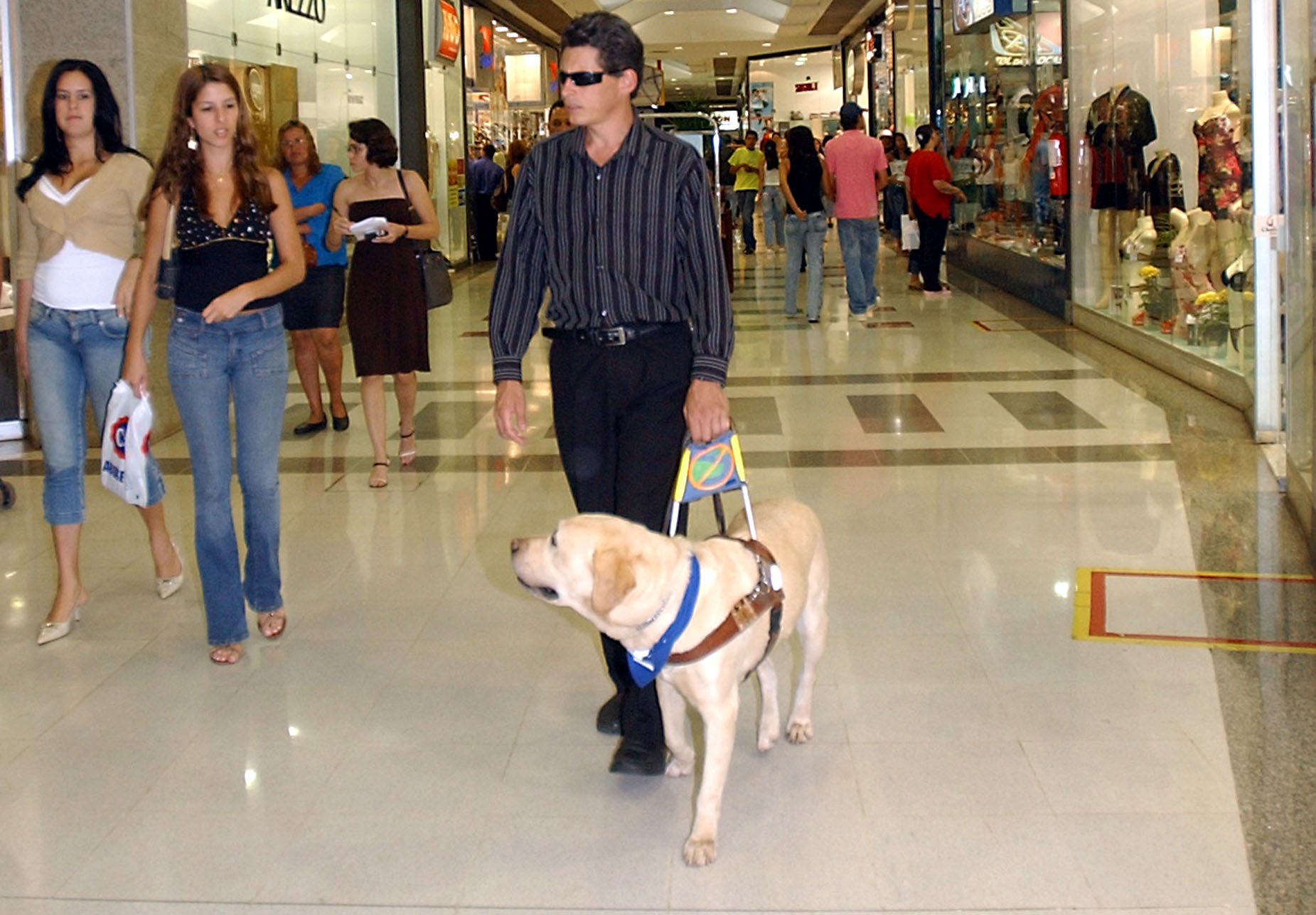
    Cyprus is moving to guarantee the legal right for people with disabilities to use assistance dogs, addressing a significant gap in legislation that has left just three certified dogs in the country.

    • Cyprus is moving to guarantee the legal right for people with disabilities to use assistance dogs, addressing a significant gap in legislation that has left just three certified dogs in the country.

    During a recent meeting of the House Human Rights Committee, MPs highlighted the urgent need for legislation after learning that training costs can soar to €50,000. This financial burden, coupled with a lack of regulatory framework, has severely limited access to assistance dogs for those who need them most.

    Assistance dogs: Legislative Action on the Horizon

    The committee convened following a motion by MP Christos Senekis, which garnered broad political and institutional support for immediate action. Senekis stressed that the right to be accompanied by an assistance dog is already recognised under the UN Convention on the Rights of Persons with Disabilities, a treaty Cyprus ratified in 2011. However, the absence of specific laws for universal access in public and private spaces has left many individuals without the help they require.

    In collaboration with organisations such as the Cyprus Confederation of Disability Organisations (KYSOA) and the Pan-Cyprian Organisation of the Blind, Senekis is drafting a bill aimed at enshrining these rights in law. He referenced Greece, which has had a regulatory framework in place since 2010, and suggested that Cyprus could link the certification process to existing laws regarding dogs and persons with disabilities.

    High Costs and Ongoing Challenges

    Committee chair Eirini Charalambidou underscored the importance of this issue, pointing out the prohibitive costs associated with certification. “It cannot be that around €10,000 is required for the certification of a guide dog,” she stated. “The state has a duty to resolve the issue with a clear legislative framework and certification process.”

    MP Charalambos Theopemptou echoed these sentiments, noting that discussions on exempting assistance dogs from ownership fees have highlighted the critical lack of certified dogs in Cyprus. He mentioned that training costs can vary significantly, with many instances reaching €50,000 at foreign schools. The lengthy training process involves both the dog and its handler and includes ongoing assessments.

    Voices from the Community

    Pelagia Englezaki, director of the School for the Blind, elaborated on the extensive training requirements for assistance dogs, emphasising the financial and temporal commitments involved. MP Alexandra Attalides remarked on the cultural barriers that persist in Cyprus, where assistance animals are not as widely accepted as in other European nations. She stressed the vital role these dogs play in the lives of many disabled individuals, serving not just as aids but as companions.

    Officials from various ministries expressed support for establishing a regulatory framework. Petros Anagiotis from the Interior Ministry indicated a positive stance towards reform, while Christakis Nicolaides, president of the Pan-Cyprian Organisation of the Blind, highlighted that the issue has been on the agenda since at least 1980. He reiterated the urgent need for a new legislative framework to facilitate certification and ensure free access for assistance dogs in public spaces.

    A Call for Action

    During the session, a representative from the Ombudsman’s Office noted the lack of recorded complaints, attributing this to the absence of a certification system. Concerns were raised about the current regulations set by the Road Transport Department, which require assistance dogs to have a muzzle and health documentation, a point that elicited strong reactions from MPs.

    Addressing the limitations on resources available for training assistance dogs, police representatives acknowledged that these challenges hinder the development of a robust support system for disabled individuals. Meanwhile, the Union of Municipalities expressed readiness to collaborate in creating a clear framework for assistance dog certification.

    At the conclusion of the meeting, Charalambidou announced that the issue would be swiftly referred to the Interior Ministry and the Justice Ministry for further action. Senekis is set to present a bill designed to ensure a comprehensive framework for assistance dogs, which includes national certification, state funding for training costs, and explicit access rights across all public and private spaces.

  • Disabled Employee Alleges Discrimination in Promotion Process

    Disabled Employee Alleges Discrimination in Promotion Process

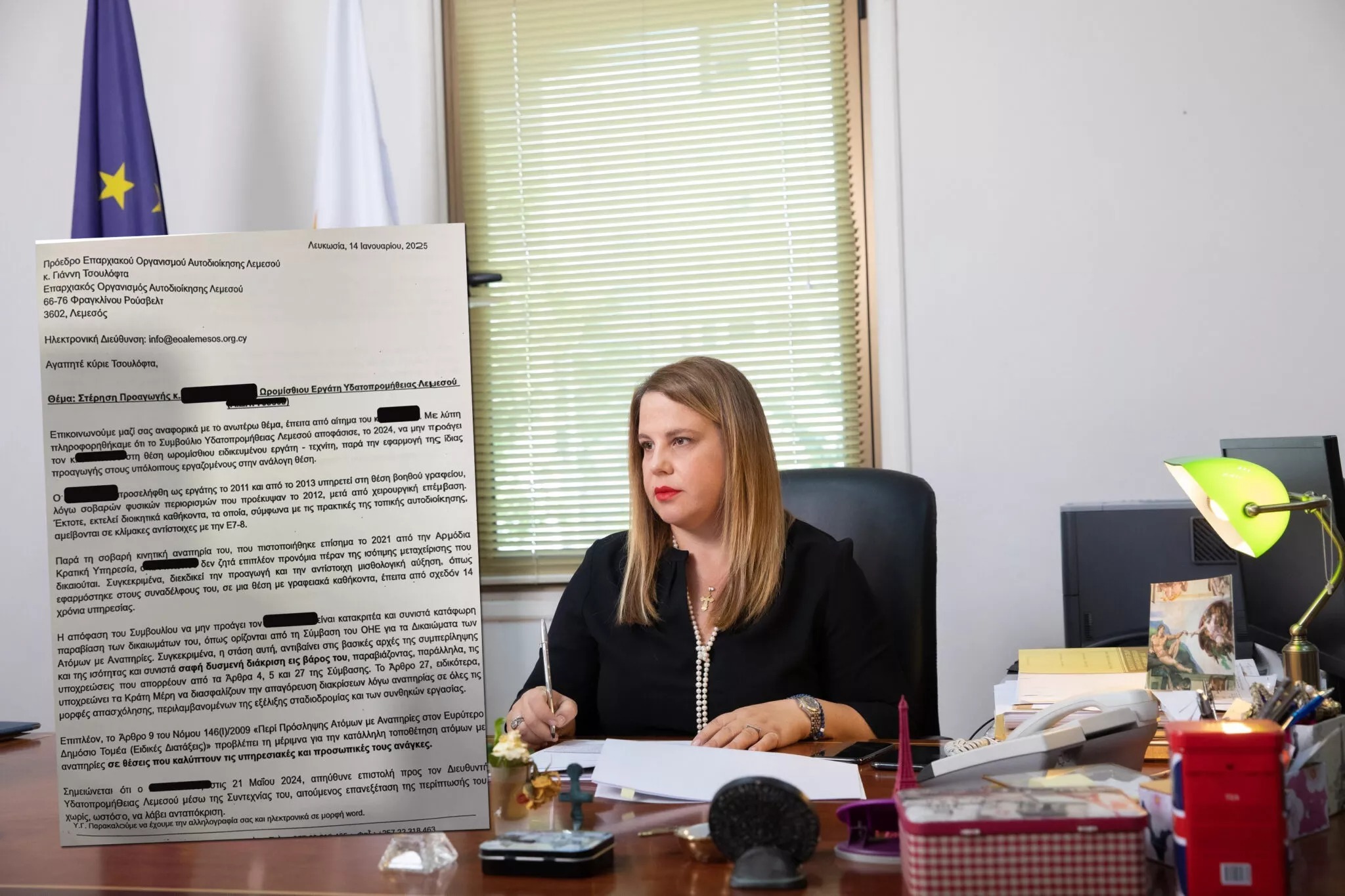
    An employee with disabilities claims he was unfairly denied a promotion, sparking a complaint to Cyprus’ Commissioner for Administration and Human Rights. The complaint, filed last Thursday by lawyer George Karapatakis, represents a former employee of the Limassol Water Board, which has been dissolved and integrated into the Limassol District Local Government Organisation (EOA).

    The complainant, a father of three, suffers from a serious spinal disability following surgery. Despite his challenges, he has continued to fulfil his job responsibilities from a different position with commitment. Notably, he is not wheelchair-bound and manages to commute independently.

    Karapatakis argues that his client was overlooked during a promotion process at the Limassol Water Board in spring 2024. He asserts that this decision was influenced by the employee’s health condition. To support this claim, the lawyer references the promotion of two other workers who had been appointed in the same year as his client, suggesting that the promotion criteria may not have been applied consistently.

    In his appeal, Karapatakis draws attention to the fact that individuals with disabilities are typically promoted within security bodies like the Police and National Guard without negative repercussions. He also mentions similar practices in the Civil Service and the wider public sector, implying that his client’s situation is an exception rather than the norm.

    The issue is complicated by the status of the Limassol Water Board, which no longer exists as a legal entity. In a response letter, Sokratis Metaxas, the General Director of the EOA and former director of the Water Board, stated that there is no authority to intervene in previous promotions because of this dissolution. He acknowledged that he participated in the promotion process in question.

    Metaxas addressed the situation after being informed of the complaint. While he refrained from discussing specific personal circumstances, he emphasised that the contributions of the affected employee would be recognised and valued in the future. He defended the promotion decisions made, asserting that they were in the best interest of the service and reflected appropriate sensitivity to all employees’ circumstances.

    The legal argument presented in the complaint highlights the serious implications of alleged discrimination based on disability. It references relevant legislation and European directives, stressing that employment for individuals with significant disabilities is essential for their self-esteem, social integration, and personal fulfilment. Karapatakis states, “Work not only enhances the physical and psychological well-being of these individuals but also reduces the feeling of isolation.”

    The complaint concludes with a strong assertion that discrimination has occurred in the employee’s career development due to his disability. Karapatakis hopes for decisive action from the Commissioner, urging that the alleged discrimination be addressed.