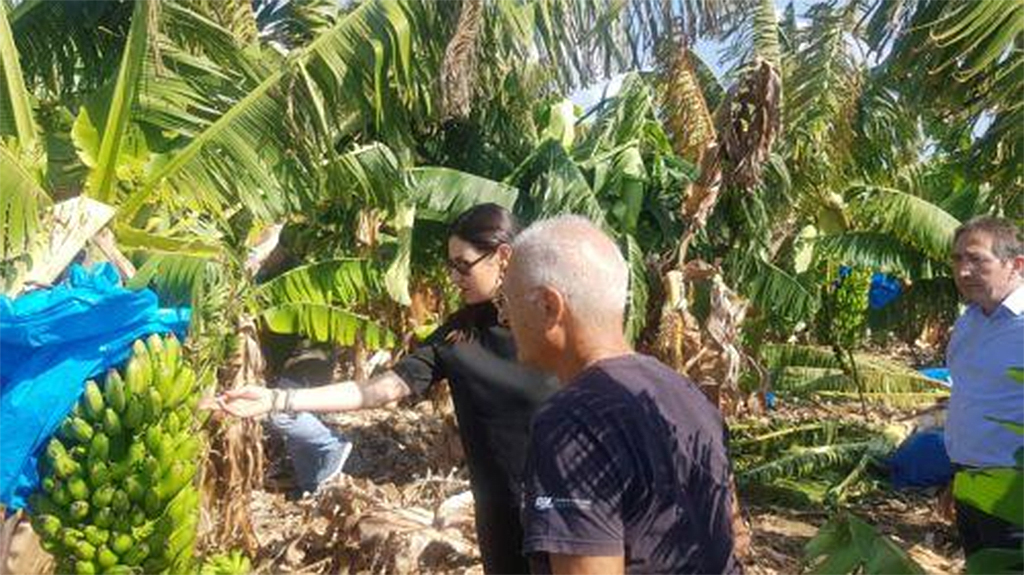
Banana farmers in the Paphos district are urging for their protection as the EU-Mercosur trade deal takes shape. Nikolas Theodosiou, the deputy mayor of Kissonerga, emphasised the need for safeguards for local producers when the agreement becomes effective. He raised concerns that local farmers could be adversely affected by cheaper imports from Latin America.
- As the signing date approaches, the concerns of Paphos banana farmers remain front and centre, highlighting the delicate balance between free trade agreements and local agricultural sustainability.
Theodosiou articulated the challenges faced by local banana producers, stating, “The products coming in are often much cheaper than what local producers can afford to produce.” He warned that without adequate protection measures, these farmers could find themselves in a precarious position.
The trade agreement, expected to be signed by European Commission President Ursula von der Leyen in Paraguay this Saturday, will establish the world’s largest free trade area, impacting over 700 million people. The deal aims to gradually eliminate tariffs on more than 90 per cent of bilateral trade between the EU and Mercosur, offering opportunities for various industries within Europe.
However, the agricultural sector in Europe, particularly in regions like Cyprus, has raised alarms about potential negative impacts. Countries such as Argentina and Brazil are significant players in global agriculture, raising fears among EU farmers of being undercut by cheaper products. Some European farmers have expressed their concerns vocally; on Tuesday, over 350 tractors protested in Paris, with demonstrations also occurring in Ireland, where local media reported around 20,000 people took to the streets in opposition.
Despite the backlash, the European Council approved the deal last Friday, albeit with dissent from Austria, France, Hungary, Ireland, Poland, and an abstention from Belgium. Italy, which had previously opposed the agreement, surprisingly voted in favour.
President Nikos Christodoulides hailed the approval as a “historic milestone,” asserting that it reflects a commitment to a robust and open trade policy. Trade Minister Michael Damianos echoed this sentiment, stressing the importance of strengthening political cooperation and economic ties amid global uncertainties.
Although the deal can be provisionally implemented without a vote in the European Parliament, the bloc’s director-general for trade, Sabine Weyland, has indicated that MEPs will have an opportunity to weigh in during a vote likely scheduled for February or March. This has left many in the Cypriot agricultural sector feeling uneasy, with Akel MP Yiannakis Gavriel warning that the deal could be devastating for Europe, particularly for smaller nations like Cyprus.
As the signing date approaches, the concerns of Paphos banana farmers remain front and centre, highlighting the delicate balance between free trade agreements and local agricultural sustainability.