
Tag: environmental issues

  • Exploring How EU Values Have Shaped Cyprus Over Two Decades

    Exploring How EU Values Have Shaped Cyprus Over Two Decades

    How have EU values shaped Cyprus? This question lies at the heart of a two-day event titled Are We European Now?, celebrating 20 years since Cyprus joined the European Union. Hosted by ABR (Alternative Brains Rule) under the project EUnity20, the event invites citizens, artists, researchers, and activists to engage in meaningful dialogue about the essence of being European.

    Taking place at ARTos House in Nicosia on December 19 and 20, the programme features a series of discussions, performances, screenings, and participatory workshops. These activities aim to foster a deeper understanding of how EU values are reflected in daily life and where gaps still exist.

    Critical Conversations on EU Values

    The event encourages open questioning about the impact of EU ideals on Cypriot society. Facilitated by journalist and podcaster Eleni Antoniou, the discussions cover a variety of vital topics, including environmental protection, democratic participation, equality, LGBTQI+ rights, and youth engagement.

    Whose Land, Whose Voice?

    The first panel, featuring Klitos Papastylianou and Andromachi Sofokleous, delves into Cyprus’ environmental challenges. Titled Whose Land, Whose Voice?, this discussion focuses on how EU policies influence land-use decisions and the participation of citizens in these critical matters.

    Bodies, Beliefs, and Who Decides

    Next, Costas Gavrilides and Maria Epaminonda lead a conversation on cultural conservatism in the panel Bodies, Beliefs, and Who Decides. This session examines how societal values shape issues of bodily autonomy, identity, and equality, even within the frameworks established by the EU.

    Fortress or Home

    The third discussion, Fortress or Home, hosted by Giorgos Charalambous and Nicos Trimikliniotis, tackles the complex relationship between migration, identity, and Cyprus’ role in the European project. This panel highlights the shifting perceptions of Cyprus as it grapples with these challenges.

    Permission to Speak

    Finally, Giorgos Koukoumas and Christiana Xenophontos address political participation in the session Permission to Speak. This discussion focuses on the reasons behind the growing sense of disenfranchisement among young people in Cyprus, particularly regarding protest rights and civic engagement.

    Artistic Expression Meets Public Dialogue

    Complementing the discussions, the event features various artistic performances and workshops. Participants can engage in activities like crafting postcards and letters to the EU and the Cyprus Parliament, encouraging a blend of artistic expression with civic participation.

    A notable feature is The Box of Full-Filling, a workshop led by Nurtane Karagil that collects personal statements, slogans, and found objects, creating a collective snapshot of individual experiences. This participatory element aims to capture the essence of what it means to be European in Cyprus today.

    The event kicks off on Friday evening with screenings and performances, including an introduction to the Visual Voices exhibition. This showcase is part of the art collective’s Relate series and highlights the work of artists with migrant backgrounds, reinforcing the theme of artistic engagement throughout the weekend.

    As Cyprus reflects on two decades of EU membership, Are We European Now? serves as a vital platform for exploring the intersection of EU values and everyday life on the island, fostering hope for a more inclusive and engaged future.
  • Cypriot MEPs Criticise EU for Inaction During Limassol Wildfire Tragedy

    Cypriot MEPs Criticise EU for Inaction During Limassol Wildfire Tragedy

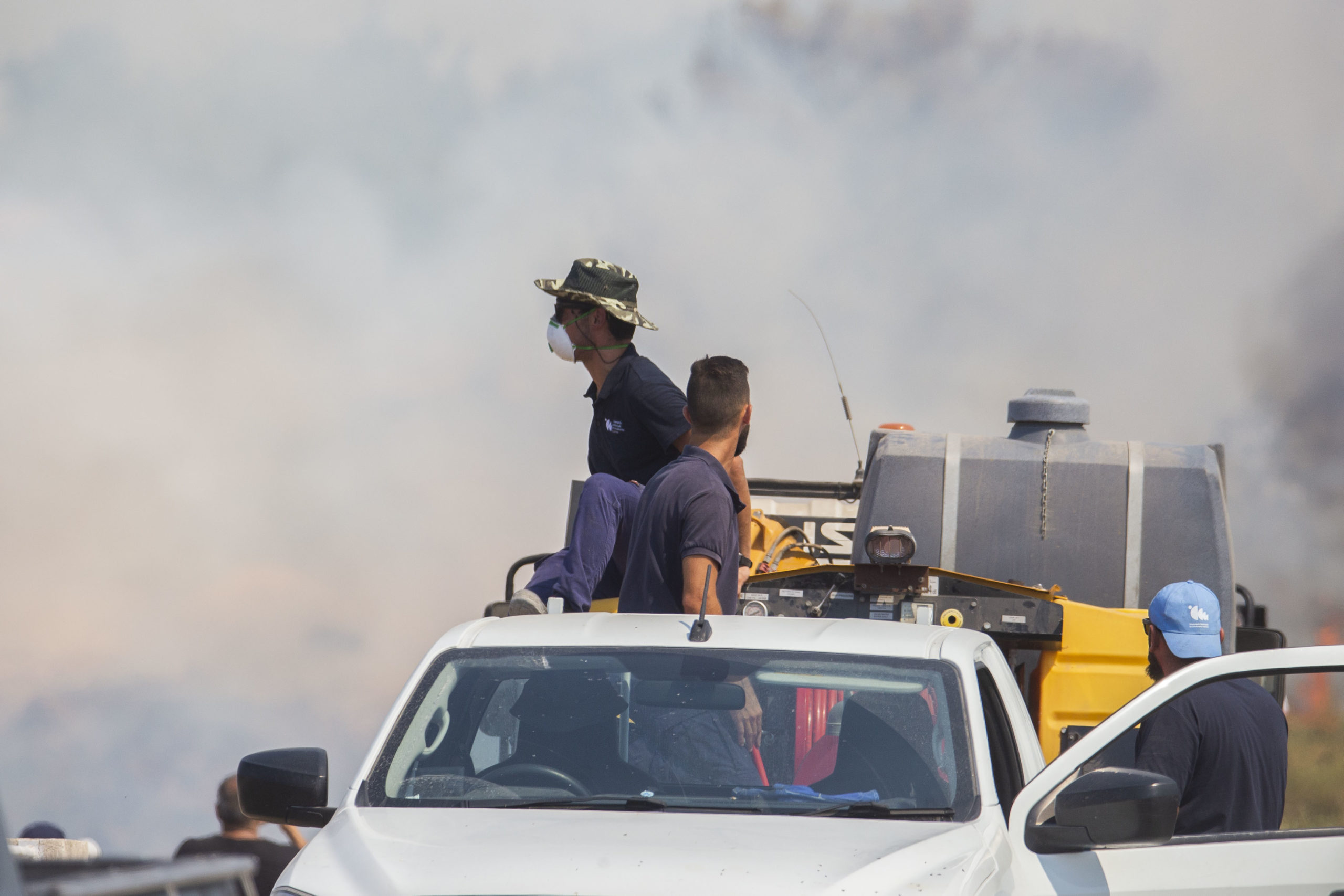
    limassol wildfire — Cypriot MEPs have sharply criticised the European Union for its perceived inaction during the devastating Limassol wildfire that claimed two lives and destroyed hundreds of homes in July. The wildfire, which ravaged over 120 square kilometres of land, highlighted the urgent need for improved fire prevention measures across Europe.

    In a heated debate, MEPs Giorgos Georgiou, Michalis Hadjipantela, Geadis Geadi, and Fidias Panayiotou voiced their frustrations over the EU’s failure to provide timely and effective support during a fire season that has been described as record-breaking. Over one million hectares of land have burned across Europe this year, an area larger than Cyprus and significantly higher than the 20-year average.

    Georgiou, representing the AKEL party, pointed out that Cyprus holds the “negative record of the decade,” noting the extensive destruction relative to its total territory. He did not shy away from criticising the Cypriot government for its lack of accountability, stating, “not even resignations of responsible ministers were seen.”

    His call for action included a demand for the establishment of a European aerial firefighting base, which he believes would benefit both Cyprus and neighbouring countries. “You ignore us demonstratively,” Georgiou lamented, urging that funding be shifted from military expenditures to public safety initiatives.

    Hadjipantela, a member of the ruling DISY party, echoed these sentiments, asserting that mere expressions of sympathy from the EU are insufficient. “The European Union cannot consider it has done its duty with a few words of sympathy. We don’t need sympathy. We need actions,” he declared. He warned that if similar disasters occur without a robust response plan, the EU would bear responsibility for the consequences.

    During the parliamentary session, Hadjipantela confirmed that Cyprus is eligible to seek compensation from the European Commission’s Solidarity Fund within 12 weeks following the wildfire. “We officially informed the government about this matter,” he stated, emphasising the need for swift action to secure financial support.

    Further highlighting the sense of abandonment felt by Cypriots, Geadi of ELAM acknowledged the assistance received from countries like Italy and Israel. He expressed gratitude for the support, particularly the firefighting aircraft sent by Israel.

    Independent MEP Panayiotou remarked on the irony that Cyprus received “more help from third countries – Georgia, Egypt, Israel, Lebanon – instead of European Union countries.” His comments reflected a broader sentiment among the Cypriot public, who feel let down by their European partners during a time of crisis.

    The current fire season has already set records since statistics began in 2006, with several European nations, including Cyprus, exceeding their twenty-year averages for wildfire damage. Tragically, at least eight people have lost their lives across the affected regions.

  • Paphos airport — US Proposal Enhances Prospects for New Paphos Airport Road

    Paphos airport — US Proposal Enhances Prospects for New Paphos Airport Road

    A new proposal from the United States is set to boost the prospects of a new road connecting Paphos with its airport, according to high-level sources. This move comes after the originally planned route faced significant environmental challenges.

    Paphos airport: Navigating Environmental Challenges

    The proposed road’s initial design encountered obstacles primarily due to its intended crossing over the Ezousa river near its estuary, an area designated as a Natura 2000 protected site. Such environmental restrictions typically imply that the Cypriot government would face hefty fines from the European Union if the project proceeded without addressing these concerns.

    Public Interest Justification

    However, sources familiar with the proposal indicated that if an infrastructure project can be classified as being in the public interest or necessary for national security, the EU may waive these fines. This could allow the road’s construction to move forward without further environmental hindrances.

    In this case, the significance of the Andreas Papandreou airbase, located at the Paphos airport, plays a pivotal role in the proposal’s justification. The US aims to underscore the airbase’s importance to common security, thereby bolstering the argument for the road’s development.

    Extending Existing Infrastructure

    If approved, the new road will effectively extend Spyros Kyprianou avenue, which currently runs from the Kings Avenue Mall to the Ezousa river, directly to the airport. This extension is expected to enhance accessibility to the airport and facilitate increased traffic flow.

    Strengthening Defence Ties with the US

    This proposal is part of a broader effort as Cyprus strengthens its defence cooperation with the United States. Plans are underway for significant upgrades to the Andreas Papandreou airbase, estimated to cost between €10 million and €14 million. Earlier this year, President Nikos Christodoulides had hinted at potential US financial assistance for these upgrades, which also include enhancements to the Evangelos Florakis naval base in Mari.

    Financial Implications and Military Hardware

    Defence Minister Vasilis Palmas has indicated that upgrades at the Mari naval base could exceed €200 million. In parallel with these infrastructure improvements, military collaboration between Cyprus and the US has intensified. The US has authorised Cyprus to procure military hardware directly from the US government, a significant shift from previous arrangements where purchases could only be made through private companies.

    Benefits of Direct Purchases

    Inclusion in the US defence security cooperation agency’s foreign military sales (FMS) programme allows Cyprus to acquire military equipment at more competitive prices. This is because the US government typically purchases its military apparatus in bulk, making it possible to offer lower prices compared to private sector suppliers.

    Maintaining Sovereignty and Collaboration

    Despite the growing military ties, Palmas has emphasised that both the airbase in Paphos and the naval base in Mari remain “of Cypriot interest and Cypriot ownership.” He reassured that these facilities will not be transferred out of Cypriot hands, regardless of the collaboration with American and European forces. “We will continue to serve allies in terms of training, information exchange, and in broader missions, including the removal of their citizens from crisis areas,” Palmas stated.

    The Future of Paphos Infrastructure

    The potential construction of the new road to Paphos airport represents not only a logistical improvement but also a strategic enhancement in the context of Cyprus’s evolving role in regional security matters. As discussions continue, the impact of this proposal could resonate beyond infrastructure, influencing Cyprus’s geopolitical stance and its relationship with both the EU and the US.