Cyprus recorded the lowest forest growth rate among EU member states in 2023, at just 1.6 per cent, according to data released by Eurostat on Friday.
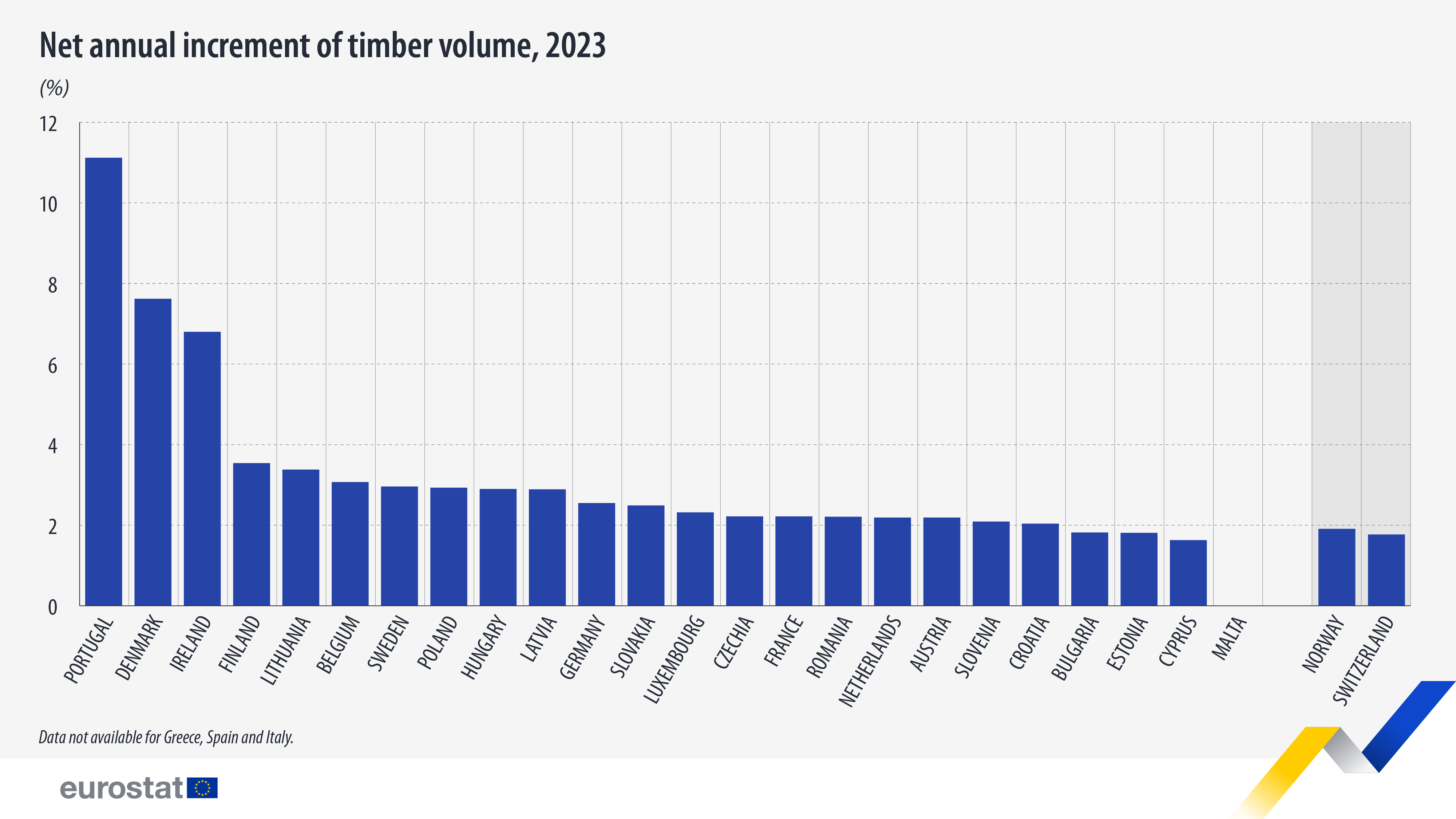
Photo: cyprus-mail.com
- Cyprus recorded the lowest forest growth rate among EU member states in 2023, at just 1.6 per cent, according to data released by Eurostat on Friday.
This alarming statistic places Cyprus at the bottom of the EU ranking, alongside Malta, which saw no forest growth at all. Bulgaria and Estonia are not far behind, both achieving a modest growth rate of 1.8 per cent. In stark contrast, Portugal boasts the highest growth rate in the EU at 11.1 per cent, followed by Denmark at 7.6 per cent.
State forest land in Cyprus encompasses approximately 18 per cent of the island’s total area, featuring a mix of natural pine forests, reforested areas, grasslands, and other non-forested lands such as dams and mining sites. Despite this coverage, the low growth rate indicates significant challenges for the island’s forestry sector.
Eurostat’s data reveals that Cyprus is also among the EU member states with the lowest net growth of timber stock. This situation contrasts sharply with countries like Ireland and Latvia, which report significantly higher net growth rates. The implications of these figures extend beyond mere statistics; they highlight the ongoing struggle for sustainable forest management in Cyprus.
As forest growth plays a vital role in the EU’s strategy for sustainable forest management and climate goals, Cyprus’s situation raises concerns about its future environmental stewardship. The Cypriot government has acknowledged these challenges, focusing its forestry management on environmental protection, biodiversity conservation, and recreational opportunities. This shift represents a deliberate move away from prioritising timber production towards achieving broader social and environmental benefits.
However, the forestry department also pointed out that this approach has resulted in limited domestic timber production. Consequently, Cyprus relies heavily on timber imports from both EU member states and third countries to satisfy local demand. This dependency underscores the urgent need for a re-evaluation of forest management practices on the island.
The forestry sector in Cyprus faces a complex situation: while there is a clear commitment to environmental sustainability, the numbers indicate that immediate action may be necessary to enhance forest growth and ensure the island’s ecological health. As Cyprus navigates these challenges, the future of its forests will be pivotal in shaping not only its environment but also its economy.