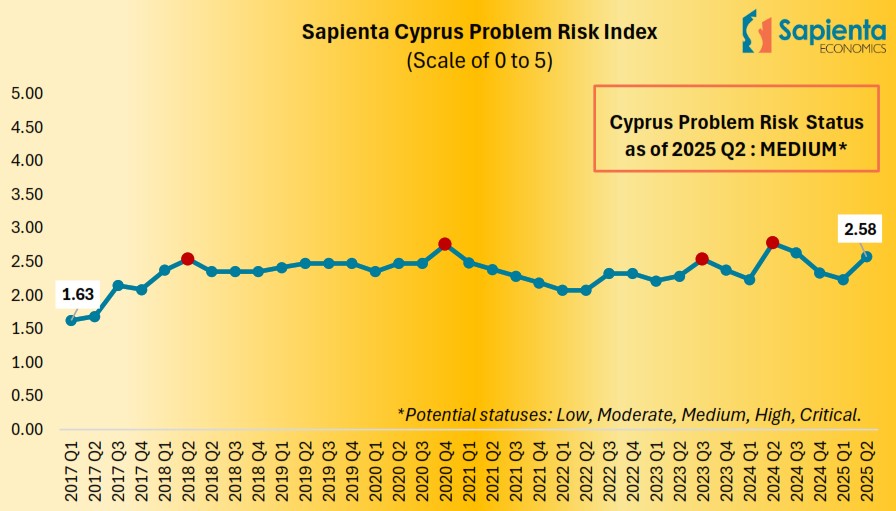
cyprus risk — cyprus risk — The risk of an attack on British bases in Cyprus has escalated due to ongoing conflicts between Israel and Iran, coupled with recent reductions in UN mission budgets. This shift has resulted in a notable increase in the quarterly Sapienta Cyprus Problem Risk Index, which assesses potential threats to the region.
Photo: financialmirror.com
- The latest report detailing these changes and methodologies is accessible on the Sapienta Economics website, offering further insights into the evolving risk landscape in Cyprus.
For the second quarter of 2025, the index rose to a score of 2.58, placing it firmly within the upper half of the “medium risk” category. This marks a rise from the previous quarter’s score of 2.24, signalling growing concerns among analysts. However, it remains lower than the same period last year, primarily attributed to relative stability within the UN-monitored buffer zone.
Cyprus risk: Factors Influencing the Index
Fiona Mullen, Director of Sapienta Economics, highlighted that various elements are contributing to the heightened risk. The recent arrest of an individual alleged to be connected to the Iranian Revolutionary Guard, reportedly spying on the British Sovereign Base Areas (SBAs), has raised alarms about potential direct threats to the island.
Moreover, attempts from certain nations to insinuate that Cyprus or its British bases could be implicated in attacks against Iran exacerbate these concerns. Mullen noted that the cuts to the UN budgets for both the Good Offices Mission and the peacekeeping UNFICYP mission diminish the organisation’s vital role in moderating tensions between communities in Cyprus.
The Curveball Risk and Its Implications
Another significant aspect of the risk index is the “curveball” category, which accounts for unpredictable high-risk events that the model does not directly address. Mullen explained, “No model is perfect, so the curveball risk captures new risks that can flare up or subside quickly.” This could destabilise relations between Greek Cypriots and Turkish Cypriots, or even escalate the potential for broader conflict.
The risk of an attack on British bases is classified as a curveball risk, indicating that while it is not factored into the traditional assessment metrics, it remains a critical concern for analysts monitoring the region.
Understanding the Broader Context
The Sapienta Cyprus Problem Risk Index is derived from ten primary factors that drive the intensity of the Cyprus issue. These factors encompass military activities in the UN-monitored buffer zone, maritime activities in adjacent waters, Turkey’s diplomatic relations, and the status of ongoing negotiations aimed at resolving the Cyprus problem.
As the geopolitical landscape continues to shift, the implications for Cyprus remain complex. With the potential for increased military tensions and a reduced role of the UN in peacekeeping, the situation warrants close attention from both local and international observers.
The latest report detailing these changes and methodologies is accessible on the Sapienta Economics website, offering further insights into the evolving risk landscape in Cyprus.