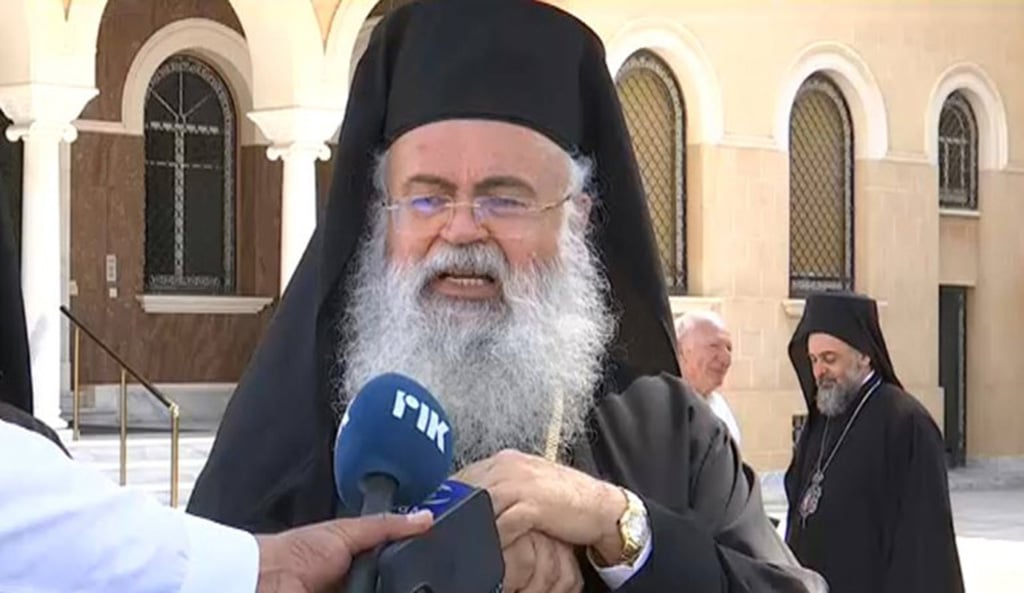
cyprob — The Cyprus problem, or Cyprob, is a pressing issue in the island’s socio-political landscape, with Archbishop Georgios vocalising his concerns over potential settlements that could jeopardise the Greek Cypriot community’s future. In a Christmas circular, he cautioned that certain proposals could amount to what he provocatively termed ‘national euthanasia’.
Cyprob: Rejection of Compromise Solutions
The Archbishop firmly rejected the ideas of a bizonal bicommunal federation and a two-state arrangement. He argued that these models would fail to protect the fundamental rights and future of the Greek Cypriot community. He emphasised that any solution must fully guarantee the rights of all European Union citizens, warning that compromises made under pressure could lead to irreversible consequences.
Unresolved National Drama
Despite the festive season traditionally symbolising peace, Archbishop Georgios stated that Cypriots cannot turn a blind eye to what he described as an unresolved national drama. He called for a ‘national and spiritual awakening’, suggesting that society has fallen into a state of ‘comfortable transience’ while Turkey continues to pursue a long-term strategy for consolidating its control over the island.
A Call for Unity
He expressed concern that societal factors have led the community to the brink of collapse, highlighting a perceived decay in values. The Archbishop’s call for a regrouping of forces aims to ensure the ‘continued presence of Hellenism’ in Cyprus, which he claimed has existed on the island for millennia. He reiterated the importance of relying on internal capacities amidst an increasingly unpredictable international environment.
Critique of Internal Developments
Archbishop Georgios did not shy away from addressing internal issues within the Greek Cypriot community. He lamented what he sees as a broader moral and social decline, pointing to rising crime, corruption, and violence as indicators that Christian values are losing their influence in public life. He argued that this decline is occurring at a time when Turkey is consolidating its position on the island.
Concerns Over Crossings into the North
The Archbishop also expressed concern regarding the daily movement of Greek Cypriots into the northern part of the island. He suggested that these crossings are now driven more by leisure and economic activities rather than visits to religious sites, which could further dilute the cultural and national identity of the Greek Cypriots.
Political Landscape and Leadership Concerns
Turning his attention to the political climate, Archbishop Georgios warned against the promotion of individuals to public positions who lack the necessary qualifications. He referred to this phenomenon as a regression to ‘political primitivism’, suggesting that it represents a significant threat to the governance and future of the island.
Misplaced Optimism Regarding Turkish Cypriot Leadership
Regarding recent developments in the northern part of Cyprus, the Archbishop cautioned against what he labelled as misplaced optimism following the election of Tufan Erhurman. He asserted that no Turkish Cypriot leadership could deviate from Ankara’s strategic direction or alter the parameters of any future settlement, warning that such perceptions could lead to renewed pressure on the Greek Cypriot community to make further concessions.
Hope for the Future
In his concluding remarks, Archbishop Georgios addressed the refugees, expressing hope that 2026 would see intensified efforts to resolve the Cyprus problem. He underscored the need for a united front among Greek Cypriots to safeguard their rights and future on the island, reflecting a deep concern for the community’s well-being.
As debates surrounding the Cyprus problem continue, the Archbishop’s statements echo the sentiments of many who fear that the essence of Hellenism on the island is at stake. His call for a return to core values and community solidarity may resonate with those feeling disillusioned by the current trajectory of both internal and external political dynamics.