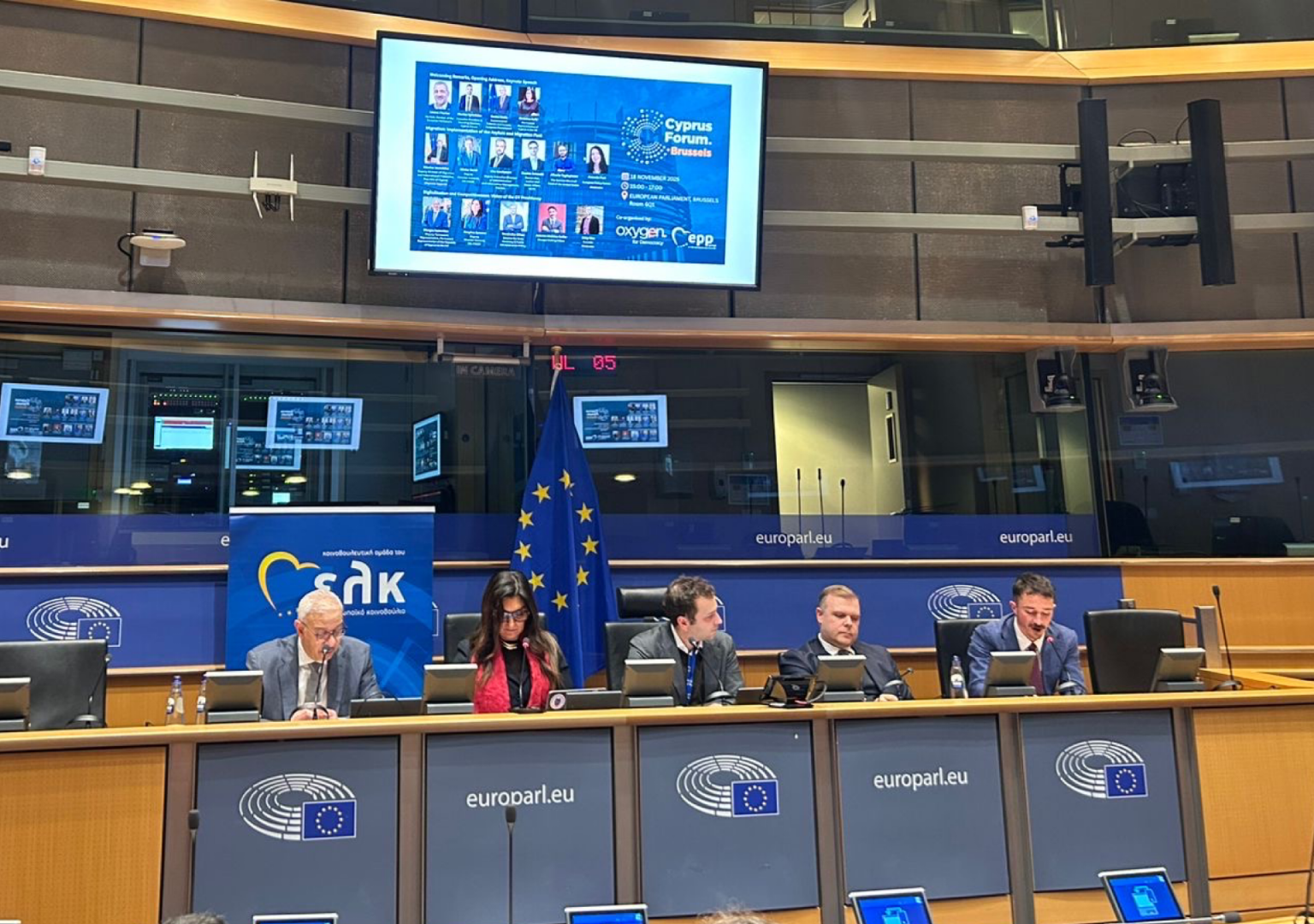
digitalisation — The Cyprus Forum Brussels has set a clear vision for digitalisation and competitiveness as Cyprus prepares to take on the rotating Council Presidency of the European Union.
Digitalisation: Steering the EU Digital Agenda
During the event, a high-level panel discussed how Cyprus intends to influence the EU’s digital strategy, particularly through significant legislative initiatives such as the Digital Omnibus, the Business Wallet, and cybersecurity reforms. Cyprus aims to create a coherent and investment-friendly digital environment that enhances European competitiveness.
Key Panel Participants
Key figures in the discussion included Giorgos Ioannides, Deputy Permanent Representative of Cyprus to the EU; Despina Spanou, Deputy Director-General for Networks & Technology at the European Commission; Tzvetoslav Mitev, Director for Data Economy & Public Administration; and Antoine Mathieu Collin, Visiting Fellow at Bruegel. The session was moderated by Eddy Wax from Euractiv.
Presidency Philosophy and Principles
Giorgos Ioannides articulated the overarching philosophy of the Cyprus Presidency, emphasising that digital transition is essential for enhancing competitiveness, resilience, and European sovereignty. He stated that rather than introducing new regulations, Cyprus aims to serve as a “guardian of balance,” ensuring that negotiations around digital files remain coherent and streamlined.
Ioannides highlighted three guiding principles for the upcoming presidency:
- Proportionality
- Avoidance of regulatory overlaps and inconsistencies
- Predictable rules that attract investment
He stressed the importance of agility in the EU’s approach, especially as companies operate in a competitive global market. He suggested that strategic public procurement could act as a catalyst for innovation and enhance the EU’s technological capabilities.
Understanding the Digital Omnibus
The Digital Omnibus package is a significant initiative from the European Commission aimed at simplifying the EU’s digital regulatory framework. Despina Spanou clarified that the focus of the Omnibus is on simplification without lowering existing standards. She reiterated that the General Data Protection Regulation (GDPR) remains a global reference standard, and the emphasis is on clarifying obligations rather than diluting rights.
The Omnibus is designed to provide a consistent regulatory framework, reducing administrative burdens on businesses, especially small and medium-sized enterprises (SMEs). It aims to replace fragmented obligations with clearer, more predictable rules that align with cornerstone laws such as the GDPR, Digital Services Act, and Digital Markets Act.
Cybersecurity Reforms
During the forum, Spanou also touched on upcoming cybersecurity initiatives. A unified cyber-incident notification mechanism, referred to as ‘report once, reach many’, is set to replace the current fragmented reporting system under GDPR and other frameworks.
The review of the Cybersecurity Act will focus on clarifying the mandate of ENISA and streamlining certification schemes, thereby addressing supply-chain security gaps more effectively. Spanou emphasised that while simplification is essential, it will not come at the expense of maintaining robust cybersecurity standards.
Business Wallet: A Tool for Competitiveness
Both Spanou and Tzvetoslav Mitev highlighted the Business Wallet as a crucial element for enhancing Europe’s digital economy. Described as “an eID for businesses,” the Business Wallet will allow companies to authenticate themselves securely and conduct administrative or financial procedures without the need for paperwork or physical presence.
Mitev pointed out that for the Business Wallet to achieve its intended impact, public administrations must adopt and integrate it into their core procedures. He warned that a purely voluntary approach could lead to low uptake, a concern that has affected previous eID initiatives.
Caution on Regulatory Simplification
Antoine Mathieu Collin provided a cautionary perspective on the implications of regulatory simplification. He argued that while easing compliance requirements could foster innovation, it might also disproportionately benefit major platforms that already dominate the digital landscape. Without appropriate safeguards, such simplification could exacerbate the competitive disadvantages faced by smaller European firms.
Collin highlighted the EU’s challenge of finding a balance between fostering innovation through simplification while preventing excessive concentration of digital power in the hands of a few large players.
Looking Ahead: Making Existing Rules Work
Across the panel, a consistent theme emerged: the Cyprus EU Presidency aims to be evaluated not by the number of new initiatives launched but by the effectiveness of implementing existing rules. The priorities include cutting overlaps, simplifying compliance, and ensuring that cybersecurity regulations remain robust yet workable.
As Cyprus prepares to assume the presidency, the choices made in the coming months will significantly impact Europe’s digital competitiveness for the next decade. Ensuring that the simplification efforts empower small and mid-sized firms remains a critical challenge for the EU.