Tag: international law

  • EU Must Act on Gaza, Says Cyprus Foreign Minister

    EU Must Act on Gaza, Says Cyprus Foreign Minister

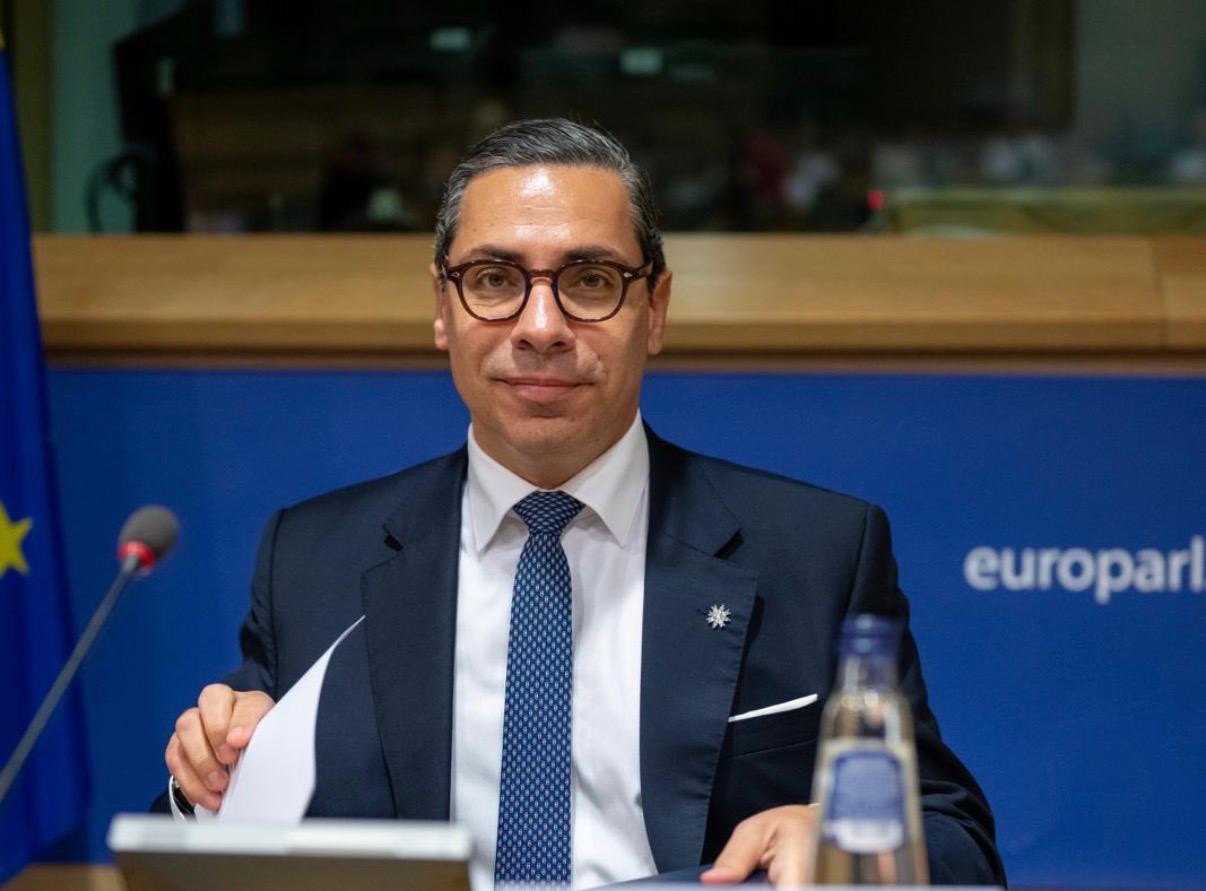
    The European Union “cannot remain mere observers” on the matter of Gaza, stated Foreign Minister Constantinos Kombos during a session with the European Parliament’s foreign affairs committee on Wednesday.

    • “Efforts are being made by Brussels to formulate a common position and stance in this regard,” he said, adding that these conversations “have not yet reached a conclusion.”

    Kombos emphasised the need for the EU to coordinate its efforts fully and act based on international law. He highlighted Cyprus’s significant contributions in humanitarian efforts, particularly through the Amalthea humanitarian aid corridor. “We must move in full coordination and on the basis of international law,” he asserted.

    His remarks come in light of the Cypriot government’s recent announcements regarding its potential participation in the United States’ Gaza Board of Peace. Last week, Kombos indicated that Cyprus would await a unified EU position before deciding on involvement, noting that discussions in Brussels to formulate a common stance are ongoing.

    “Efforts are being made by Brussels to formulate a common position and stance in this regard,” he said, adding that these conversations “have not yet reached a conclusion.”

    Cyprus’s approach has been characterised by a careful and balanced strategy, as communicated to the American side. The Foreign Minister mentioned that the government is maintaining a “particularly positive approach” towards the prospect of joining the Board of Peace, which seeks to address the complex issues facing Gaza.

    There have been reports that Cyprus received an invitation to join the board. According to Bloomberg, however, each participating country may be required to pay a membership fee of $1 billion. This claim was later addressed by Government spokesman Konstantinos Letymbiotis, who clarified that the reports do not reflect reality.

    Notably, Russian President Vladimir Putin was also invited to join the board, and he confirmed the existence of the $1 billion fee. The Board of Peace is designed to include a broad coalition of countries focused on stabilising Gaza.

    The board will also have a seven-member executive team, which includes prominent figures like US Secretary of State Marco Rubio, US special envoy to the Middle East Steve Witkoff, and former British Prime Minister Sir Tony Blair. Each member will oversee critical portfolios aimed at fostering long-term success and governance in Gaza.

    Bulgarian diplomat Nickolay Mladenov, who previously served as the UN’s special coordinator for the Middle East peace process, has been appointed as the board’s high representative for Gaza. The White House stated he would serve as the on-the-ground link between the Board of Peace and a new national committee for Gaza’s administration, led by civil engineer Ali Shaath.

    In a parallel initiative, the White House has established a separate “Gaza executive board” tasked with supporting effective governance and delivering essential services aimed at promoting peace and prosperity for the region. This board includes notable members such as Sigrid Kaag, the incumbent UN special coordinator for the Middle East peace process, and Turkish Foreign Minister Hakan Fidan.
  • Air space — Cyprus Highlights 328 Turkish Air Space Violations to UN Security Council

    Air space — Cyprus Highlights 328 Turkish Air Space Violations to UN Security Council

    Cyprus has reported extensive Turkish air space violations to the UN Security Council, detailing 328 air incursions and 16 naval breaches during July and August 2025.

    • Cyprus has reported extensive Turkish air space violations to the UN Security Council, detailing 328 air incursions and 16 naval breaches during July and August 2025.

    A letter from Cyprus’s Permanent Mission was circulated among council members on 8 December, revealing that among the air violations, 93 involved Turkish unmanned military aircraft, while 56 were executed by armed military fighter jets. These actions have been described by Nicosia as a clear violation of its sovereignty, independence, and territorial integrity.

    The violations extended beyond mere incursions. Cyprus asserted that Turkish forces breached its national airspace, the Nicosia Flight Information Region (FIR), and territorial waters. Furthermore, allegations were made regarding the illegal use of closed ports and airports by Turkish military units.

    Concerns were also raised over nearly daily entries into the designated dead zone and the bolstering of military infrastructure in occupied territories. Such practices have been characterised as part of Turkey’s persistent aggressive behaviour, aimed at establishing new faits accomplis that threaten the security of all Cypriots.

    In its communication to the UN, Cyprus emphasised that these developments undermine efforts to resume negotiations for a peaceful resolution. Despite these challenges, Cyprus reiterated its commitment to working closely with the Secretary-General and his Personal Envoy to foster the necessary conditions for dialogue. The letter reaffirmed a desire for a bicommunal, bizonal federation with political equality, in line with United Nations resolutions.

    The Cypriot mission has requested that the letter and accompanying documents be officially recorded as part of the 80th Session of the General Assembly under the Cyprus question and the Security Council agenda.

  • Deneia — Turkish Military Vehicle Blocks Greek Cypriot Farmers in Deneia

    Deneia — Turkish Military Vehicle Blocks Greek Cypriot Farmers in Deneia

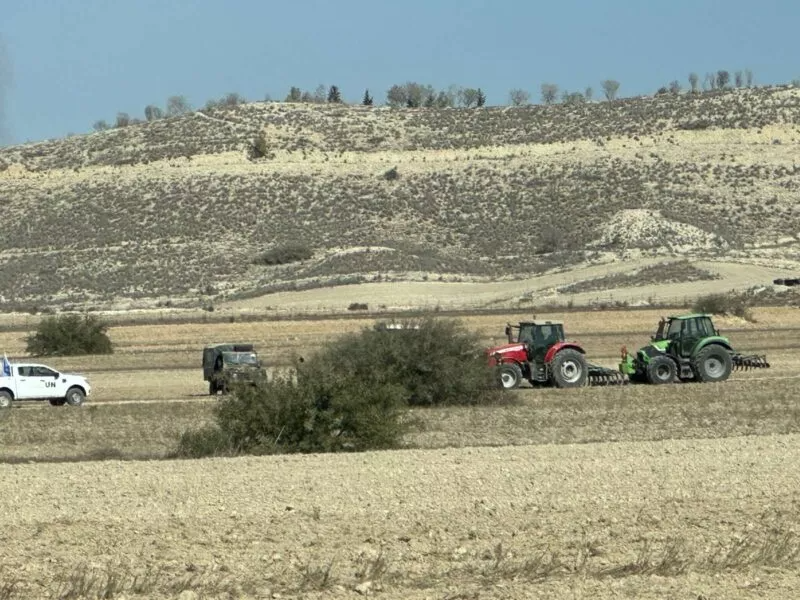
    A Turkish military vehicle entered the United Nations buffer zone near the village of Deneia on Saturday morning to block Greek Cypriot farmers from working their land, leading to a brief standoff.

    Photo: in-cyprus.philenews.com

    • A Turkish military vehicle entered the United Nations buffer zone near the village of Deneia on Saturday morning to block Greek Cypriot farmers from working their land, leading to a brief standoff.
    • The Ministry of Defence is also monitoring the situation closely, indicating the importance of this issue to both local authorities and the international community.

    The incident occurred around 10:00 a.m. local time when Greek Cypriot farmers attempted to cultivate their fields within the buffer zone. Reports indicate that a military vehicle from the Turkish forces arrived and ordered the farmers to leave the area.

    United Nations peacekeepers (UNFICYP) quickly responded to the scene to help defuse the situation. Following initial tensions, both the farmers and the Turkish vehicle retreated momentarily, but the military vehicle returned shortly after. Eventually, UNFICYP members arrived again, and both the Turkish soldiers and peacekeepers departed the buffer zone after some time.

    This incident follows a similar occurrence just four days prior, heightening concerns over the ongoing tensions in the region. Constantinos Letymbiotis, the Government Spokesperson, expressed the government’s serious concern regarding the Turkish military’s actions, describing them as attempts to “dispute the status of the buffer zone” and create new facts on the ground, which he asserted violates international law and UN Security Council resolutions.

    Letymbiotis affirmed that the Republic of Cyprus would respond with “calmness, determination, and full commitment to international law.” In addition, the Ministry of Foreign Affairs (MFA) is actively working with UNFICYP to restore access for the farmers. MFA Spokesperson Theodoros Gotsis stated that the ministry is in contact with local authorities and is making necessary representations to the UN force to ensure farmers can return to their land in line with UNFICYP’s mandate and Security Council resolutions.

    The Ministry of Defence is also monitoring the situation closely, indicating the importance of this issue to both local authorities and the international community.

  • Arrest of Russian-Israeli Citizen in Larnaca Linked to Sea Piracy Charges

    Arrest of Russian-Israeli Citizen in Larnaca Linked to Sea Piracy Charges

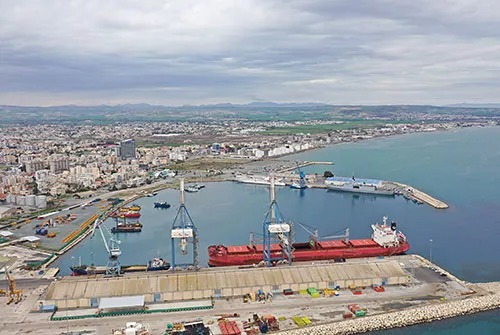
    A Russian-Israeli citizen, Alexei Kartzgor, has been arrested in Larnaca under an Interpol warrant for his alleged involvement in sea piracy.

    • A Russian-Israeli citizen, Alexei Kartzgor, has been arrested in Larnaca under an Interpol warrant for his alleged involvement in sea piracy.
    • Following his arrest, Kartzgor is set to appear before the Larnaca District Court on Monday, where proceedings will begin to address the extradition request from Russia.

    The 47-year-old was apprehended on Saturday at Larnaca port, following an international arrest warrant issued by Russian authorities. According to a police spokesperson, this arrest is connected to an old case involving the hijacking of the cargo ship Arctic Sea in the Baltic Sea.

    Kartzgor’s arrest has garnered attention, particularly after reports from Israeli newspaper Yedioth Ahronoth confirmed the details. It is believed that he arrived in Cyprus by ship, unaware of the pending warrant against him.

    In a twist, it has been reported that Kartzgor was previously arrested in connection with the same case. He was released on bail in 2009 but subsequently fled, prompting Russian officials to seek his extradition.

    Following his arrest, Kartzgor is set to appear before the Larnaca District Court on Monday, where proceedings will begin to address the extradition request from Russia.

  • Greek cypriots — European Parliament to Address Detention of Greek Cypriots in Occupied North

    Greek cypriots — European Parliament to Address Detention of Greek Cypriots in Occupied North

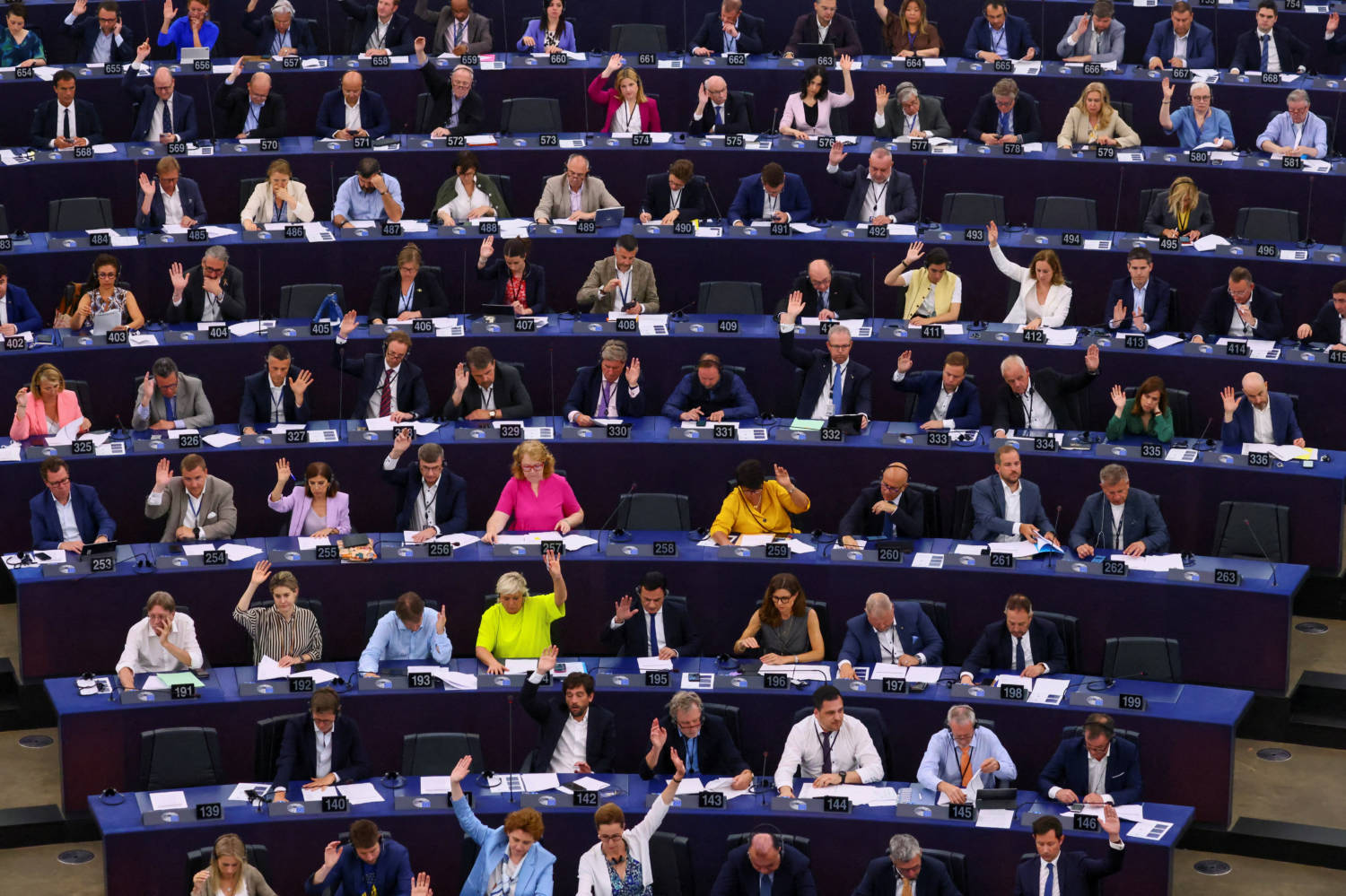
    The European Parliament will debate a resolution condemning the detention of five Greek Cypriots in the occupied north, a move led by Cyprus’s delegation to the European People’s Party. This initiative has been spearheaded by DISY MEPs Loukas Fourlas and Michalis Hadjipantela.

    Scheduled for Wednesday, 10 September, the debate titled “detention of European citizens in the occupied areas of Cyprus” marks a significant step in addressing the plight of these individuals. The resolution is expected to be approved on Thursday, 11 September, demanding their immediate and unconditional release.

    The text of the resolution will not only name the five detained Greek Cypriots but also reference the context of their arrests, which are viewed as retaliatory measures linked to the usurpation of Greek Cypriot properties. Statements from the MEPs in Strasbourg assert that the resolution will directly call upon Turkey to act for the release of these EU citizens, emphasising Turkey’s responsibility for their illegal detention as the authority behind the occupation.

    In its discussions, the European Parliament will explicitly condemn the politically motivated detainment of the five Greek Cypriots, highlighting that their continued imprisonment lacks credible evidence and is based on decisions from an unrecognised “court.” The health issues faced by the detainees and the absence of adequate medical care will also be addressed, framing their situation as inhumane treatment.

    The resolution’s demands are unequivocal; it seeks the immediate and unconditional release of the five Greek Cypriots, along with the cessation of all arbitrary prosecutions against them. Additionally, it will urge the European Commission to take diplomatic, political, and legal measures in collaboration with the UN and other international entities to facilitate their release.

    Furthermore, the resolution extends its support to the Republic of Cyprus in pursuing legal actions against Turkey, potentially at the European Court of Human Rights. It points out that Turkey bears full responsibility for the actions of the occupying regime, asserting that the ongoing occupation is a serious violation of international law and an impediment to peace, stability, and the EU-Turkey relationship.

  • International Outcry Over Israel’s E1 Settlement Plans

    International Outcry Over Israel’s E1 Settlement Plans

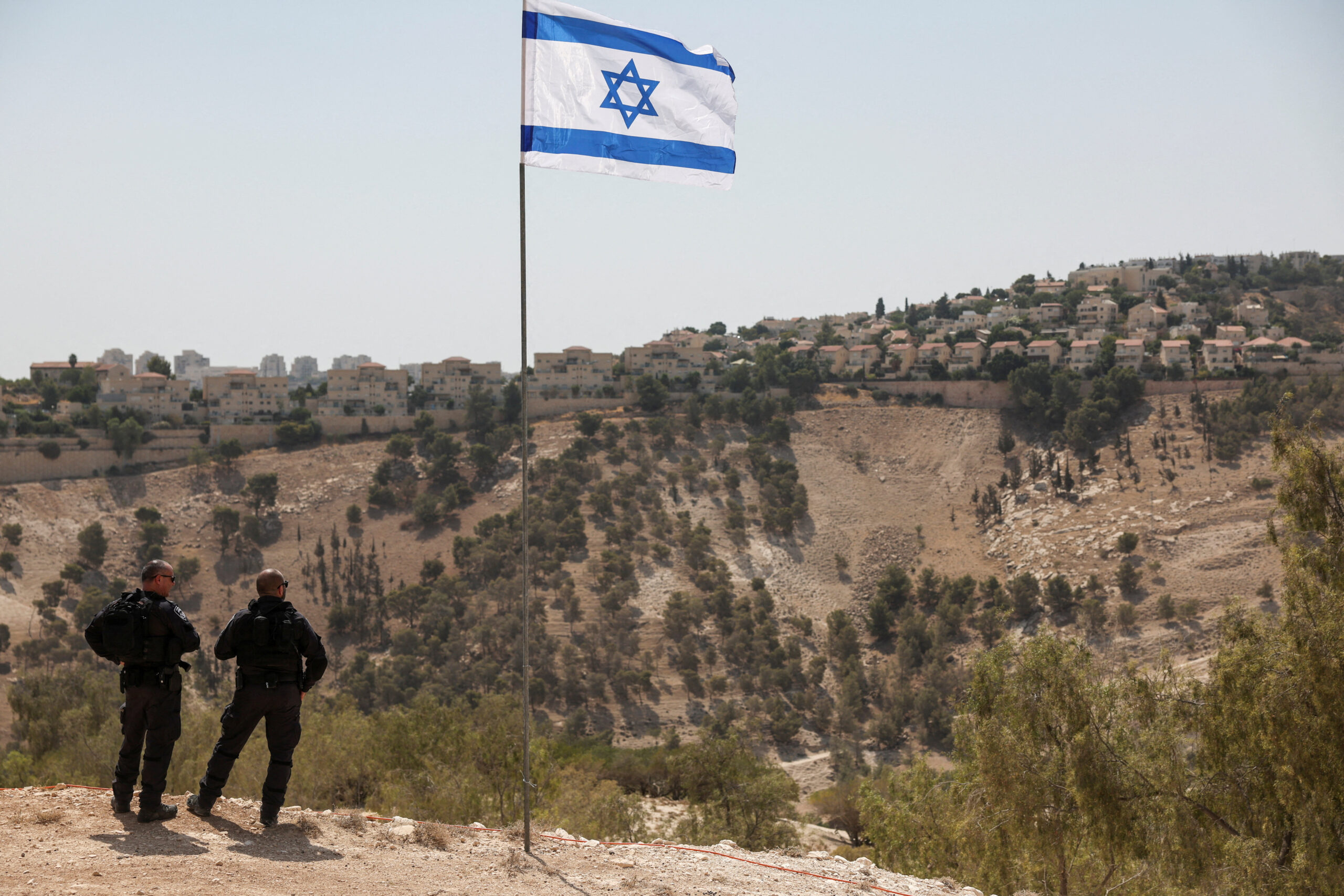
    Foreign ministers from various European nations, along with Australia and the UK, have condemned Israel’s new settlement plans, particularly the controversial E1 project, which threatens to significantly alter the landscape of East Jerusalem and the West Bank.

    The E1 settlement initiative, which has received backing from Israeli Finance Minister Bezalel Smotrich and was approved by a defence ministry planning commission, aims to construct new settlements east of Jerusalem. This development has raised serious concerns among international leaders, as it would effectively bisect the West Bank and hinder the establishment of a contiguous Palestinian state.

    In a joint statement released on Friday, foreign ministers from countries including Belgium, Canada, Denmark, France, Greece, and others expressed their disapproval, stating, “The decision by the Israeli higher planning committee to approve plans for settlement construction in the E1 area, east of Jerusalem, is unacceptable and a violation of international law.” They called for an immediate reversal of the decision, emphasising the potential ramifications for peace in the region.

    EU foreign chief Kaja Kallas, who also serves as the vice-president of the European Commission, joined the chorus of condemnation, reinforcing the collective stance of the international community against the E1 project. The ministers warned that this settlement plan could severely obstruct the possibility of a two-state solution, arguing that it would divide any prospective Palestinian state and limit Palestinian access to Jerusalem.

    Israel responded swiftly to the international criticism, with its Foreign Ministry dismissing the statement as an attempt to impose foreign dictates. They reiterated Israel’s historical claim to the land, stating, “The historic right of Jews to live anywhere in the Land of Israel – the birthplace of the Jewish people – is indisputable.” The ministry further contended that Israel’s actions were in accordance with international law, asserting that the Jewish people are the indigenous people of the region.

    The E1 settlement plan has been a point of contention for years, with significant international opposition. Since the 1967 Middle East war, Israel has expanded its settlements in the West Bank, resulting in approximately 700,000 Israeli settlers now residing among 2.7 million Palestinians in the area. The ongoing conflict with Hamas in Gaza has further complicated the situation, with tensions remaining high.

    As the international community watches closely, the future of the E1 project remains uncertain. The foreign ministers’ statement has highlighted a growing divide between Israel and many nations who are advocating for peace and stability in the region.