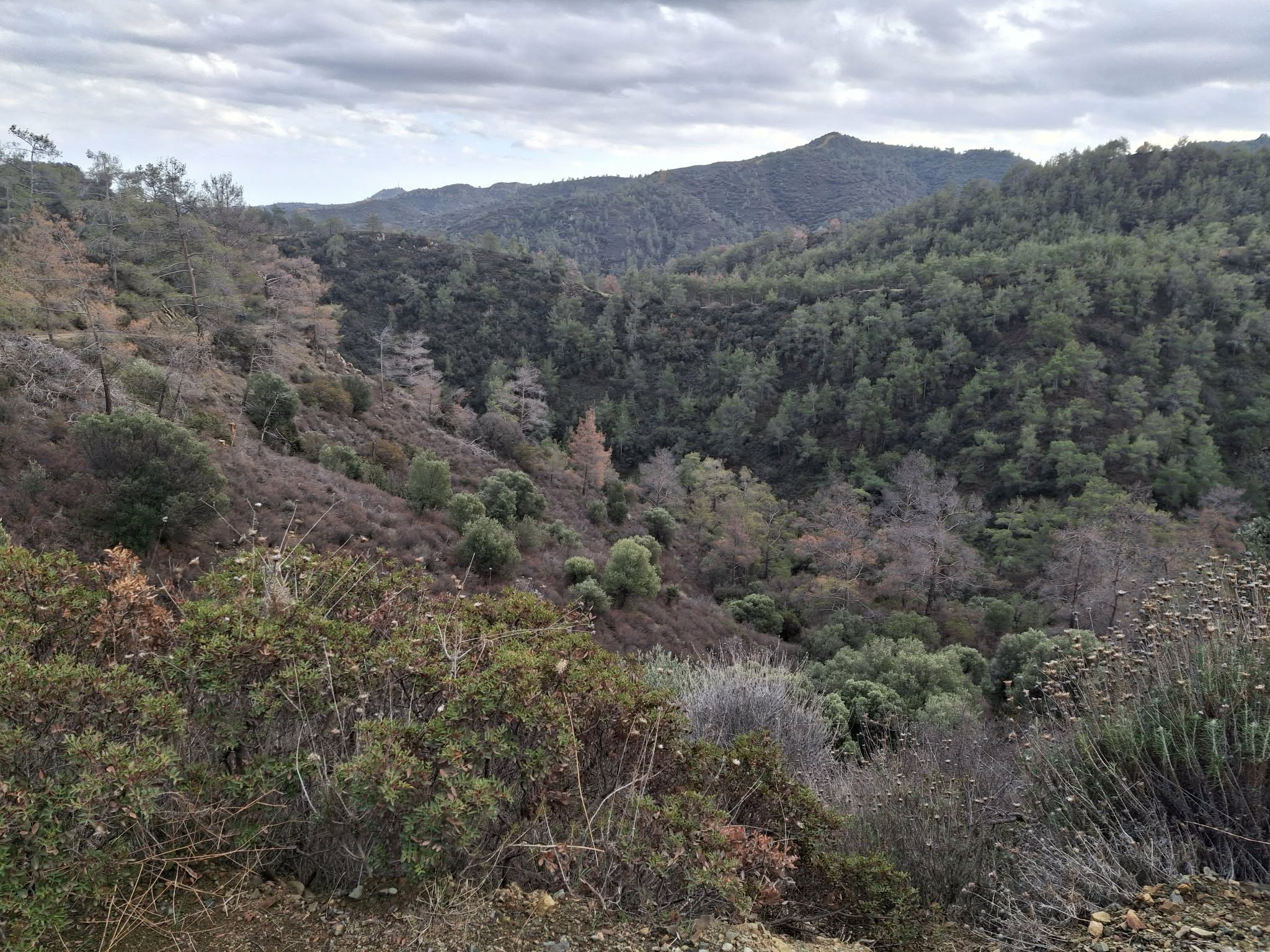
Alarm bells are ringing for wild mushroom foraging in Cyprus as climate change increasingly impacts the region’s forests. This year’s picking season has been disappointing, attributed largely to the rising temperatures and drying conditions affecting the island’s biodiversity. During visits to familiar foraging spots around Vavatsinia, Lythrodondas, and Troodos, the signs of distress in the forests became alarmingly apparent.

Photo: cyprus-mail.com
Wild mushroom: Forest Conditions Reveal Climate Change’s Toll
Last week, I traversed one of my favourite forest routes from Vavatsinia to Kyprovasa, passing by Lefkara dam. The landscape bore witness to extensive tree felling and numerous dead trees, including mature Calabrian pines (Pinus brutia), which I realised had succumbed to drought. This phenomenon is most pronounced on south-facing slopes, where the soil dries out and the water table drops below the reach of tree roots.

Photo: cyprus-mail.com
Equally concerning was the low water level in Lefkara dam, which stands as a stark reminder of the ongoing challenges faced by Cyprus’ natural resources. The Cyprus Institute has highlighted a grim forecast: from 2020 to 2050, the number of extremely hot summer days in Cyprus is expected to increase significantly, with maximum temperatures exceeding 38˚C for an additional two weeks annually. By the century’s end, Nicosia could experience two additional months of such heat, mirroring conditions currently found in cities like Cairo.
Consequences of Drought and Poor Foraging Practices
The dire state of water resources is further illustrated by the Kouris dam, which is at less than 11% capacity. Compounding these challenges are the remnants of last summer’s wildfires, which have left slopes exposed and vulnerable to soil erosion. The lack of vegetation cover is particularly alarming.
While climate change plays a significant role in the current foraging conditions, irresponsible foraging practices contribute to the problem. It is disheartening to witness individuals using rakes to forage for mushrooms, uprooting the delicate ecosystem of leaves and twigs. This method disrupts the life cycles of countless insects and prevents fungi from distributing their spores. Despite strict regulations prohibiting such practices, including potential prison sentences of up to one year or fines of up to €5,000, the destructive behaviour persists.
The Challenges of This Year’s Harvest
This year’s wild mushroom harvest has been particularly poor due to late rains that arrived too close to colder temperatures. Fungi require a specific temperature range of 10 to 13°C for optimal growth. When conditions are cold and wet, mushrooms can become waterlogged and mouldy before they have a chance to flourish.
Among the most sought-after varieties is the ‘milk cap’ mushroom, or Lactarius deliciosus, known locally as the red pine mushroom. While many Cypriots are familiar with this delicacy, I also enjoy foraging for other Russula varieties. However, I advise caution, as some, like the pink-capped ‘sickener’, can cause adverse stomach reactions if consumed by the untrained. One of my preferred mushrooms is the ‘Slippery Jack’ (Suillus luteus), which I prepare by slicing and drying for use in soups and risottos.
The Broader Implications of Climate Change
Sadly, the lack of wild mushrooms is only one consequence of the broader environmental crisis facing Cyprus. As temperatures and drought conditions intensify, the island’s ability to cope will be severely tested. It is imperative that we acknowledge the gravity of these changes and accept the sacrifices necessary to address them.
In my efforts to raise awareness about the issues plaguing Cyprus’ forests, I have received considerable feedback. Roger Cartwright, from the UK’s Landscape Trust, noted the visible impact of extreme summer climates on south-facing slopes during a recent study visit to the Cyprus Forestry Department. Additionally, Evgenia Emets, a former participant in the ‘Guardians of the Forest’ programme, emphasised the need for more forests that can generate and protect water resources.
Strategies for Managing Water Resources and Forests
As we confront these challenges, several strategies could help mitigate the impact of climate change on Cyprus’ environment:
- Encourage tourists to conserve water, suggesting alternatives like swimming in the sea instead of frequent showers.
- Support initiatives to recycle non-potable water from sources such as roofs, washing machines, and swimming pools.
- Advise against planting trees on south-facing slopes, and promote the planting of native species that are better suited to withstand heat and drought.
- Reduce the cultivation of Calabrian pines, as they are particularly vulnerable to changing climatic conditions.
- Restrict the drilling of new wells to protect groundwater resources.
- Evaluate the sustainability of swimming pools and excessive car washing in residential areas.
- Limit the construction of water-intensive golf courses and promote alternative agricultural methods, such as hydroponics.
- Encourage the storage of water in underground tanks and cisterns, which are more efficient than open reservoirs.
- Address leaks in the water transport infrastructure to reduce wastage.
These are challenging times for Cyprus, and as the climate crisis intensifies, it is vital we take action to protect our natural resources and the environment. The future of our forests and the delicate ecosystems they support depends on our willingness to adapt and preserve.