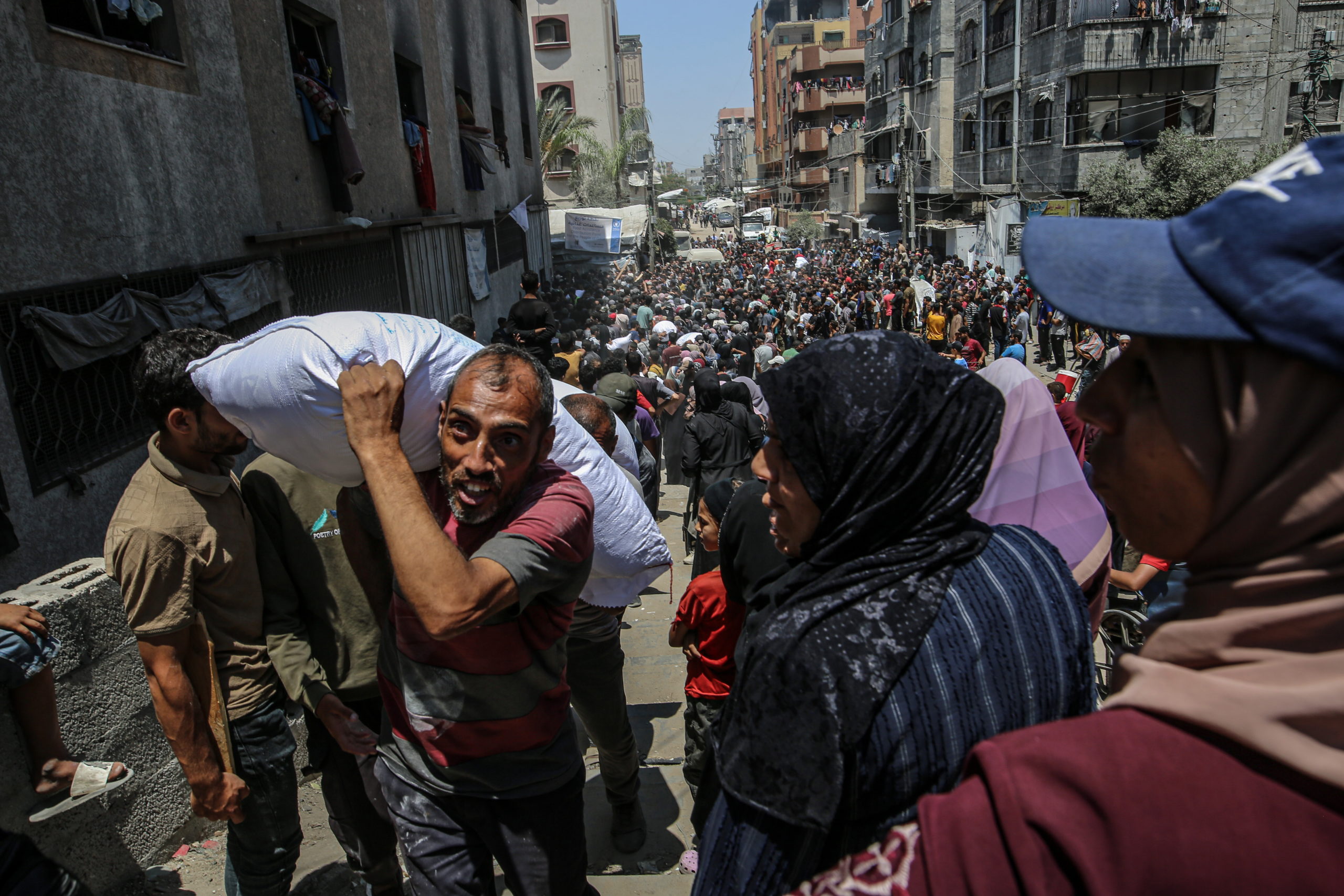
During a recent television interview, Democratic Alignment (DIPA) President Marios Garoyan described the situation in Gaza as a “genocide of Palestinians.” His comments were made on Sigma TV, where he also addressed Cyprus’s Western alignment amid the ongoing conflict.
Garoyan’s remarks come at a time when international powers face scrutiny for their positions on the Palestinian issue. He asserted, “With the same force that we condemn the Russian invasion of Ukraine, with the same voice we must shout: stop this genocide.” This statement highlights his belief that international law should not be selectively applied based on political convenience.
He firmly rejected the notion that discussing the humanitarian crisis in Gaza could harm Cyprus’s national interests. “I categorically reject when we talk about genocide in Gaza that some third parties claim we are harming national interests,” Garoyan stated. He emphasised the importance of acknowledging the severity of the situation affecting civilians, particularly women and children in Gaza.
Despite his strong criticisms, Garoyan reiterated Cyprus’s commitment to its Western orientation. “Cyprus has a clear orientation – and that is towards the West. It does not change, it does not alter,” he affirmed. He argued that political consistency should allow for criticism, particularly in matters of humanitarian concern.
Garoyan also reflected on his previous role as the first parliamentary speaker to visit Israel in 35 years, stating, “I am not against Israel… Things are not one-dimensional. Politics needs realism and clear positions, not hypocrisy or ambiguities.” This comment underscores his call for a balanced approach to foreign relations.
He pointed to Turkey as an example of how geopolitical balance can be maintained, noting that the NATO member has managed relations with Russia while facing tensions with Israel. Garoyan’s comments resonate within a broader discourse on international relations and the treatment of humanitarian crises.
Garoyan’s condemnation of the situation in Gaza has sparked conversations about the responsibilities of nations and leaders in advocating for human rights amidst complex geopolitical realities. As the conflict continues, the narrative surrounding the humanitarian implications remains a pivotal aspect of the ongoing discussions.