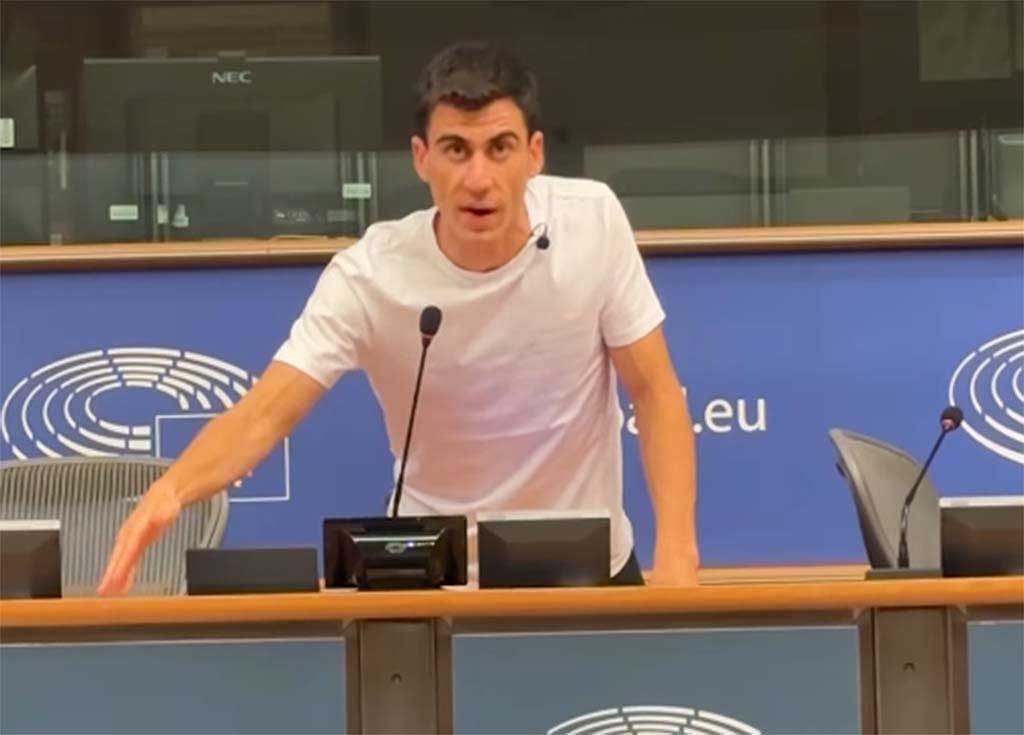
Political parties in Cyprus are incensed following controversial remarks made on a podcast hosted by MEP Fidias Panayiotou, where doubts were cast on the widely accepted narrative surrounding the death of Eoka fighter Grigoris Afxentiou.
The narrative, which claims that British forces set Afxentiou’s hideout ablaze while he was still inside, was challenged by historian Michalis Michael during the podcast. Michael suggested that Afxentiou may not have been burned alive as traditionally believed, stating, “It is said that Afxentiou told [his fellow fighters], ‘get out and I will stay here’. You could not fight inside the hideout.”
According to Michael, the circumstances of Afxentiou’s death were further complicated by a forensic report from a 2017 trial involving four of his fellow fighters. He noted, “The description states that the others got out, Afxentiou stayed, they shouted at him to surrender and he did not, they threw a grenade at him.” Michael revealed that the forensic report detailed Afxentiou’s injuries, including a bullet wound and other significant trauma, casting doubt on the suicide narrative previously suggested.
Political reactions were swift and fierce. The Democratic Rally (Disy) was one of the first to respond, condemning the podcast’s assertions as an attempt to “rewrite Cypriot history, which was written with the blood of our heroes.” They described the suggestion that Afxentiou committed suicide or was shot by a fellow fighter as slanderous and an affront to his legacy.
“Grigoris Afxentiou will remain an eternal beacon of militancy and supreme virtue,” Disy stated, insisting that the significance of his sacrifice should not be altered by contemporary political views.
The Democratic Party (Diko) echoed these sentiments, asserting that Afxentiou’s sacrifice is a cornerstone of national dignity and collective memory. They urged political figures to refrain from exploiting the sacrifices of heroes for political gain, stating that such attempts deserve nothing but shame.
In contrast, the left-wing party Akel defended Michael’s position, framing his comments as a legitimate historical inquiry. They highlighted Afxentiou’s status as a symbol of self-sacrifice and heroism in the fight against colonialism. “For the sake of history, we recall that when the British colonialists were searching for Grigoris Afxentiou, the only newspaper which refused to publish his wanted notice was the Akel newspaper,” they argued, emphasising their own patriotism in the face of criticism.
This exchange of accusations escalated, with Disy accusing Akel of adopting a narrative aligned with British colonialists and undermining the legacy of Cypriot resistance. They challenged Akel to acknowledge their historical mistakes, further intensifying the political friction surrounding the podcast remarks.
On Saturday afternoon, President Nikos Christodoulides also weighed in on the debate, sharing a post on social media featuring Afxentiou’s wanted poster along with a quote attributed to him: “In the ultimate need, I will fight and die like a Greek, but they will not catch me alive.” This statement resonated with those who view Afxentiou as a national hero, underscoring the deep emotional and political stakes involved in the discourse surrounding his legacy.