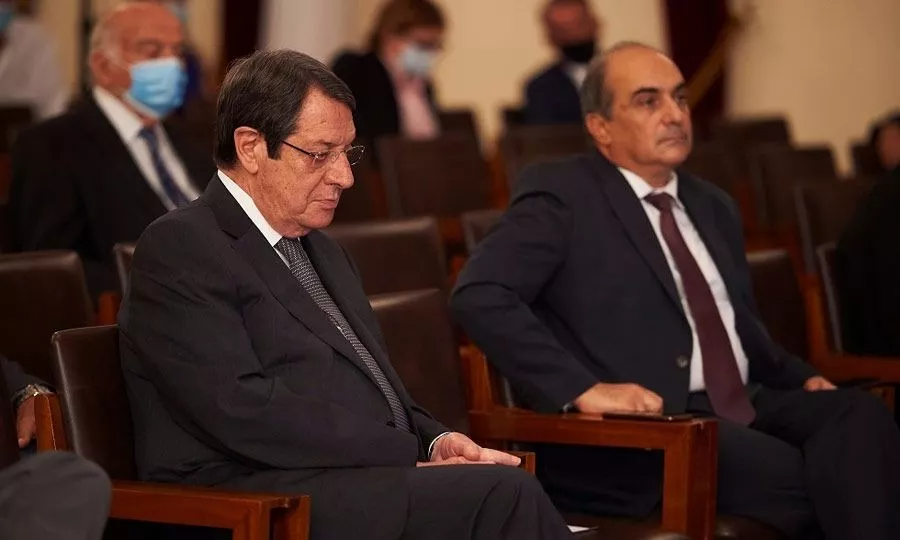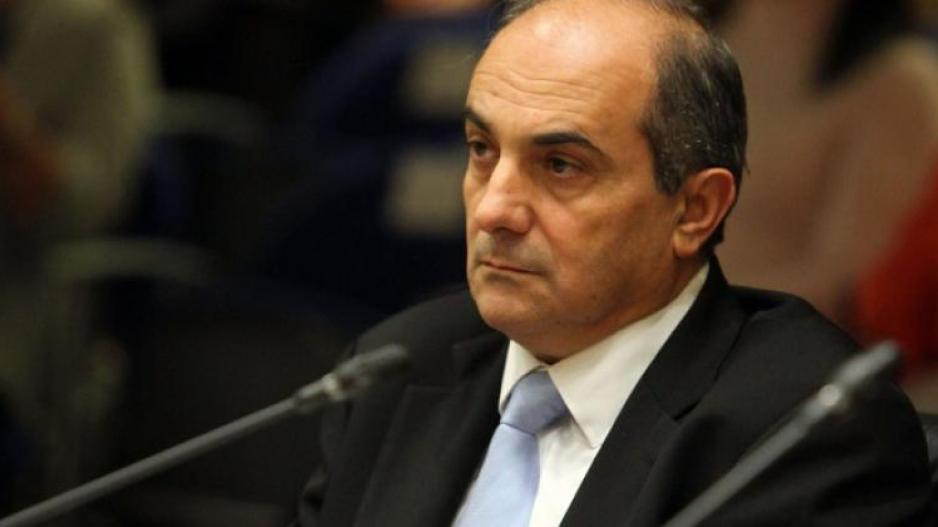
In a significant development in the golden passports trial, former parliament speaker Demetris Syllouris pleaded not guilty on Thursday before Nicosia’s Criminal Court. He is facing charges alongside Christakis Giovanis, who also insists he acted lawfully and without wrongdoing.
- This authorisation letter from March 2015 is pivotal as it supports Syllouris's claims regarding his official capacity and the legitimacy of his actions in the context of the golden passports scheme.
- This trial is poised to remain in the public eye, drawing attention to the broader implications of the golden passports scheme and its impact on Cyprus's international reputation.
Defendants’ Stance on Allegations
During the hearing, Syllouris expressed his commitment to addressing the accusations directly. He stated, “I declare categorically that I am innocent of all charges I face in this case, which has completely unjustly caused enormous problems for me and my family.” His unsworn statement underlined his belief that he did not violate the law in any capacity regarding the golden passports scheme.
Giovanis echoed Syllouris’s sentiments in his own unsworn statement, asserting that he had not committed any illegal acts. He explained that the documents he signed in the Nikolay Gornovsky case were either requested or drafted by lawyer Andreas Pittadjis, who represents both him and the Group. “I never thought or believed there was anything reprehensible, nor did I do anything reprehensible,” Giovanis stated.
Details of the Golden Passports Scheme
The golden passports scheme in question has garnered considerable attention, as it involves allegations of corruption surrounding the issuance of citizenship to foreign investors. The case has drawn scrutiny from both local and international media, particularly considering the high-profile nature of the defendants.
During the proceedings, Syllouris maintained that he closely followed the court’s testimony and reiterated his position that he did not engage in any actions that would satisfy the charges. His defence seeks to establish that the actions taken were part of legitimate parliamentary duties.
Testimony from Former Parliamentary Director
As the trial progressed, Sokratis Sokratous, the former Director General of Parliament, provided testimony on the official trips undertaken by Syllouris during his tenure as Speaker. Sokratous confirmed that an official visit to China took place in November 2019, led by Syllouris, where discussions on imports and exports were held.
According to Sokratous, the selection of Members of Parliament (MPs) for participation in such trips is made exclusively by their respective parties. He defended the necessity of these visits, emphasising their role within the framework of parliamentary diplomacy, which aims to promote Cyprus’s economic, cultural, and political interests abroad.
Insights into Parliamentary Diplomacy
Sokratous elaborated on the operations of parliamentary diplomacy, explaining that it allows Parliament to function autonomously when promoting the Republic’s interests. He highlighted the importance of attracting foreign investment, noting that parliamentary delegations are often accompanied by representatives from the Cyprus Investment Promotion Agency (CIPA).
The focus on economic relations with non-EU countries is a crucial aspect of this diplomatic effort. Sokratous clarified that the aim is not only to foster political ties but also to enhance economic prospects for Cyprus.
Submission of Evidence
During the hearing, the court agreed to admit a letter from the former President of Cyprus, which provided authorisation for Syllouris to attract investments to the country. Initially, the secretary of the former President was to appear in court to confirm the document, but her presence was deemed unnecessary after the prosecution consented to submit it as evidence.
This authorisation letter from March 2015 is pivotal as it supports Syllouris’s claims regarding his official capacity and the legitimacy of his actions in the context of the golden passports scheme.
Next Steps in the Trial
The proceedings are set to continue with further hearings scheduled. The next session is slated for 15 September at 10am, where witnesses called by Giovanis’s defence team will be examined. As the trial unfolds, both defendants are expected to maintain their positions of innocence, with their legal teams prepared to counter the allegations brought against them.
This trial is poised to remain in the public eye, drawing attention to the broader implications of the golden passports scheme and its impact on Cyprus’s international reputation.