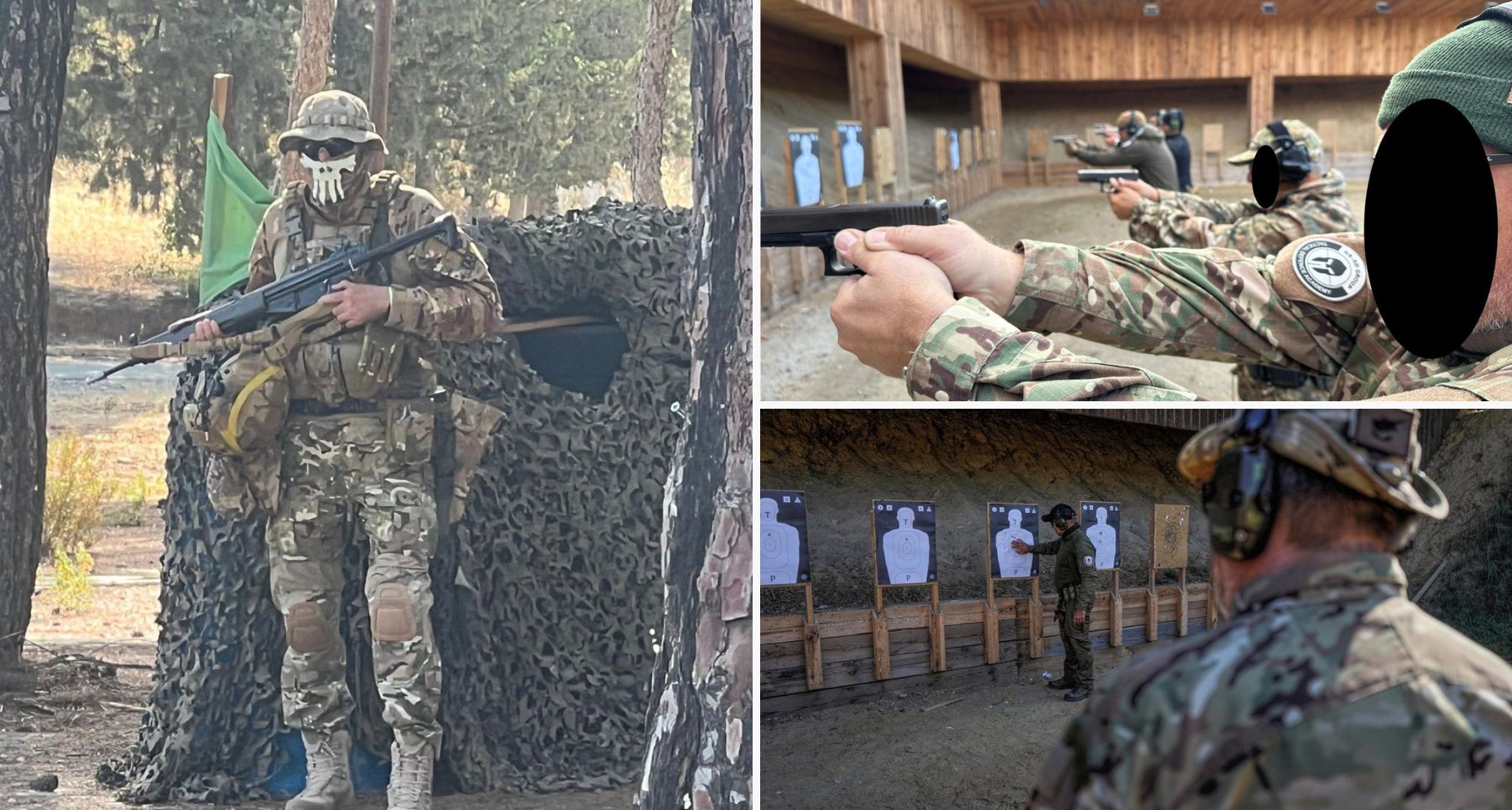
Hundreds of Cypriots are seeking private military training abroad due to a legal ban on such instruction within Cyprus. According to sources from Phileleftheros, a professional military instructor operating overseas has confirmed a significant rise in interest among citizens keen to develop their military skills.

Photo: in-cyprus.philenews.com
The demand for this specialised training has escalated as individuals express concerns about their ability to handle basic military techniques, such as properly holding a weapon or applying a tourniquet effectively in emergencies. This situation has led to the emergence of what some are calling a “secret army,” a group of individuals trained outside of Cyprus due to the country’s restrictive laws.

Photo: in-cyprus.philenews.com
Cypriot legislation, specifically Article 55 of Chapter 154 of the Criminal Code, prohibits private military or tactical training, classifying it as a felony with penalties of up to seven years in prison. Any military training involving weapons or tactical drills on Cypriot soil is strictly regulated and requires permission from the Council of Ministers. Notable exceptions exist, such as the Israeli Defence Forces (IDF), which have received annual authorisation to conduct exercises in the Paphos area.
Those seeking training have turned to well-known private military companies (PMCs) across Europe, including ESA in Poland, Alfa-Metal in Bulgaria, Anti Terror Academy, and Hard Task Training in the Czech Republic. The high cost of this training has not deterred many, as citizens prioritise acquiring essential skills.
In light of this growing demand, private instructors and companies are advocating for legislative reform to allow for regulated military training within Cyprus. They argue that with the proper legal framework, they could provide tailored instruction to civilians and National Guard personnel alike. One instructor stated, “We can offer training in portable weaponry, small-scale tactics, anti-drone jammer technology, and combat first aid, among other areas.” This suggests a broader push for collaboration between the National Guard and the private sector, which has been successfully implemented in various European Union member states.
As the reserve force is viewed as a crucial component of the National Guard’s operational strategies, there is increasing pressure on state officials to enhance the quality of training available to those who seek it. The current reserve system is often perceived more as an obligation rather than a valuable opportunity for effective instruction.
Adding to the narrative, many private trainers are already involved voluntarily in the Rapid Reaction Forces (RRFs) across Cyprus. Established through a Cabinet decision in 2021, these volunteer units are part of the National Guard’s plans to provide immediate responses during crises in populated areas before full mobilisation takes place. The volunteers leverage their professional military expertise to train other members, enhancing the overall capability of the National Guard.
Despite their dedication, RRF volunteers and their supporting instructors often bear the costs of their training initiatives personally, with limited institutional backing. Many believe that improved state support and resources, along with clear legal recognition of their efforts, could significantly bolster the National Guard’s deterrent capabilities and operational readiness.