Tag: technology

  • National Guard Introduces Locally Developed Anti-Drone Systems in Cyprus

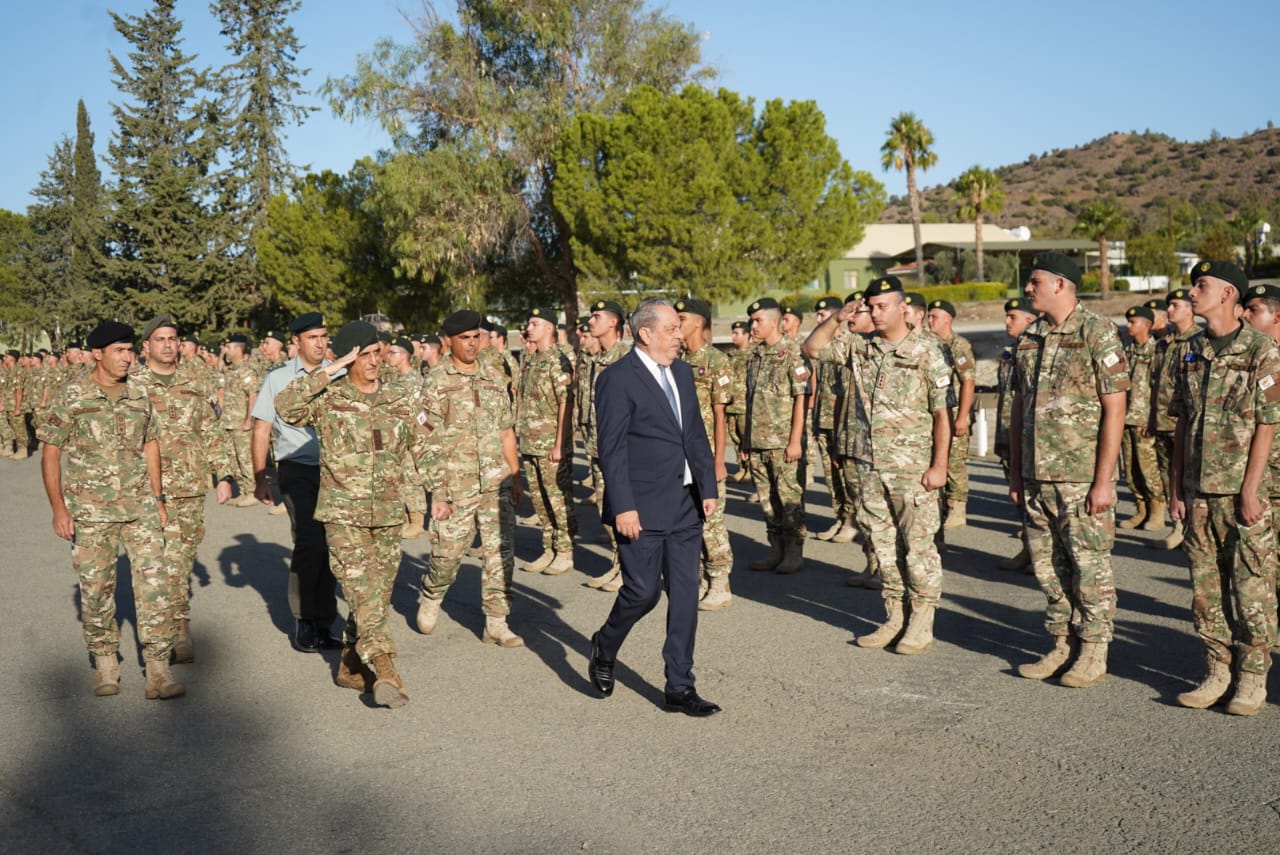
    anti-drone systems — The National Guard today unveiled two innovative, locally produced anti-drone systems, known as “THISEAS” and “Drone Eye,” during a presentation at the Stavros Stylianides Camp in Kornos, Larnaca. This unveiling marks a significant advancement in Cyprus’s defence capabilities, showcasing homegrown technology designed to enhance national security.

    Photo: in-cyprus.philenews.com

    • Importantly, the THISEAS system can simultaneously detect over 2,000 targets and has already been successfully tested by four different armies, with three countries having purchased it.

    Defence Minister Vasilis Palmas highlighted the importance of these developments, stating that the completion of the “ATHENA” action plan demonstrates how domestic scientific research, innovation, and technological growth can act as a force multiplier and deterrent power for the nation.

    Photo: in-cyprus.philenews.com

    Anti-drone systems: THISEAS: Enhancing Battlefield Awareness

    The THISEAS project took 28 months to develop and was a collaborative effort involving Cypriot companies Signal Generix and 8Bells, along with the CYENS and KIOS Centres of Excellence. With a budget of €530,000, of which €450,000 was funded by the Ministry of Defence (MoD), this integrated system provides crucial solutions for battlefield situation awareness.

    THISEAS excels in radio emission detection, target identification, and geo-location estimation, all aimed at supporting rapid decision-making in military operations. The system features a virtual reality combat visualisation component powered by advanced artificial intelligence (AI).

    Data from multiple sources—including cameras, radar, UAVs (drones), and sensors—streams into a central processor. AI algorithms, encompassing Computer Vision, Machine Learning, and Deep Learning, are employed to recognise and classify targets such as vehicles, people, and drones. This capability allows THISEAS to detect unusual activity and calculate trajectories, issuing automatic warnings for suspicious movements and effectively reducing reaction time.

    Importantly, the THISEAS system can simultaneously detect over 2,000 targets and has already been successfully tested by four different armies, with three countries having purchased it.

    Drone Eye: A Vehicle-Mounted Anti-Drone Solution

    The second system introduced, Drone Eye, is a robust vehicle-mounted anti-drone solution, fully developed within Cyprus. This project took 42 months and was created through collaboration between the Cypriot company Encorp, Frederick University, and the Open University of Cyprus. It shares a budget of €530,000 with THISEAS, receiving the same amount of MoD funding.

    Drone Eye focuses on the surveillance and neutralisation of small-range unmanned aerial vehicles. It employs a variety of sensors, including high-resolution and thermal cameras, radio frequency (RF) detectors, and radar, to continuously monitor and identify targets.

    AI algorithms play a pivotal role in analysing flight patterns, classifying targets, recognising unusual behaviours—such as drones approaching sensitive areas—and calculating probable trajectories. The system provides real-time alerts and prioritises incidents based on their risk level, integrating seamlessly into broader security and anti-air defence infrastructures.

    During the demonstration attended by Minister Palmas, members of the Parliamentary Defence Committee, and MoD Director General Erikos Elias, the capabilities of these systems were showcased for the first time to the public, reflecting Cyprus’s commitment to enhancing its defence industry through innovation.
  • Cyprus Defence Ministry to Finalise National Plan for EU Safe Funding

    Cyprus Defence Ministry to Finalise National Plan for EU Safe Funding

    eu safe — eu safe — The Cyprus defence ministry will convene the defence industry council in the coming days to finalise the national action plan for the European Union’s Safe financial instrument. Defence capability development and armament director Panayiotis Hadjipavlis confirmed the meeting’s details during an interview with the Cyprus News Agency (CNA).

    Eu safe: Extraordinary Meeting Scheduled

    Chaired by Defence Minister Vassilis Palmas, the council will hold an extraordinary meeting to assess the ministry’s progress and establish final recommendations. These recommendations are crucial for the plan’s submission to the European Commission, which is due by November 30.

    Preparations Underway Since June

    Hadjipavlis explained that the ministry has been diligently preparing the Safe investment plan since June, with the intention of incorporating Cypriot defence and technology companies wherever feasible. The council comprises various stakeholders, including the presidents of the Cyprus Chamber of Commerce and Industry (Keve), the Employers and Industrialists Federation (Oev), and the Cyprus Defence Industry Association.

    Strengthening International Cooperation

    The defence ministry is actively participating in and co-organising events with foreign partners to enhance collaboration between Cypriot and international defence companies. Upcoming activities will involve the UK Ministry of Defence, as well as the embassies of France and Poland, focusing on joint research, technology development, and procurement strategies.

    Recent European Defence Agency Visit

    A team from the European Defence Agency (EDA) visited Cyprus on October 23-24 to explore new opportunities for cooperation with EU member states. During this visit, the EDA’s executive director met with Minister Palmas. Hadjipavlis remarked that relations between Cyprus and the agency are “excellent,” highlighting Cyprus as one of the agency’s staunchest supporters within the EU framework.

    Innovative Defence Research Initiatives

    As part of ongoing research and innovation efforts, a demonstration showcasing two completed projects under the Athena defence research programme is scheduled for November 10 at a National Guard base. These projects include an anti-drone system and a situational awareness platform designed to assist battlefield decision-making. Furthermore, two new programmes, Athena 2 and Athena Plus, are being prepared for launch in 2026 to expand upon these initiatives.

    Growing Defence Sector Landscape

    Currently, around 30 Cypriot companies are engaged in the defence sector, with a rising interest from firms specialising in dual-use technologies. Hadjipavlis noted that several Cypriot companies have already joined European Defence Fund consortia, positioning Cyprus seventh in Europe for successful funding applications.

    Upcoming Defence Events and Collaborations

    Several significant defence events are on the horizon, including a conference focused on technological advancements in the sector, taking place on November 11-12, under the auspices of the defence ministry. Additionally, the ministry will participate in a joint event organised by Keve and the French Embassy, in collaboration with the deputy ministry of research, aimed at promoting modern technologies and dual-use products.

    Future Conferences and Initiatives

    In early 2025, a bilateral conference will be co-organised with the UK Ministry of Defence and the Cyprus High Commission in London, aimed at fostering partnerships between defence industry associations from both nations. Another event with the Polish Embassy in Nicosia will concentrate on cybersecurity and cyber defence collaboration.

    Comprehensive Development Toolkit in Progress

    The ministry is also engaged in discussions with European experts to develop a comprehensive toolkit for the Cypriot defence industry. This includes formulating a national defence industry strategy, a detailed action plan, and necessary updates to legislation and the national defence industry registry.

    Significant EU Funding Secured

    Cyprus has successfully secured €500,000 in EU funding to advance this development package following a competitive selection process. Hadjipavlis pointed out that Cyprus stands out as one of the few EU countries to receive such support, contrasting with many others that rely on national budgets for similar initiatives.

  • Cyprusays: The First App Dedicated to Learning Cypriot Greek

    Cyprusays: The First App Dedicated to Learning Cypriot Greek

    Cypriot greek: Revolutionising Language Learning

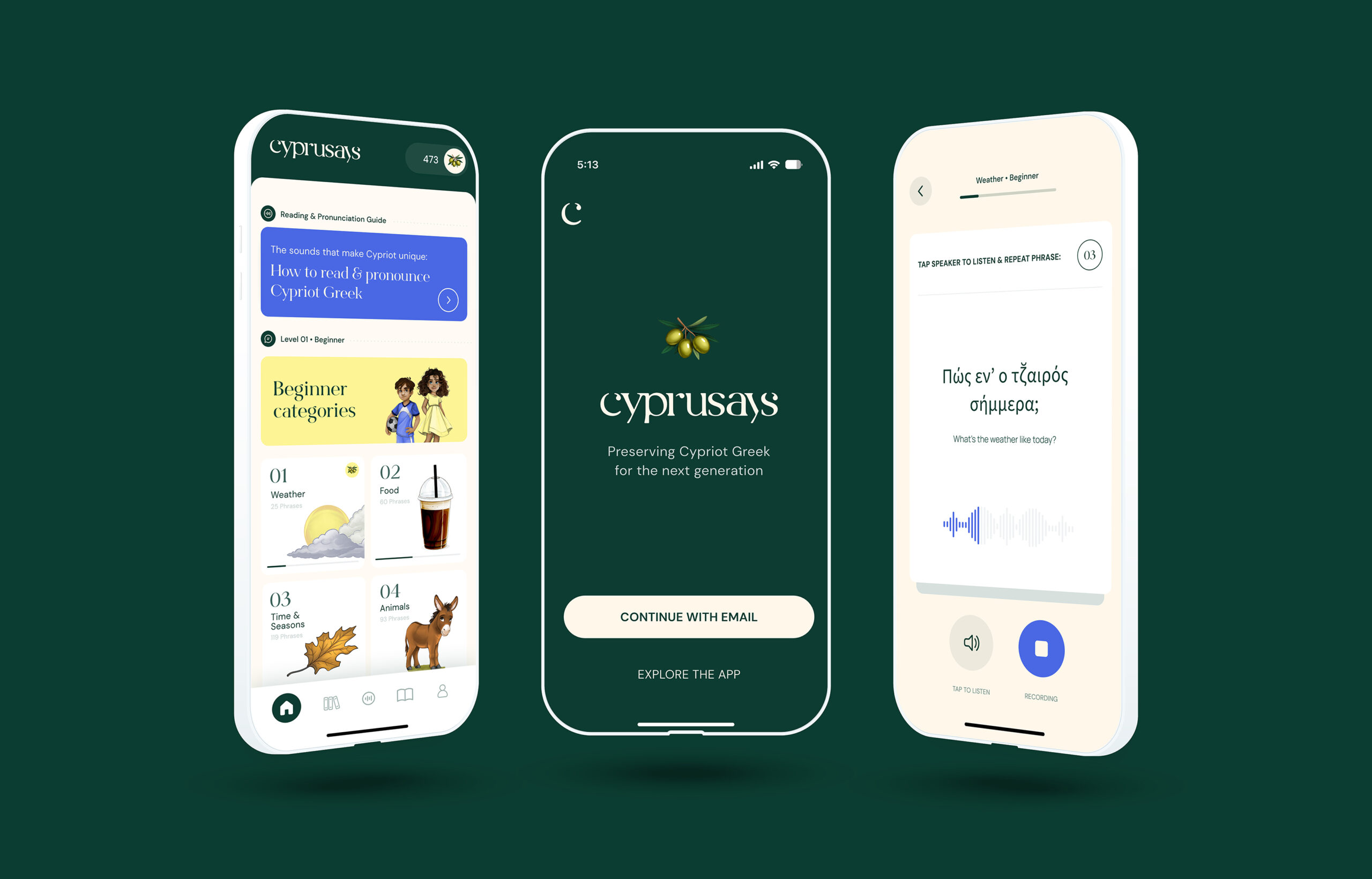
    The first mobile language app dedicated entirely to Cypriot Greek, Cyprusays, was launched on Thursday, providing a unique opportunity for users worldwide to learn and speak this distinctive Mediterranean dialect. This innovative app, founded in Sydney by Australian-born Greek Cypriot Iphigenia (Effie) Athanassiou and her husband Konstantinos (Costas) Athanassiou, aims to be more than just an educational tool; it seeks to celebrate and preserve the rich cultural heritage of the Cypriot community.

    A Personal Mission

    “Cyprusays is more than an app. It’s a tribute to our parents, grandparents and every Cypriot who wants to keep our language alive. It’s about helping the next generation feel proud to speak the way their families do – wherever in the world they call home,” said Effie Athanassiou, reflecting on the personal significance of the project.

    Targeting the Cypriot Diaspora

    Designed primarily for the Cypriot diaspora, the app preserves the dialect’s unique melody through native-speaker recordings. Users can engage with interactive lessons that are rich in idioms and everyday scenarios, fostering a deeper connection to the language. One of the standout features of Cyprusays is its pioneering reading and pronunciation guide for the Cypriot Greek alphabet, a resource that has been previously unavailable to learners.

    A Collaborative Effort

    The development of Cyprusays is the result of a global collaboration involving linguists and researchers from Cyprus, Australia, and the UK. Experts such as Spyros Armostis, Natalia Pavlou, Constantina Fotiou, and Chryso Hadjidemetriou have contributed their knowledge and expertise to ensure that the app meets the needs of learners at all levels.

    Innovative Technology for Language Preservation

    At the heart of the app is an advanced AI speech-recognition system, created by chief data and technology officer Hoang Nguyen. This technology analyses pronunciation with remarkable precision, having been trained on over 50 hours of diverse audio. It is the first technology designed specifically to capture the subtle nuances of Cypriot Greek, marking a significant milestone in the efforts for language preservation.

    Structured Learning Experience

    Cyprusays offers a structured learning experience with its listen-speak-learn lessons mapped to the internationally recognised Common European Framework of Reference for Languages. This structure supports learners at every stage, from curious beginners to advanced speakers looking to refine their skills. The app’s user-friendly interface and engaging content make it accessible to a wide audience.

    Addressing a Language Gap

    According to linguist Professor Spyros Armostis, the launch of Cyprusays addresses a significant gap in language education. “While teaching materials for standard modern Greek have long existed, there used to be no teaching material for Cypriot Greek – so there was no way to learn it,” he noted, highlighting the necessity of such a resource for preserving the dialect.

    Embracing Cultural Heritage

    The launch of Cyprusays is not just about language; it’s about embracing a cultural heritage that is rich and diverse. The app aims to foster a sense of pride among users, encouraging them to connect with their roots and share their language with others. This initiative has the potential to strengthen the bonds within the global Cypriot community, allowing individuals to maintain their linguistic identity no matter where they reside.

    Promoting Community Engagement

    In addition to serving as a learning platform, Cyprusays aims to engage the community through various initiatives. The developers plan to host online events and workshops where users can practice their language skills in real-world contexts, fostering a supportive environment for language learning. This community aspect is crucial for encouraging users to remain motivated and engaged with their learning journey.

    The Future of Cyprusays

    As Cyprusays grows, the team behind the app envisions expanding its features and content. Future updates may include more advanced lessons, cultural insights, and user-generated content, allowing learners to contribute their experiences and knowledge. This adaptability ensures that the app remains relevant and continues to meet the evolving needs of its users.

    A Milestone in Language Preservation

    The launch of Cyprusays represents a significant milestone in the preservation of Cypriot Greek. It stands as a beacon for future generations, illustrating the importance of maintaining linguistic diversity in a rapidly globalising world. By embracing technology and community engagement, Cyprusays is setting a precedent for similar initiatives aimed at preserving endangered languages.

    As users begin their journeys with Cyprusays, they are not only learning a language; they are joining a movement dedicated to preserving a vital part of Cypriot identity. The potential impact of this app could resonate far beyond its initial launch, inspiring similar efforts to promote and protect other lesser-known dialects and languages worldwide.

  • Geolocator — Geolocator Aids Arrest in Limassol Theft Case

    Geolocator — Geolocator Aids Arrest in Limassol Theft Case

    geolocator — A geolocator has played a crucial role in the arrest of a 45-year-old man for theft of building materials in Limassol. Police announced the arrest on Friday following a complaint from a construction company owner regarding the loss of materials valued at €2,850.

    The incident occurred at a residence undergoing renovation in the Kato Polemidia area. The construction company’s owner reported the materials missing, prompting a swift response from local authorities.

    What made this case particularly compelling was the use of a geolocation device that had been secretly attached to the stolen items. This technology tracked the whereabouts of the materials, leading police to their location in Limassol.

    Upon receiving the geolocation data, officers conducted a search and successfully recovered a substantial quantity of stolen building materials. Some of these items were still equipped with the geolocation device, providing vital evidence for the case.

    The arrested individual now faces charges of theft as well as illegal possession of property. Limassol police have confirmed that investigations are ongoing to ascertain the full extent of the theft and to determine whether additional individuals may be involved.