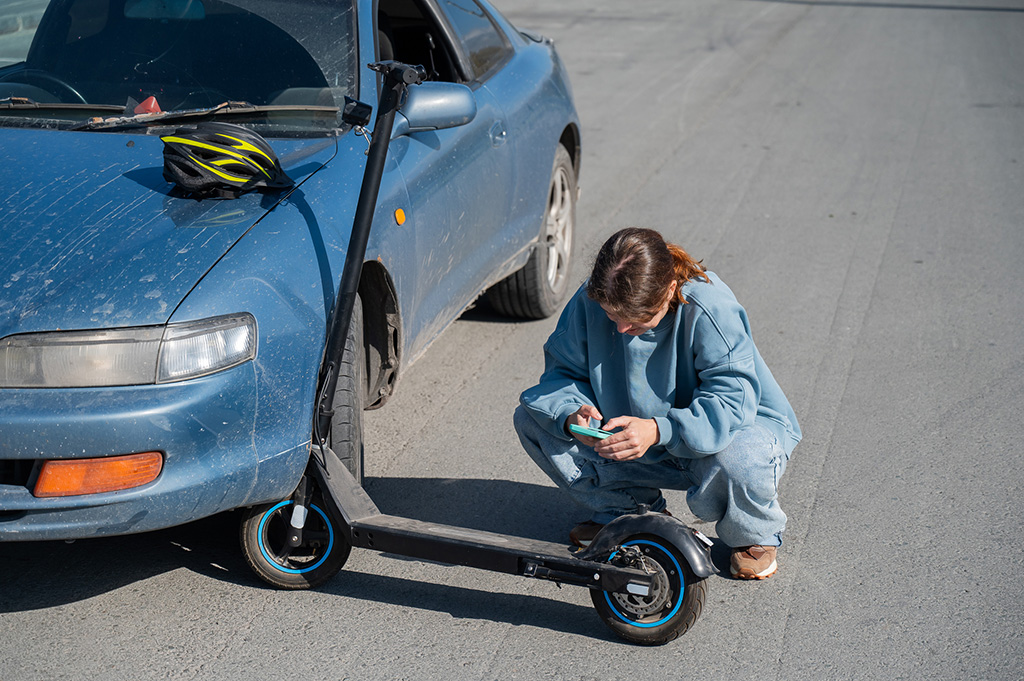
Car owners in Cyprus are increasingly out of pocket after collisions with electric scooters and other two-wheeled vehicles, as legal gaps hinder police intervention. Social media platforms have become a repository for videos and posts from frustrated drivers who have experienced damage to their vehicles due to these incidents.
Electric scooter: Frustration on the Roads
Numerous clips shared on TikTok and Instagram depict parked cars that have been clipped or scratched by electric scooters, often leaving owners to bear the financial burden of repairs. One viral video showed a BMW with a dent, reportedly incurring a repair bill of around €600 after a scooter collided with it in Limassol. Another case involved a Nicosia vehicle owner facing damages of €450 from a similar incident. These accounts highlight a growing issue that is affecting motorists across the island.
Police Clarify Their Limitations
In an interview with the Sunday Mail, police confirmed their limited capacity to handle collisions involving electric scooters, which are officially termed personal mobility devices (PMDs). The police stated, “Where there are serious traffic offences, serious injuries, or significant material damage, the police proceed to investigate a road collision involving a PMD or a bicycle. Otherwise, we cannot intervene.” This limitation leaves many victims without recourse.
Rising Incidents and Fines
From 2023 to 2024, authorities issued a staggering 3,996 fines related to PMD offences. Among these, 1,592 fines were for usage in prohibited areas, and 363 for operating outside designated lanes. The police underscored the risks faced by PMD users, noting that they are particularly vulnerable on roads where speed limits exceed 30 km/h.
Legislative Gaps Creating Vulnerability
The current legal framework governing electric scooters is still pending in parliament, leaving victims of accidents unprotected and without options for compensation. Green Party MP Stavros Papadouris emphasised the urgent need for reform: “Depending on the area, supervision can fall under either the police or the municipality. If the situation is not fixed, there’s a risk that the legislation itself will collapse.”
He pointed out the critical issue of a lack of registration and insurance for these vehicles. “These vehicles are not recorded anywhere and have no insurance coverage. We proposed a separate registry with identification plates and mandatory insurance so owners can be traced and costs covered,” he explained.
The Human Cost of Legal Gaps
Papadouris highlighted the severe consequences of the current legal shortcomings, citing a motorcyclist who spent three months in hospital after colliding with an uninsured e-scooter, losing his job as a result. “If the government wanted, it could step in voluntarily, recognising the legal gap. But there are no legislative tools for that,” he added.
Calls for Stricter Regulations
Disy MP Marinos Moushioutas stated that the House is considering stricter regulations to address these issues, noting, “They are not insured, so we cannot intervene when an accident happens. Because the necessary measures are not being taken by the police, local authorities, scooter importers, and rental companies, we proposed banning scooters as a pressure measure.” He indicated that similar measures have been successfully implemented in other European countries.
Municipal Challenges
Municipalities are also grappling with the enforcement of existing laws. Kyriakos Xydias, mayor of Amathus, expressed concerns about legislative delays. “The scooters are a matter of legislation that has been passed. They are allowed to circulate below a certain speed limit, but there is no insurance. We have made professional plans, properly and legally, but we are not ready yet,” he stated.
Awareness and Enforcement Gaps
Haris Christodoulou, an executive engineer at the transport ministry, acknowledged the enforcement gaps despite ongoing awareness campaigns. “We seek from all involved to take responsibility under the law and act within their powers. The absence of proper enforcement is the issue,” he said.
Proposed Solutions for Accountability
The police have suggested additional measures to improve accountability, such as retaining PMDs used in prohibited areas. “The bill should include provisions to ensure smooth implementation, including storage arrangements for retained PMDs,” they commented.
Currently, the lack of insurance coverage remains a significant barrier for victims seeking compensation. Papadouris reiterated the necessity for a comprehensive system that includes registration and insurance to protect all road users. “For the system to work, there needs to be a complete micromobility network connecting all areas without gaps,” he argued.
Urgent Need for Legislative Action
The human and financial costs associated with scooter collisions are mounting, with repair bills ranging from €300 to €750 per incident. High-traffic areas, such as university districts and promenades, are witnessing frequent collisions, prompting many drivers to alter their routes and parking strategies to avoid scooters.
As parliament continues to deliberate on e-scooter legislation, car owners remain uncertain about their responsibilities and liabilities. The situation underscores a broader issue of accountability in Cyprus’s burgeoning micromobility sector. With nearly 4,000 PMD-related fines issued in just two years and injuries already reported, the urgency for a coherent and enforceable law is evident.