Tag: Tufan Erhurman

  • Cyprus negotiations: Tufan Erhurman Outlines Four Key Stipulations for Cyprus Negotiation Resumption

    Cyprus negotiations: Tufan Erhurman Outlines Four Key Stipulations for Cyprus Negotiation Resumption

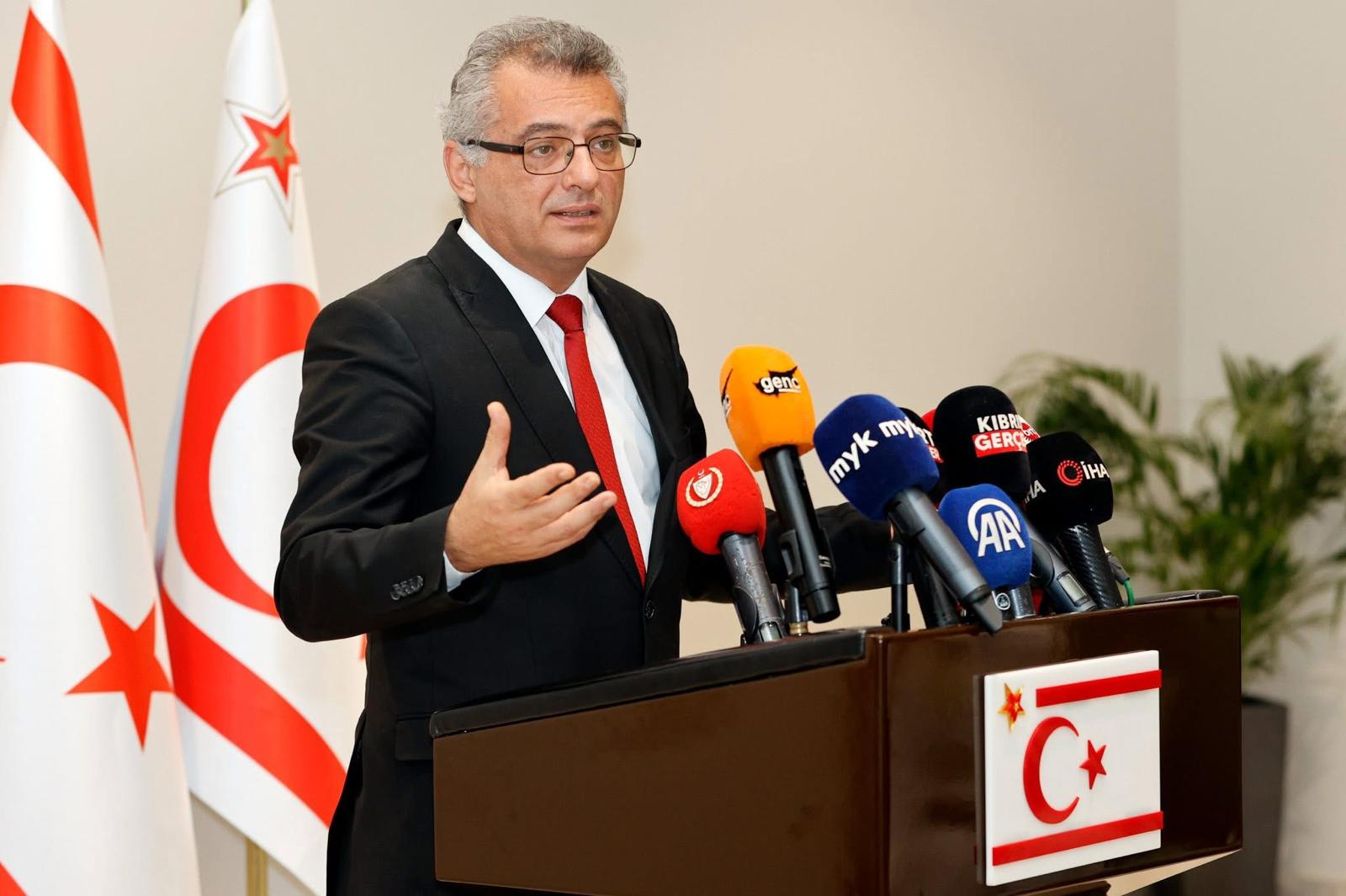
    cyprus negotiations — cyprus negotiations — Tufan Erhurman has outlined four key stipulations crucial for the resumption of negotiations on the Cyprus problem, ahead of United Nations envoy Maria Angela Holguin’s arrival on the island. The Turkish Cypriot leader expressed his views on Sunday, emphasising the need for these stipulations to pave the way for productive discussions.

    Cyprus negotiations: Erhurman’s Four Stipulations

    The four stipulations proposed by Erhurman, often labelled as “preconditions”—a term he finds unappealing—are as follows:

    • The Greek Cypriot side must accept political equality.
    • Negotiations should have a set time limit.
    • All past agreements must be preserved.
    • The UN must guarantee that any embargoes on Turkish Cypriots are lifted if the Greek Cypriot side withdraws from the negotiations.

    Political Equality as a Core Issue

    Erhurman reiterated that the acceptance of political equality is vital for achieving a lasting solution to the Cyprus issue. He stated, “My experience regarding the intractability of the Cyprus problem is very clear to me. Throughout my political life, I have seen, thought, and explained that the biggest obstacle to a solution is the Greek Cypriot leadership’s refusal to accept political equality.”

    He further explained that his insistence on political equality stems from a desire to avoid past disappointments in negotiations. “If negotiations begin, I do not want them to end in disappointment,” he added. “I want negotiations for the sake of a solution, not negotiations for the sake of negotiations.”

    Public Sentiment for a Solution

    Erhurman highlighted the widespread desire among Turkish Cypriots for a genuine resolution to the conflict. “A very large segment of my people wants a solution, and so do I,” he stated. He believes that any agreement lacking political equality would not be viewed as a legitimate solution by his constituents.

    He affirmed, “Nothing has changed in this regard, and nothing will change,” indicating a firm stance on the necessity of political equality in any future negotiations.

    Upcoming Meetings with UN Envoy

    Maria Angela Holguin is scheduled to meet with both Erhurman and Greek Cypriot President Nikos Christodoulides on Tuesday, followed by a trilateral meeting on Wednesday. Erhurman expressed hope that Holguin’s visit would “yield concrete results aimed at creating the atmosphere for a solution.”

    In preparation for these meetings, Erhurman has requested that technical-level work be expedited. “In line with our results-oriented approach, our request is that the technical-level work be accelerated before that meeting,” he said.

    Future Outlook for Negotiations

    Looking ahead, an enlarged meeting on the Cyprus problem is expected to be convened in the weeks following Holguin’s visit. This meeting will include representatives from the island’s two sides, the three guarantor powers—Greece, Turkey, and the United Kingdom—and the UN.

    Following a previous tripartite meeting, a joint statement was released, emphasising that “the real aim is the solution of the Cyprus problem with political equality as described by the United Nations Security Council resolutions.”

    This statement also included discussions on trust-building initiatives and new ideas aimed at fostering cooperation between the two communities.

    A Collaborative Effort

    Both sides have agreed to focus on achieving new agreements promptly, particularly regarding the opening of new crossing points, the halloumi issue, and the construction of pipelines from the Mia Milia water treatment plant. Christodoulides noted that the previous meeting had taken place in a “very good atmosphere,” suggesting a willingness to engage positively moving forward.

    As the negotiations approach, the emphasis remains on the need for political equality, a central tenet that Erhurman is keen to uphold. His firm stance reflects not only his political convictions but also the sentiments of many Turkish Cypriots who yearn for a meaningful resolution to the longstanding dispute.
  • Erhurman hahn: Tufan Erhurman Engages with EU Envoy Hahn Amid Controversy

    Erhurman hahn: Tufan Erhurman Engages with EU Envoy Hahn Amid Controversy

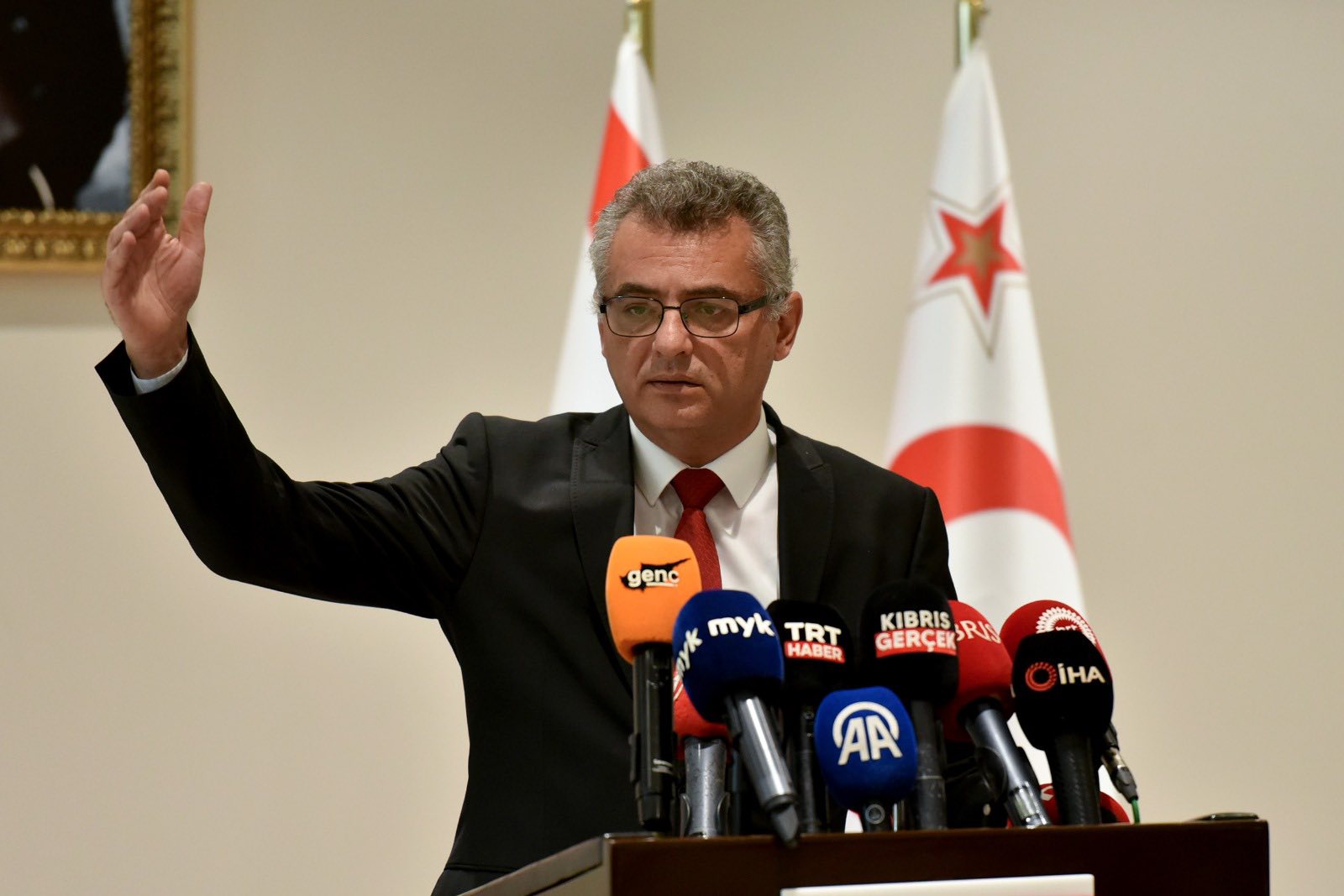
    erhurman hahn — erhurman hahn — The Turkish Cypriot leader Tufan Erhurman met this week with the European Union’s special representative for Cyprus, Johannes Hahn, sparking criticism from senior Turkish Cypriot officials who labelled the meeting a breach of protocol.

    Erhurman announced the meeting on social media on Wednesday evening, detailing discussions that revolved around EU-related issues pertinent to the island’s divided communities. Topics included the Schengen process, EU citizenship rights for children of mixed marriages, and direct contact with EU institutions.

    Erhurman hahn: Key Discussions on EU Matters

    During the meeting, Erhurman highlighted several significant matters, such as the ad hoc EU committee on alignment, rules regarding direct trade, the EU-supported GSI project, halloumi registration, and initiatives related to solar energy in the buffer zone. He accompanied his announcement with a photograph of the interaction with Hahn.

    Recent Joint Visits and Humanitarian Efforts

    This meeting followed a joint visit by Erhurman and the Greek Cypriot leader to the CMP anthropological laboratory, where they received updates on the organisation’s work concerning missing persons. Erhurman described supporting the laboratory as a duty and emphasised the importance of preventing the politicisation of its research. He expressed sympathy for families affected by the issue from both communities.

    Criticism from Turkish Cypriot Officials

    However, not all were supportive of the meeting. Turkish Cypriot Foreign Minister Tahsin Ertugruloglu publicly denounced the encounter, labelling it a mistake. He argued that Hahn’s role was appointed unilaterally by the European Commission, which he claimed only consulted with the Greek Cypriot leadership.

    Ertugruloglu contended that EU institutions have consistently favoured the Greek Cypriot side since the Republic of Cyprus’s accession to the EU in 2004. He reinforced that all Cyprus-related processes should occur under the oversight of the United Nations secretary-general, requiring consent from both sides for personal envoys and UN peacekeeping officials.

    Calls for Increased Cooperation and Equality

    The Foreign Minister further asserted that the Turkish Cypriot authorities view Hahn’s appointment as an internal EU issue and cannot recognise it in official negotiations. He cautioned that unilateral actions by the EU could jeopardise ongoing diplomatic efforts within the UN framework.

    Stressing the importance of cooperation based on sovereign equality, Ertugruloglu called for the EU to lift political, economic, and cultural restrictions on Turkish Cypriots. He argued that such steps would demonstrate a genuine commitment to the peace process on the island.

  • Christodoulides Urges Swift Action on Cyprus Meeting with Mitsotakis

    Christodoulides Urges Swift Action on Cyprus Meeting with Mitsotakis

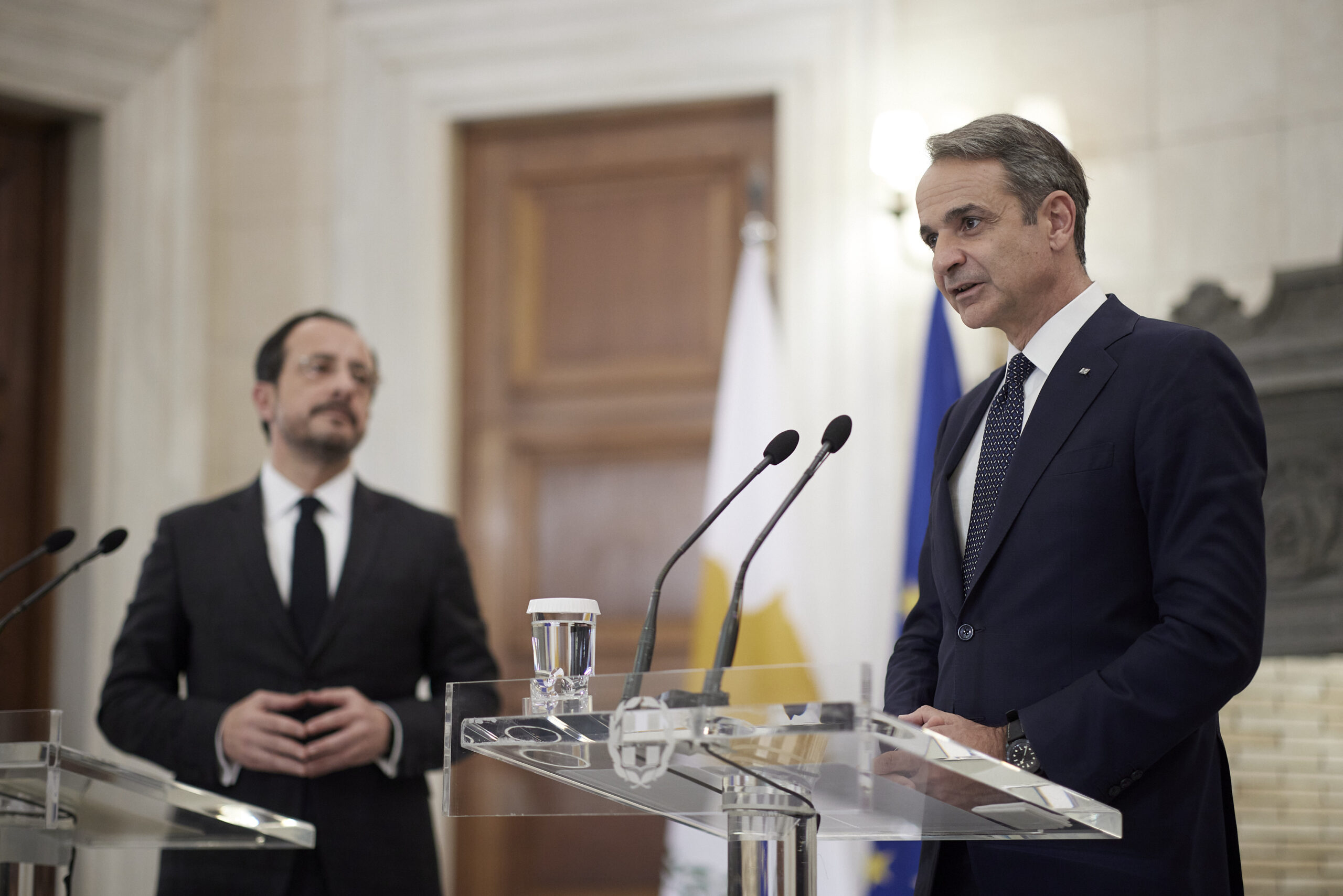
    cyprus meeting — cyprus meeting — President Nikos Christodoulides emphasised the need for an enlarged meeting regarding the Cyprus problem during a telephone conversation with Greek Prime Minister Kyriakos Mitsotakis on Thursday. This discussion followed Christodoulides’ meeting with European Union envoy Johannes Hahn and came just before a tripartite meeting with Turkish Cypriot leader Tufan Erhurman and United Nations envoy Maria Angela Holguin.

    As one of Cyprus’ guarantor powers, Greece plays a crucial role in these discussions, typically represented by Foreign Minister Giorgos Gerapetritis. The aim is to foster dialogue among the involved parties, including Turkey and the United Kingdom, to address the longstanding issues surrounding Cyprus.

    During the call, Christodoulides articulated that the purpose of the day’s meetings was to pave the way for the resumption of substantive negotiations, which had been interrupted in Crans-Montana, Switzerland. A government statement reiterated that Nicosia and Athens are in complete alignment, steadily progressing towards the unchanged objective of resolving the Cyprus problem.

    The resolution, according to the statement, should adhere to the resolutions of the UN Security Council, the principles and values of the EU, and the European acquis communautaire. This framework underscores the importance of a comprehensive approach to the complex geopolitical dynamics at play.

    Following his meeting with Hahn, Christodoulides highlighted the significant role the European Union can play in the process. He noted that the EU has both political and institutional tools capable of supporting the resumption and progress of negotiations. “The EU’s active involvement is not only a strategic choice for Cyprus but also a recognition that the solution to the Cyprus problem is a European issue that affects the cohesion, stability, and security of the entire union,” he stated.

    Prime Minister Mitsotakis had previously reiterated Greece’s commitment to reunifying the island, stating that the Greek government’s positions are clear. He asserted that it is now up to other parties to demonstrate their willingness to restart talks within a framework defined by UN resolutions and the broader relationship between the EU and Turkey.

    Gerapetritis remarked that the election of pro-reunification candidate Tufan Erhurman as Turkish Cypriot leader in October represents a new chapter filled with hope and expectations for the island’s reunification. The alignment of thoughts and actions among the involved parties could be pivotal in moving forward.

  • Expansionist neo-ottoman — Christodoulides Critiques Turkey’s Expansionist Neo-Ottoman Policy on Cyprus

    expansionist neo-ottoman — President Nikos Christodoulides has strongly condemned Turkey’s expansionist neo-Ottoman policy regarding Cyprus. Speaking at a conference focused on Hellenic culture, he highlighted that Cyprus continues to suffer from the lasting impacts of what he termed ‘selfish approaches’ and ‘foolish policies’ that have perpetuated the island’s division.

    Expansionist neo-ottoman: A Call for Assertive Realism

    In his address, Christodoulides advocated for ‘assertive realism’ as a strategic approach to address the ongoing Cyprus issue. He stated, “Assertive realism is the cornerstone of the efforts we have been making for the past two and a half years for liberation and for the resolution of the Cyprus problem, in a difficult geopolitical environment.” This approach aims to navigate the complexities surrounding Cyprus and foster a more constructive dialogue between the involved parties.

    Upcoming Diplomatic Engagements

    Christodoulides’ ‘assertive realism’ will soon face a critical test in December. United Nations envoy Maria Angela Holguin is scheduled to visit Cyprus to engage with both Christodoulides and Turkish Cypriot leader Tufan Erhurman. The objective of these meetings is to prepare for an enlarged gathering focused on the Cyprus problem, which will include representatives from Cyprus, its three guarantor powers—Greece, Turkey, and the United Kingdom—and the UN. This significant meeting is tentatively slated for January in New York.

    Delay in Meetings and Strategic Relations

    Initially, the enlarged meeting was expected to occur this month. However, Erhurman opted to postpone his initial meeting with Holguin from early November to December 5. Reports suggest that Erhurman made this decision to strengthen ties with the Turkish government prior to the commencement of substantive discussions regarding Cyprus. He is set to visit Ankara shortly for a meeting with President Recep Tayyip Erdogan.

    Election Outcomes and Negotiation Dynamics

    Erhurman, who recently secured an unprecedented electoral victory, is in favour of returning to negotiations aimed at achieving a federal solution to the Cyprus issue, a model that aligns with Christodoulides’ perspective. However, the Turkish government has exhibited scepticism towards this approach. Erdogan has consistently reiterated his preference for a two-state solution, despite earlier indications of a willingness to engage in negotiations following Erhurman’s election.

    Statements from Turkish Leadership

    In a statement made on Monday, Erdogan reiterated his demand for a two-state solution, which complicates the prospects for a unified negotiation framework. Yet, he also acknowledged the significance of the Turkish Cypriots’ electoral choice, asserting, “The Turkish Cypriots’ will is highly respected by us.” This duality in Erdogan’s stance reflects the challenging dynamics at play in the ongoing negotiations.

    Continued Tensions and Future Prospects

    The Cyprus issue remains a contentious topic, with historical grievances and political complexities hindering progress. As the December meetings approach, there is cautious optimism regarding the potential for dialogue, although significant obstacles remain. The contrasting positions of the Cypriot leadership and the Turkish government underscore the intricate nature of the discussions ahead.

    Looking Ahead

    As December approaches, all eyes will be on the meetings between Holguin, Christodoulides, and Erhurman. The outcomes of these discussions may shape the future trajectory of Cyprus and the broader geopolitical landscape in the region. With Christodoulides advocating for assertive realism, the hope is that a pathway towards resolution can be forged amidst the complexities of Turkish Cypriot relations and the historical context of the island’s division.