Tag: Turkey

  • Cyprus — Kombos Urges Turkey to Seize Opportunity in Cyprus Relations

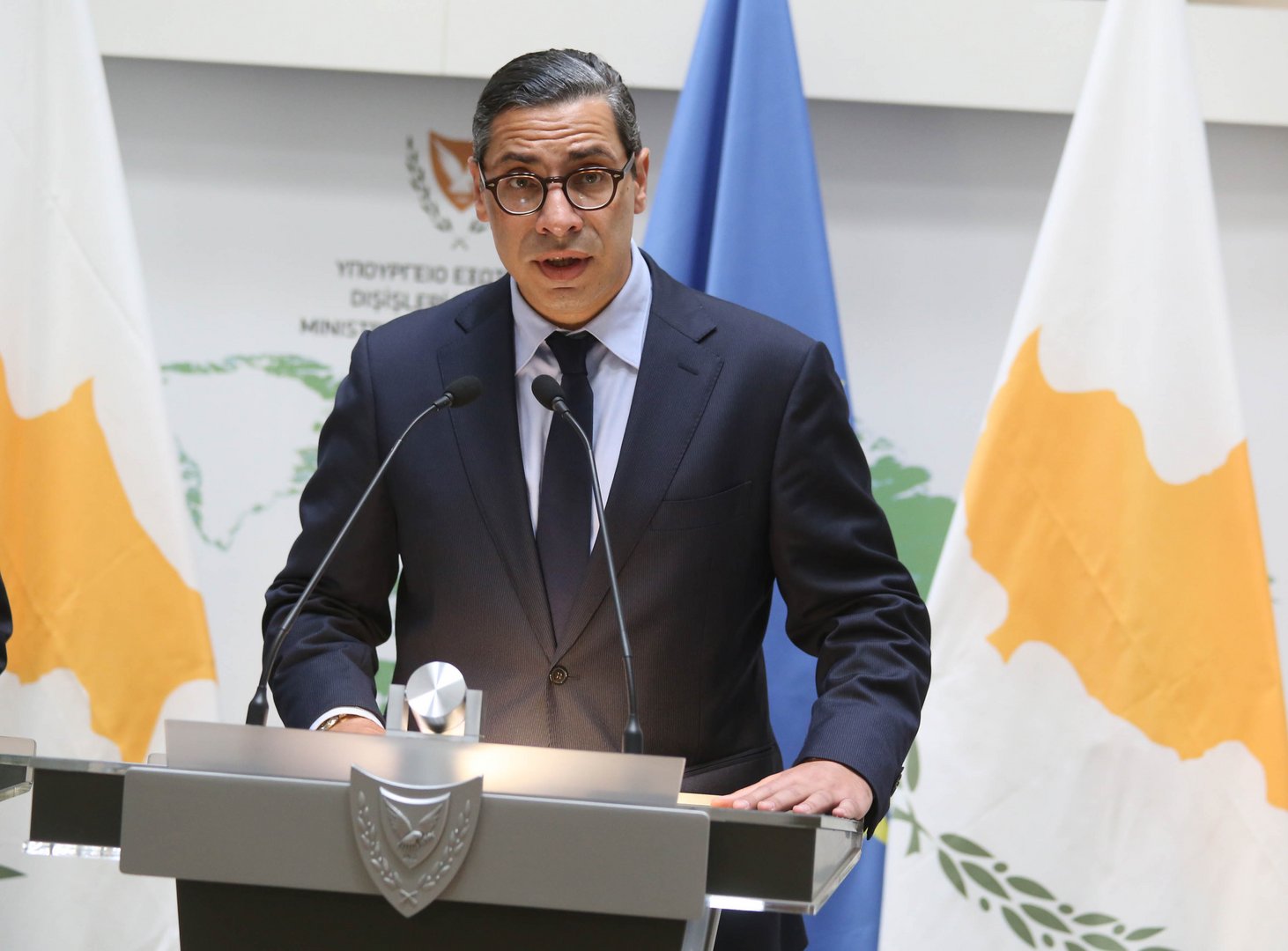
    Foreign Minister Constantinos Kombos has called on Turkey to seize the opportunity regarding Cyprus and its evolving relationship with the European Union. In a recent interview with the newspaper Phileleftheros, Kombos addressed the potential invitation for Turkish Foreign Minister Hakan Fidan to an informal meeting of European foreign ministers in Limassol, scheduled for later this year.

    Kombos emphasised that Turkey is not excluded from the Republic of Cyprus, urging the nation to choose collaboration over self-exclusion. He referenced President Nikos Christodoulides’ proposal to invite Turkish President Recep Tayyip Erdogan to meet with EU member states and neighbouring countries in Cyprus in April. “Turkey is not excluded from the Republic of Cyprus, but Turkey must choose whether to insist on its own self-exclusion,” he stated. “We seek for Turkey to seize the opportunity, in connection with its Cyprus-related obligations.”

    Fidan had previously suggested that Cyprus’ six-month presidency of the Council of the European Union, which commenced last Thursday, could serve as a pivotal moment for Turkey. He lamented ongoing challenges posed by the Greek Cypriot administration, claiming they obstruct Turkey on the international stage. Despite these obstacles, he expressed hope for a softening of this stance in the near future. “They obstruct us whenever they get the chance. However, I think that in the face of the current threats which Europe is facing, cooperation and relations between the European Union and Turkey have become more meaningful than ever,” Fidan remarked.

    Fidan raised concerns about a potential Mediterranean agreement that would exclude Turkey, characterising such a proposal as “illegitimate” from their perspective. He claimed that the EU has historically acquiesced to what he described as the arrogance of the Greek Cypriot administration, which he believes threatens the EU’s security architecture.

    Meanwhile, Christodoulides’ overtures towards Erdogan have stirred controversy. Turkish Cypriot leader Tufan Erhurman responded critically to comments made by Christodoulides in an interview with French newspaper Le Figaro, where the Cypriot President stated his willingness to engage with Erdogan to discuss the Cyprus issue and work towards a negotiated settlement. Erhurman accused Christodoulides of disregarding the Turkish Cypriot community, asserting that their presence is crucial in any negotiations facilitated under the United Nations. “The Turkish Cypriot people exist. They are one of the two equal founding partners on the island, and we will not tolerate them being ignored or treated as if they do not exist through statements or agreements,” he said.
  • Turkey sanctions: Cyprus President Presents Evidence of Turkey’s Sanctions Violations to EU

    Turkey sanctions: Cyprus President Presents Evidence of Turkey’s Sanctions Violations to EU

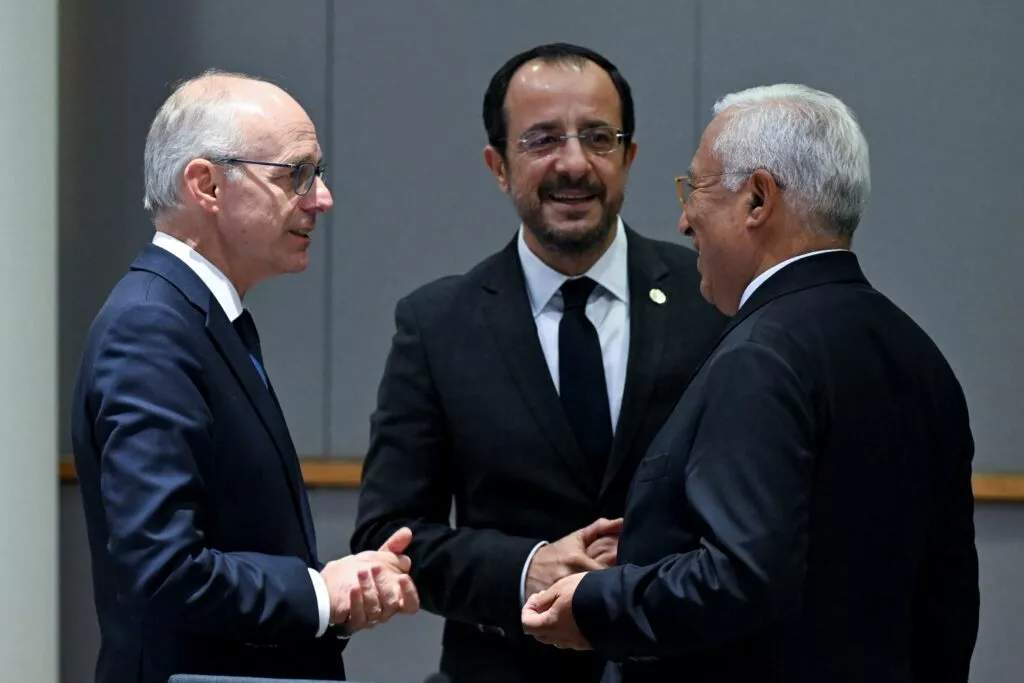
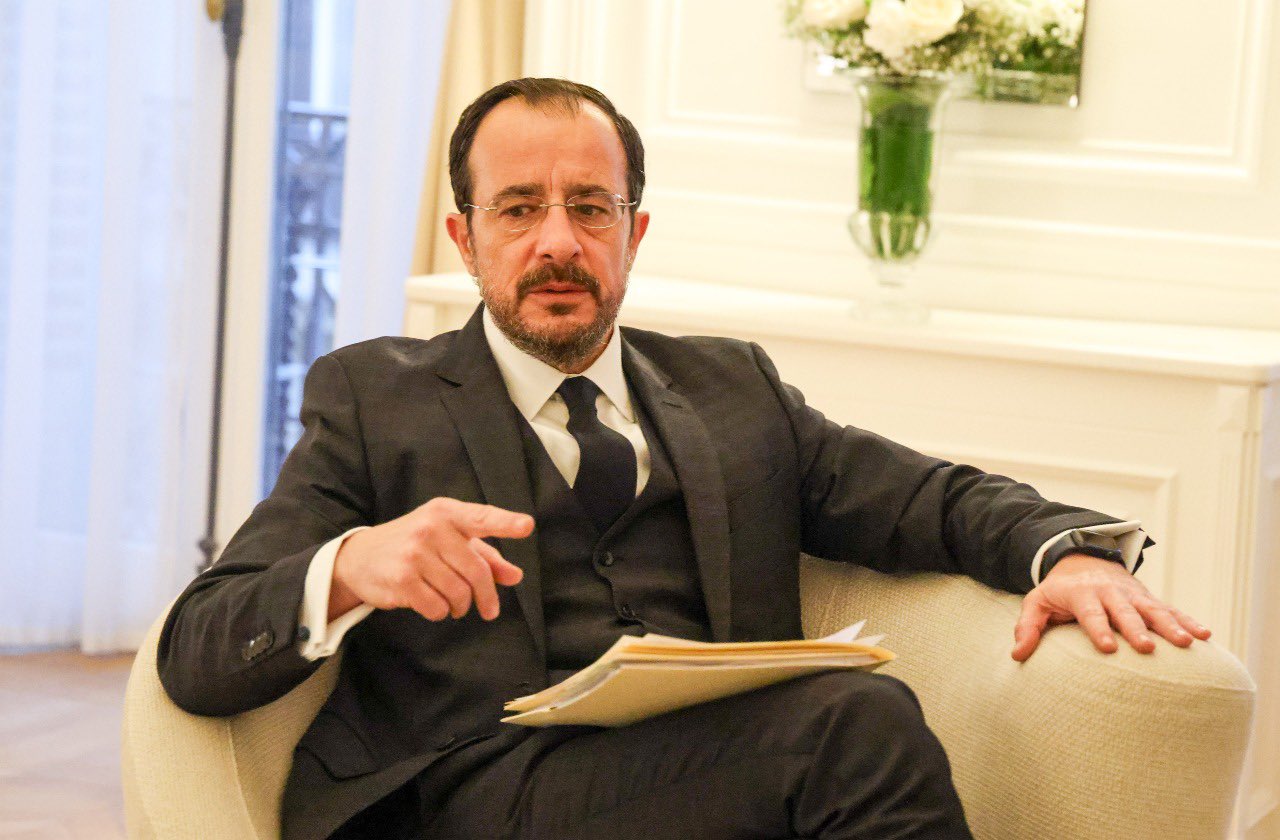
    turkey sanctions — turkey sanctions — Cyprus President Nikos Christodoulides will present evidence of Turkey’s involvement in violations of sanctions against Russia during Thursday’s European Council session. This meeting is pivotal as it is the last before Cyprus takes over the EU Presidency on 1 January.

    Turkey sanctions: Focus on Supporting Ukraine

    Christodoulides intends to share specific data with other EU leaders that indicates breaches of European sanctions by Turkey. This follows a similar presentation made during his recent visit to Ukraine, where he met with President Volodymyr Zelensky.

    Upcoming Discussions on Financial Support

    One of the key topics at the Council will be Ukraine’s financial support for the 2026-27 period. Leaders aim to reach a consensus among the 27 member states, although Hungary has expressed reservations about the idea of common borrowing. The agenda includes discussions on utilising frozen Russian Central Bank assets to facilitate a compensation loan.

    Sanctions and Strategic Objectives

    The renewal of sanctions against Russia will ensure that Russian assets remain frozen until compensation is arranged for Ukraine. This strategy aims to alleviate the financial burden on EU member states while maintaining pressure on Russia to cease its military actions.

    Political Dynamics and Enlargement Discussions

    The upcoming session is also expected to address the EU’s enlargement, particularly concerning the Western Balkans, Ukraine, Moldova, and Turkey. Cyprus is keen on sending strong messages regarding its ongoing issues, especially with Turkey, and is committed to collaborating with the UN to support resolution efforts.

    Addressing Geo-Economic Challenges

    Christodoulides’ agenda will also touch upon the EU’s economic resilience in light of pressures from global powers like China and the United States. The discussions will focus on reducing dependence on external entities while enhancing the EU’s competitiveness and strategic autonomy.

    Multiannual Financial Framework Negotiations

    Another critical topic will be the draft of the Negotiating Box for the Multiannual Financial Framework (MFF) for 2028-2034. Member states aim for a political agreement by the end of 2026, as the MFF represents a significant priority for the upcoming Cyprus Presidency. The discussions will address various funding allocations, including support for Ukraine and the role of the Common Agricultural Policy.

    Diverging Views Among Member States

    Significant differences remain among member states regarding budget architecture and prioritisation. The proposed new MFF, amounting to €2 trillion, aims to redefine how the EU supports its initiatives, particularly with regards to security and economic stability.

  • Cyprus President Advocates for Nato Membership as Natural Progression

    Cyprus President Advocates for Nato Membership as Natural Progression

    Joining Nato would be a natural development for Cyprus, according to President Nikos Christodoulides. In an interview with French newspaper Le Figaro, he expressed strong aspirations for the island’s accession to the military alliance.

    Christodoulides stated, “If it were possible for Cyprus to apply tomorrow and receive a positive response from all member states, we would do so.” However, he acknowledged the significant hurdle posed by the unresolved Cyprus problem, which he believes would lead Turkey to veto any application.

    In light of this, the President revealed that efforts are underway to enhance Cyprus’s military capabilities to align more closely with those of existing Nato members. He noted, “For this reason, we are working methodically to strengthen our military to bring it up to the level of other Nato members, while we wait for the political conditions to be met for us to join the organisation.”

    Christodoulides highlighted that Cyprus has already established a clear foreign policy, significantly leaning towards the West. The notion of joining Nato gained traction following his meeting with former US President Joe Biden at the White House last year. Reports indicated that during this meeting, Christodoulides presented a plan for Cyprus’s future accession to Nato.

    Post-meeting, he reiterated that Cyprus was preparing for Nato membership, contingent on Turkey retracting its objections. However, these aspirations were met with resistance from Turkey, whose defence ministry declared that Cypriot membership in Nato would be “unacceptable” and could disrupt the fragile balance regarding the Cyprus issue.

    Shifting focus away from the potential for Nato membership, Cyprus has been actively reorienting its defence strategy towards the West. At the beginning of the year, the United States granted the island permission to procure military hardware directly from its government, marking a significant step in its defence policy.

    Cyprus was integrated into several US defence programmes, including the Foreign Military Sales (FMS) programme, the Excess Defence Articles (EDA) programme, and is set to receive resources under the US’s Title 10 security assistance provisions. These initiatives are designed to bolster Cyprus’s military infrastructure and capabilities.

    In the autumn, the National Guard received the Israeli Barak MX air defence system, a sophisticated surface-to-air missile capable of defending against a wide range of airborne threats. This acquisition further solidifies Cyprus’s position within the US defence ecosystem and reflects its commitment to enhancing its military readiness.

  • Air space — Cyprus Highlights 328 Turkish Air Space Violations to UN Security Council

    Air space — Cyprus Highlights 328 Turkish Air Space Violations to UN Security Council

    Cyprus has reported extensive Turkish air space violations to the UN Security Council, detailing 328 air incursions and 16 naval breaches during July and August 2025.

    • Cyprus has reported extensive Turkish air space violations to the UN Security Council, detailing 328 air incursions and 16 naval breaches during July and August 2025.

    A letter from Cyprus’s Permanent Mission was circulated among council members on 8 December, revealing that among the air violations, 93 involved Turkish unmanned military aircraft, while 56 were executed by armed military fighter jets. These actions have been described by Nicosia as a clear violation of its sovereignty, independence, and territorial integrity.

    The violations extended beyond mere incursions. Cyprus asserted that Turkish forces breached its national airspace, the Nicosia Flight Information Region (FIR), and territorial waters. Furthermore, allegations were made regarding the illegal use of closed ports and airports by Turkish military units.

    Concerns were also raised over nearly daily entries into the designated dead zone and the bolstering of military infrastructure in occupied territories. Such practices have been characterised as part of Turkey’s persistent aggressive behaviour, aimed at establishing new faits accomplis that threaten the security of all Cypriots.

    In its communication to the UN, Cyprus emphasised that these developments undermine efforts to resume negotiations for a peaceful resolution. Despite these challenges, Cyprus reiterated its commitment to working closely with the Secretary-General and his Personal Envoy to foster the necessary conditions for dialogue. The letter reaffirmed a desire for a bicommunal, bizonal federation with political equality, in line with United Nations resolutions.

    The Cypriot mission has requested that the letter and accompanying documents be officially recorded as part of the 80th Session of the General Assembly under the Cyprus question and the Security Council agenda.

  • Christodoulides Urges Swift Action on Cyprus Meeting with Mitsotakis

    Christodoulides Urges Swift Action on Cyprus Meeting with Mitsotakis

    cyprus meeting — cyprus meeting — President Nikos Christodoulides emphasised the need for an enlarged meeting regarding the Cyprus problem during a telephone conversation with Greek Prime Minister Kyriakos Mitsotakis on Thursday. This discussion followed Christodoulides’ meeting with European Union envoy Johannes Hahn and came just before a tripartite meeting with Turkish Cypriot leader Tufan Erhurman and United Nations envoy Maria Angela Holguin.

    As one of Cyprus’ guarantor powers, Greece plays a crucial role in these discussions, typically represented by Foreign Minister Giorgos Gerapetritis. The aim is to foster dialogue among the involved parties, including Turkey and the United Kingdom, to address the longstanding issues surrounding Cyprus.

    During the call, Christodoulides articulated that the purpose of the day’s meetings was to pave the way for the resumption of substantive negotiations, which had been interrupted in Crans-Montana, Switzerland. A government statement reiterated that Nicosia and Athens are in complete alignment, steadily progressing towards the unchanged objective of resolving the Cyprus problem.

    The resolution, according to the statement, should adhere to the resolutions of the UN Security Council, the principles and values of the EU, and the European acquis communautaire. This framework underscores the importance of a comprehensive approach to the complex geopolitical dynamics at play.

    Following his meeting with Hahn, Christodoulides highlighted the significant role the European Union can play in the process. He noted that the EU has both political and institutional tools capable of supporting the resumption and progress of negotiations. “The EU’s active involvement is not only a strategic choice for Cyprus but also a recognition that the solution to the Cyprus problem is a European issue that affects the cohesion, stability, and security of the entire union,” he stated.

    Prime Minister Mitsotakis had previously reiterated Greece’s commitment to reunifying the island, stating that the Greek government’s positions are clear. He asserted that it is now up to other parties to demonstrate their willingness to restart talks within a framework defined by UN resolutions and the broader relationship between the EU and Turkey.

    Gerapetritis remarked that the election of pro-reunification candidate Tufan Erhurman as Turkish Cypriot leader in October represents a new chapter filled with hope and expectations for the island’s reunification. The alignment of thoughts and actions among the involved parties could be pivotal in moving forward.

  • Cyprus Airspace Breached by Turkish F-16 Fighter Jets

    Cyprus Airspace Breached by Turkish F-16 Fighter Jets

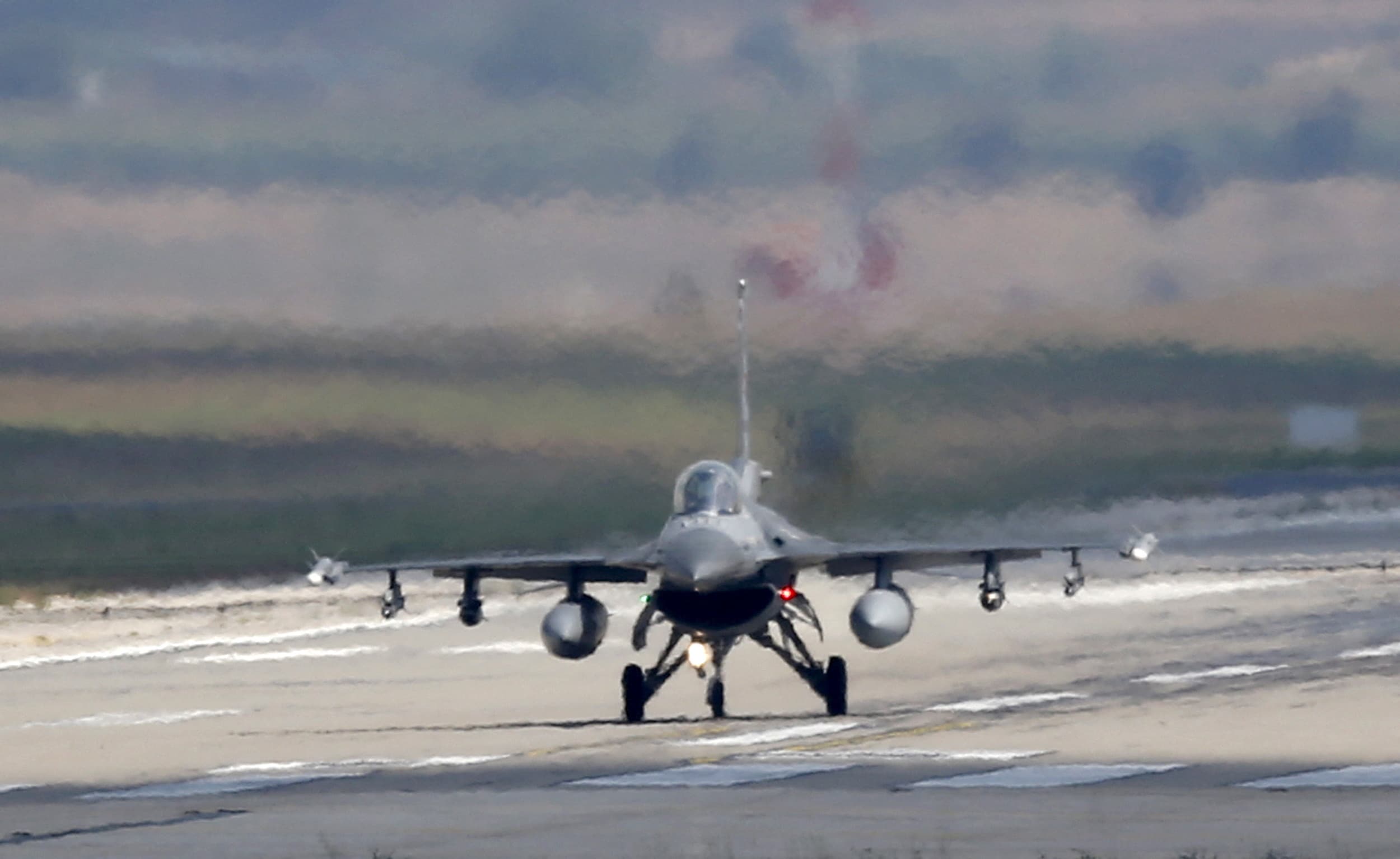
    cyprus airspace — The violation of Cyprus airspace by Turkish F-16 fighter jets has raised significant concerns regarding regional tensions. On Saturday, four Turkish aircraft entered the airspace of the Republic of Cyprus while participating in celebrations marking the anniversary of the illegal unilateral declaration of the breakaway regime in northern Cyprus.

    According to sources, two of the F-16s also reportedly flew over a small section of the UN-controlled buffer zone, heightening the situation’s sensitivity. The National Guard General Staff responded promptly, taking all necessary steps to address the incursion.

    In a statement to the Cyprus News Agency (CNA), the National Guard confirmed that representations were made concerning the incident. This action underlines the ongoing military and political tensions between Cyprus and Turkey, particularly in light of historical grievances and territorial disputes.

    The Turkish aircraft’s actions were seen as provocative, particularly given the timing of the flights coinciding with a day of significance for the breakaway regime, which is only recognised by Turkey. The incident exemplifies the fragile nature of peace in the Eastern Mediterranean and the complexities of airspace sovereignty in the region.

    Cyprus airspace: Military and Diplomatic Reactions

    The National Guard’s immediate response reflects a broader strategy to ensure the security of Cypriot airspace. Military officials are closely monitoring the situation, with the potential for further diplomatic engagements to address such violations in the future.

    Local authorities and international observers have expressed concern over the implications of increased military activity in the area. With Cyprus caught between its historical ties to Greece and the ongoing tensions with Turkey, such incidents could escalate if not addressed swiftly and effectively.

    Implications for Regional Stability

    This airspace violation serves as a reminder of the precarious balance of power in the Eastern Mediterranean. Analysts suggest that continuous military provocations could undermine efforts for dialogue and peaceful resolution of ongoing conflicts.

    The UN has previously called for restraint from both sides, advocating for diplomatic solutions to long-standing disputes. The recent actions by Turkish F-16s might complicate these efforts, as they signal a willingness to assert military presence in contested areas.

  • Expansionist neo-ottoman — Christodoulides Critiques Turkey’s Expansionist Neo-Ottoman Policy on Cyprus

    expansionist neo-ottoman — President Nikos Christodoulides has strongly condemned Turkey’s expansionist neo-Ottoman policy regarding Cyprus. Speaking at a conference focused on Hellenic culture, he highlighted that Cyprus continues to suffer from the lasting impacts of what he termed ‘selfish approaches’ and ‘foolish policies’ that have perpetuated the island’s division.

    Expansionist neo-ottoman: A Call for Assertive Realism

    In his address, Christodoulides advocated for ‘assertive realism’ as a strategic approach to address the ongoing Cyprus issue. He stated, “Assertive realism is the cornerstone of the efforts we have been making for the past two and a half years for liberation and for the resolution of the Cyprus problem, in a difficult geopolitical environment.” This approach aims to navigate the complexities surrounding Cyprus and foster a more constructive dialogue between the involved parties.

    Upcoming Diplomatic Engagements

    Christodoulides’ ‘assertive realism’ will soon face a critical test in December. United Nations envoy Maria Angela Holguin is scheduled to visit Cyprus to engage with both Christodoulides and Turkish Cypriot leader Tufan Erhurman. The objective of these meetings is to prepare for an enlarged gathering focused on the Cyprus problem, which will include representatives from Cyprus, its three guarantor powers—Greece, Turkey, and the United Kingdom—and the UN. This significant meeting is tentatively slated for January in New York.

    Delay in Meetings and Strategic Relations

    Initially, the enlarged meeting was expected to occur this month. However, Erhurman opted to postpone his initial meeting with Holguin from early November to December 5. Reports suggest that Erhurman made this decision to strengthen ties with the Turkish government prior to the commencement of substantive discussions regarding Cyprus. He is set to visit Ankara shortly for a meeting with President Recep Tayyip Erdogan.

    Election Outcomes and Negotiation Dynamics

    Erhurman, who recently secured an unprecedented electoral victory, is in favour of returning to negotiations aimed at achieving a federal solution to the Cyprus issue, a model that aligns with Christodoulides’ perspective. However, the Turkish government has exhibited scepticism towards this approach. Erdogan has consistently reiterated his preference for a two-state solution, despite earlier indications of a willingness to engage in negotiations following Erhurman’s election.

    Statements from Turkish Leadership

    In a statement made on Monday, Erdogan reiterated his demand for a two-state solution, which complicates the prospects for a unified negotiation framework. Yet, he also acknowledged the significance of the Turkish Cypriots’ electoral choice, asserting, “The Turkish Cypriots’ will is highly respected by us.” This duality in Erdogan’s stance reflects the challenging dynamics at play in the ongoing negotiations.

    Continued Tensions and Future Prospects

    The Cyprus issue remains a contentious topic, with historical grievances and political complexities hindering progress. As the December meetings approach, there is cautious optimism regarding the potential for dialogue, although significant obstacles remain. The contrasting positions of the Cypriot leadership and the Turkish government underscore the intricate nature of the discussions ahead.

    Looking Ahead

    As December approaches, all eyes will be on the meetings between Holguin, Christodoulides, and Erhurman. The outcomes of these discussions may shape the future trajectory of Cyprus and the broader geopolitical landscape in the region. With Christodoulides advocating for assertive realism, the hope is that a pathway towards resolution can be forged amidst the complexities of Turkish Cypriot relations and the historical context of the island’s division.

  • Greek cypriots — European Parliament to Address Detention of Greek Cypriots in Occupied North

    Greek cypriots — European Parliament to Address Detention of Greek Cypriots in Occupied North

    The European Parliament will debate a resolution condemning the detention of five Greek Cypriots in the occupied north, a move led by Cyprus’s delegation to the European People’s Party. This initiative has been spearheaded by DISY MEPs Loukas Fourlas and Michalis Hadjipantela.

    Scheduled for Wednesday, 10 September, the debate titled “detention of European citizens in the occupied areas of Cyprus” marks a significant step in addressing the plight of these individuals. The resolution is expected to be approved on Thursday, 11 September, demanding their immediate and unconditional release.

    The text of the resolution will not only name the five detained Greek Cypriots but also reference the context of their arrests, which are viewed as retaliatory measures linked to the usurpation of Greek Cypriot properties. Statements from the MEPs in Strasbourg assert that the resolution will directly call upon Turkey to act for the release of these EU citizens, emphasising Turkey’s responsibility for their illegal detention as the authority behind the occupation.

    In its discussions, the European Parliament will explicitly condemn the politically motivated detainment of the five Greek Cypriots, highlighting that their continued imprisonment lacks credible evidence and is based on decisions from an unrecognised “court.” The health issues faced by the detainees and the absence of adequate medical care will also be addressed, framing their situation as inhumane treatment.

    The resolution’s demands are unequivocal; it seeks the immediate and unconditional release of the five Greek Cypriots, along with the cessation of all arbitrary prosecutions against them. Additionally, it will urge the European Commission to take diplomatic, political, and legal measures in collaboration with the UN and other international entities to facilitate their release.

    Furthermore, the resolution extends its support to the Republic of Cyprus in pursuing legal actions against Turkey, potentially at the European Court of Human Rights. It points out that Turkey bears full responsibility for the actions of the occupying regime, asserting that the ongoing occupation is a serious violation of international law and an impediment to peace, stability, and the EU-Turkey relationship.

  • Greek cypriots — Parliament Speaker Appeals to EU Leaders Over Detained Greek Cypriots

    Greek cypriots — Parliament Speaker Appeals to EU Leaders Over Detained Greek Cypriots

    Parliament Speaker Annita Demetriou has reached out to European leaders regarding the detention of five Greek Cypriots in the occupied areas. In formal letters sent to European Parliament President Roberta Metsola and Council of Europe Parliamentary Assembly President Theodoros Roussopoulos, she expressed urgent concerns surrounding their continued imprisonment.

    Greek cypriots: Ongoing Diplomatic Efforts

    According to a parliamentary announcement, the Cyprus government is actively pursuing diplomatic channels to address this situation. Demetriou’s correspondence urges both Metsola and Roussopoulos to leverage their positions to facilitate the release of the detained individuals, while also calling for Turkey to comply with international obligations related to human rights.

    Allegations of Political Retaliation

    The parliament speaker has described the arrest and ongoing detention of the Greek Cypriots, which began on 19th July, as a premeditated political act of reprisals. This incident is allegedly linked to the Republic of Cyprus’s lawful prosecution of foreign nationals who have been appropriating Greek Cypriot properties in the occupied regions.

    Violation of International Law

    Demetriou emphasised that the actions taken by the regime in the north represent a flagrant violation of international law and infringe upon the fundamental human rights of displaced Greek Cypriots. Many of these individuals sought to visit properties that have been under Turkish military occupation since 1974.

    Intimidation Tactics

    The parliament speaker stated, “These tactics clearly aim to terrorise and prevent Greek Cypriots from visiting their properties and seeking restoration of their rights.” Her comments underscore the broader implications of these actions on the ongoing negotiations regarding the Cyprus issue.

    Impact on Negotiation Efforts

    Demetriou pointed out that the property issue is a fundamental component of a comprehensive solution to the Cyprus problem, as recognised under international and European law. She expressed concern that such actions undermine prospects for the resumption of negotiations aimed at resolving the longstanding conflict.

    Contradicting Confidence-Building Measures

    These intimidation tactics further complicate the creation of a climate of trust, which has been advocated by the UN Secretary-General. Instead, they appear to align with Turkey’s demand for a “two-state” solution and its ultimate goal of de jure partition of Cyprus.

    A Call for International Attention

    Demetriou’s letters represent Cyprus’s latest diplomatic endeavour to highlight what it perceives as systematic violations of the rights of displaced persons. The case of the five detained Greek Cypriots is emblematic of the ongoing challenges faced by property owners in the occupied areas, where their fundamental rights are at stake under international law.

  • Amalthea — Kombos Accuses Turkey of Obstructing Cyprus’ Amalthea Humanitarian Initiative

    Amalthea — Kombos Accuses Turkey of Obstructing Cyprus’ Amalthea Humanitarian Initiative

    Foreign Minister Constantinos Kombos has accused Turkey of obstructing the Republic of Cyprus’ humanitarian initiative called Amalthea. He described the actions of Ankara as a coordinated campaign aimed at derailing the aid corridor that Cyprus has been striving to establish.

    Turkey’s Diplomatic Pressure

    In an interview published on Sunday by Phileleftheros, Kombos stated that Turkey has been “quite inventive” in implementing various tactics to hinder Cyprus’ humanitarian plans. These tactics reportedly include exerting diplomatic pressure on third countries to undermine the initiative and casting doubts on its feasibility.

    Significance of the Amalthea Initiative

    Despite facing numerous challenges, Kombos reaffirmed the importance of the Amalthea initiative, calling it a diplomatic and operational success. He highlighted that the existence of this initiative is crucial, particularly given the current volatile regional climate. “The fact that the Republic of Cyprus managed to design, implement, and continue this effort in this particularly sensitive field and during this time has its own importance and sends a specific message,” he stated.

    International Support

    The humanitarian corridor to Gaza, which is part of the Amalthea initiative, has received commendations from various international bodies, including the Palestinian Authority and several key Arab states. This global acknowledgment serves as a testament to the credibility and constructive role that Cyprus is attempting to play in the region.

    Addressing Domestic Criticism

    Kombos also responded to domestic criticisms regarding the government’s handling of the ongoing Middle East crisis. He pointed out that the international reception to the Amalthea initiative acts as a firm rebuttal against local dissent. The Foreign Minister remarked that such recognition strengthens Cyprus’ position on the global stage.

    A Warning Against Complacency

    While discussing the geopolitical landscape, Kombos warned against complacency in Cyprus, linking Turkey’s obstructive actions to the broader existential threat posed by the ongoing division of the island. “Let’s not have the delusion of normality. We are facing an existential threat,” he cautioned, adding, “It would be irresponsible to ignore reality.”

    Security Concerns

    As an illustration of these security concerns, Kombos mentioned the case of five Greek Cypriots who are currently being illegally detained in the Turkish-occupied northern part of Cyprus. He condemned Turkey’s actions in this regard, further emphasising the need for vigilance in light of the prevailing geopolitical tensions.

    Commitment to Negotiations

    Turning his attention to the longstanding Cyprus problem, Kombos reiterated the government’s commitment to relaunching negotiations. He stressed that Nicosia remains aligned with the UN Security Council framework to resolve the division of the island. “We have made continuous efforts to generate momentum for a return to the negotiating table, but these efforts are met with the barren reaction of the other side,” he expressed.

    Support from the International Community

    Kombos also noted that Cyprus’ position is supported by the European Union and the wider international community. “The only framework is that of the UN Security Council. There can be nothing else for us,” he affirmed, underlining the necessity of a unified approach to the issue.