Tag: UAE

  • Territorial dispute — Iran Summons Cypriot Ambassador Amid UAE Territorial Dispute

    Territorial dispute — Iran Summons Cypriot Ambassador Amid UAE Territorial Dispute

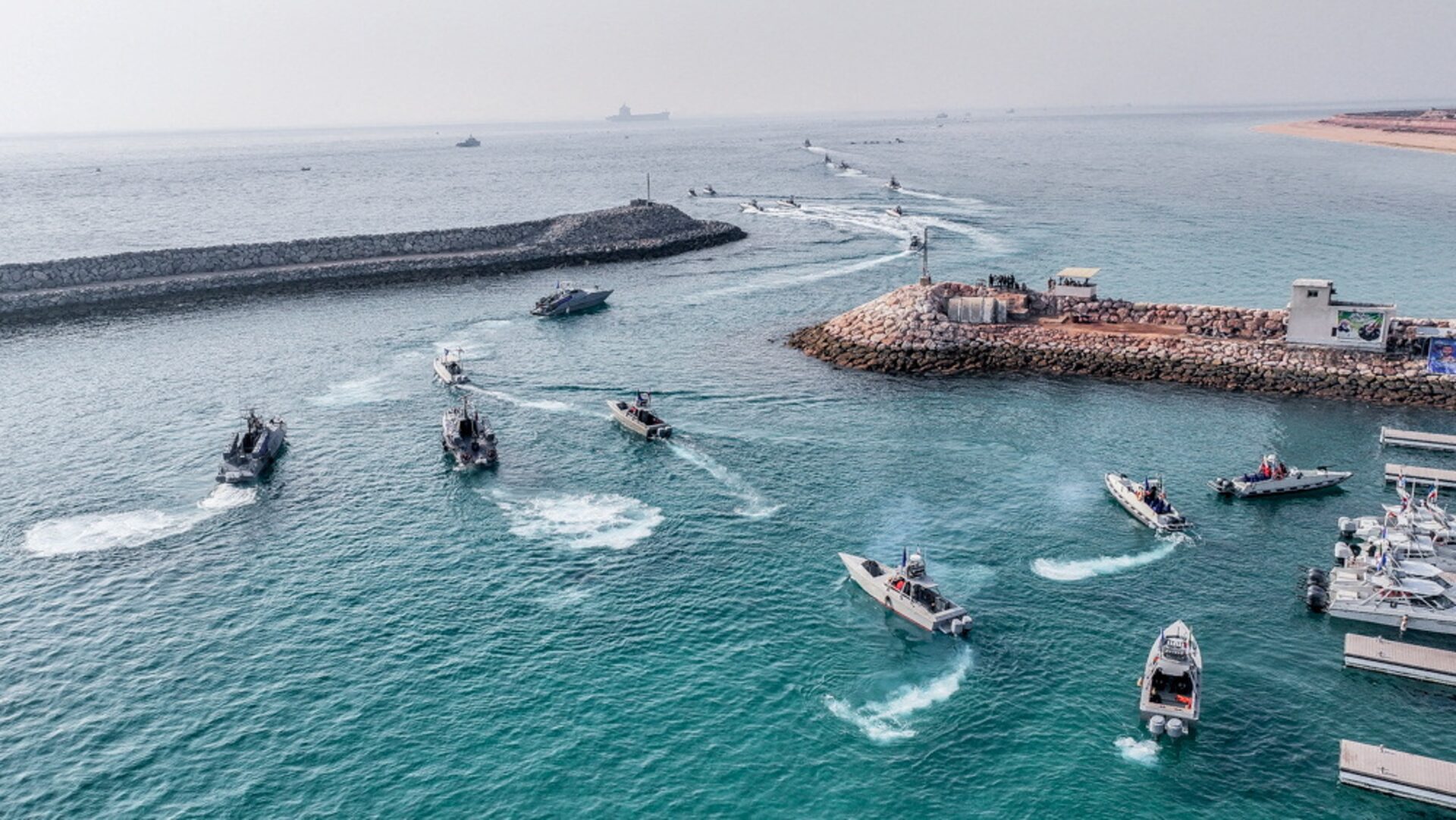
    territorial dispute — Iran has summoned the Cypriot ambassador in Tehran, Petros Nacouzis, over a recent territorial dispute involving the United Arab Emirates (UAE). The diplomatic tension arose after the Cypriot government issued a joint declaration with the UAE, recognising three islands in the Persian Gulf as belonging to the UAE.

    Territorial dispute: Formal Protest Issued

    According to the Islamic Republic News Agency, Iranian Assistant Foreign Minister Mohammad Alibek met with Nacouzis and lodged a formal protest against the declaration. Alibek asserted that Iran considers the islands of Abu Musa, Greater Tunb, and Lesser Tunb as integral parts of its territory. He emphasised that Iran’s historical sovereignty over these islands is undisputed.

    Iran’s Stance on Sovereignty

    During the meeting, Alibek condemned any territorial claims against Iran, describing them as a violation of the fundamental principle of national sovereignty and territorial integrity. He urged the Cypriot government to rectify what he termed a serious mistake and to avoid similar actions in the future. The Cypriot declaration, made on Sunday, clearly supported the UAE’s sovereignty over the islands.

    Joint Declaration Details

    The joint statement from Cyprus and the UAE reaffirmed Cyprus’s support for the UAE’s claims over Greater Tunb, Lesser Tunb, and Abu Musa. The declaration also referenced a previous statement from the European Union and the Gulf Cooperation Council, which called on Iran to end its “occupation” of the islands. This statement labelled Iran’s presence on the islands as a violation of UAE sovereignty and United Nations principles.

    Geographical and Historical Context

    Abu Musa, the largest of the three islands, is situated roughly between Dubai and the Iranian coastal town of Bandar Lengeh, featuring a commercial airport with flights to Iran. Greater Tunb and Lesser Tunb lie further northeast, close to the Iranian island of Qeshm, and have a combined population of approximately 300.

    The historical roots of the dispute trace back to the period of British rule over the Trucial States, now the UAE. A memorandum of understanding was signed before the UAE’s formation in 1971, stipulating joint administration of Abu Musa between Iran and the Emirate of Sharjah. However, Iran seized Greater Tunb and Lesser Tunb on the same day the memorandum was signed and took control of Abu Musa the following day.

    Escalation of Tensions

    Following the 1971 events, the UAE submitted its claim to the United Nations in 1980, but this issue has remained unresolved. Over the years, Iran has strengthened its military presence on the islands, establishing naval bases to patrol the strategic Strait of Hormuz.

    The current diplomatic spat is not the first incident this year between Iran and Cyprus. In June, a misunderstanding arose involving Iran’s conflict with Israel, where Cyprus was mistakenly believed to be conveying messages between the two nations. Such incidents highlight the fragile nature of relations in the region.

    Future Implications

    The summons of the Cypriot ambassador signals Iran’s commitment to assert its claims over the islands, while Cyprus’s alignment with the UAE reflects the geopolitical complexities at play. As regional tensions persist, the situation surrounding these islands remains a point of contention that could affect broader diplomatic relations.

    The Iranian government’s strong reaction underscores its sensitivity to any perceived challenges to its territorial integrity. Meanwhile, the Cypriot administration has signalled its ongoing support for the UAE, indicating a potential rift with Iran that may have implications for future interactions.

  • UAE President Sheikh Mohammed Bin Zayed Al Nahyan Visits Cyprus to Enhance Trade

    UAE President Sheikh Mohammed Bin Zayed Al Nahyan Visits Cyprus to Enhance Trade

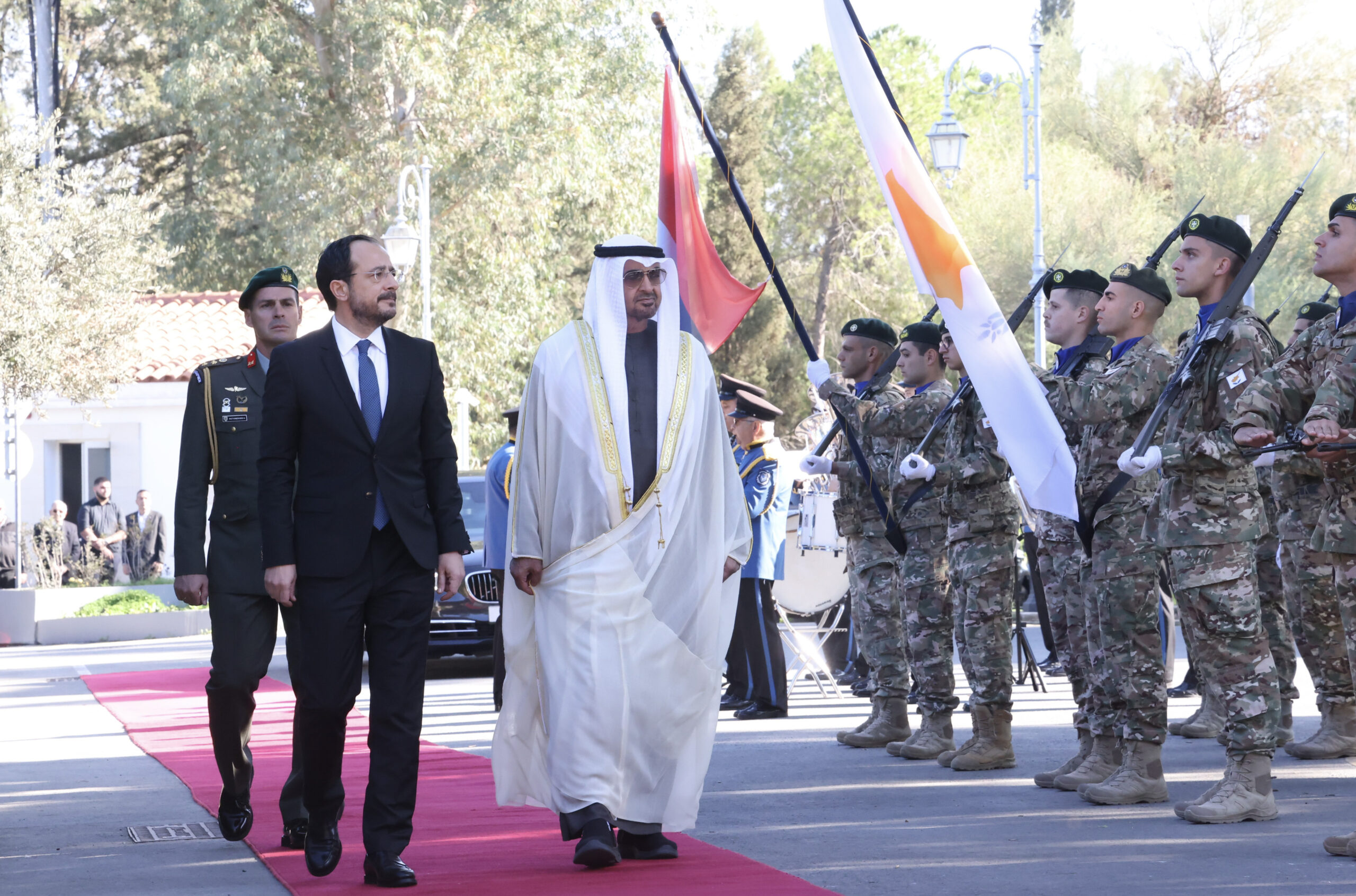
    UAE President Sheikh Mohammed bin Zayed Al Nahyan’s visit to Cyprus marks a significant step in strengthening trade relations between the two nations. On Sunday, he met with Cypriot President Nikos Christodoulides at the presidential palace in Nicosia, an event that is seen as a formal confirmation of the upgraded strategic relationship between the UAE and Cyprus.

    Trade: Welcoming Ceremony Highlights Diplomatic Ties

    The day commenced with a welcoming ceremony at Larnaca airport, where President Christodoulides greeted Sheikh Mohammed with military honours. The national anthems of Cyprus and the UAE resonated through the air as bands from the National Guard and the Cyprus police played, setting a tone of respect and collaboration.

    After the reception, Sheikh Mohammed laid a wreath at the statue of Archbishop Makarios III, further highlighting the significance of the visit. The gathering included senior officials from both nations, such as Foreign Minister Constantinos Kombos and Transport Minister Alexis Vafeades from Cyprus.

    Discussions on Key Areas of Cooperation

    The private meeting between the two presidents was followed by expanded talks involving delegations from both sides. According to Konstantinos Letymbiotis, the government spokesman, the discussions centred on enhancing bilateral cooperation across several important sectors. These include:

    • Investment
    • Energy
    • Technology
    • Trade
    • Education
    • Culture
    • Tourism
    • Shipping
    • Security
    • Critical infrastructure

    Both leaders expressed their commitment to moving from strategic alignment to practical implementation. They underscored the necessity of measurable objectives and actionable plans to fortify their relationship.

    UAE’s Interest in Cypriot Investment Opportunities

    During the talks, particular emphasis was placed on investment, with the UAE showing a keen interest in launching significant initiatives in Cyprus. Priority sectors identified include energy, infrastructure, technology, tourism, and shipping. To facilitate this cooperation, a permanent business framework will be established through a joint UAE-Cyprus business council. This council will link the Cyprus Chamber of Commerce and Industry, Invest Cyprus, and the UAE Chamber of Commerce Federation, providing a stable platform for business collaboration and project development.

    Joint Action Plan and Future Prospects

    The two presidents agreed to collaborate on a joint action plan in areas where their interests converge. This includes trade, investment, energy, political dialogue, tourism, culture, education, shipping, security, and critical infrastructure. The upcoming Cypriot Presidency of the Council of the European Union, set to begin on January 1, 2026, was highlighted as an opportunity to strengthen EU-Gulf relations, particularly with the UAE.

    The discussions also touched on the ongoing negotiations for a free trade agreement between the UAE and the EU, which is anticipated to unlock further avenues for trade, investment, and cooperative efforts.

    Regional and Humanitarian Considerations

    Amid their discussions, both leaders exchanged views on various regional and international issues, focusing on developments in the Middle East. The humanitarian situation in Gaza was particularly emphasised, with commitments to continue providing aid through all available channels. President Christodoulides described the visit as a new chapter in Cyprus-UAE relations, reinforcing the strategic partnership and establishing operational structures with measurable goals.

    “From today, a new chapter opens, defined by trust, shared interests, and our joint commitment to a more connected and prosperous region,” he stated.

    Strengthening the Ties Established Since 2022

    Sheikh Mohammed bin Zayed Al Nahyan remarked that since the establishment of strategic cooperation between Cyprus and the UAE in 2022, the ties have seen substantial growth in various sectors, including energy, industry, trade, investment, tourism, and education. He acknowledged that a UAE-EU free trade agreement would further enhance opportunities with Cyprus and welcomed the forthcoming Cypriot EU presidency as a means to bolster UAE-EU relations.

    As the visit came to a close, President Christodoulides hosted an official luncheon in honour of Sheikh Mohammed, further cementing the diplomatic ties forged during this historic meeting.

  • Economic ties: Cyprus and UAE Forge Stronger Economic Relations with New Business Council

    Economic ties: Cyprus and UAE Forge Stronger Economic Relations with New Business Council

    economic ties — economic ties — Cyprus and the United Arab Emirates (UAE) have significantly advanced their economic relations with the establishment of a joint business council, a move that underscores a remarkable growth in non-oil trade between the two nations.

    At a recent business forum in Nicosia, UAE Trade Minister Thani bin Ahmed Al Zeyoudi revealed that non-oil trade reached $176 million in the first nine months of this year, marking an almost 40 per cent increase compared to the same period last year. This surge is approaching the total trade value recorded in 2024, indicating robust economic momentum.

    The newly formed UAE-Cyprus Joint Business and Investment Council aims to foster structured cooperation among businesses and investors, opening doors for greater collaboration. During his address, Al Zeyoudi highlighted the forum as a prime opportunity to explore synergies across sectors of mutual interest.

    Recent initiatives reflect this growing partnership, including the establishment of the Cyprus Business Council in Dubai last month, which is designed to enhance collaboration in key areas such as finance, green technology, tourism, and logistics. These developments are part of a broader strategy to strengthen ties and facilitate mutual investment.

    Al Zeyoudi also pointed out that the Investopia investment platform from the UAE hosted its first international events in Cyprus in June, which reinforces the island’s position as a gateway to Europe for Middle Eastern investors. He noted the similarities in the economic models of both countries, characterised by streamlined company registration processes, innovation incentives, and low corporate tax rates.

    Both Cyprus and the UAE serve as essential hubs for shipping and fintech, attracting foreign direct investment in sectors like real estate, technology, and renewable energy. Al Zeyoudi encouraged UAE companies to seek opportunities in Cyprus while inviting Cypriot businesses to view the UAE as a base for regional expansion, particularly towards Asia and the wider Middle East.

    Commerce Minister Michael Damianos described the Memorandum of Understanding (MoU) as a “major step forward” in institutionalising economic cooperation. He expressed confidence that the council would provide a structured platform for entities seeking collaboration, facilitating knowledge exchange, joint ventures, and cooperative projects.