Tag: workers rights

  • Sexual harassment — Supreme Court Rules in Favour of Woman Dismissed After Reporting Sexual Harassment

    Sexual harassment — Supreme Court Rules in Favour of Woman Dismissed After Reporting Sexual Harassment

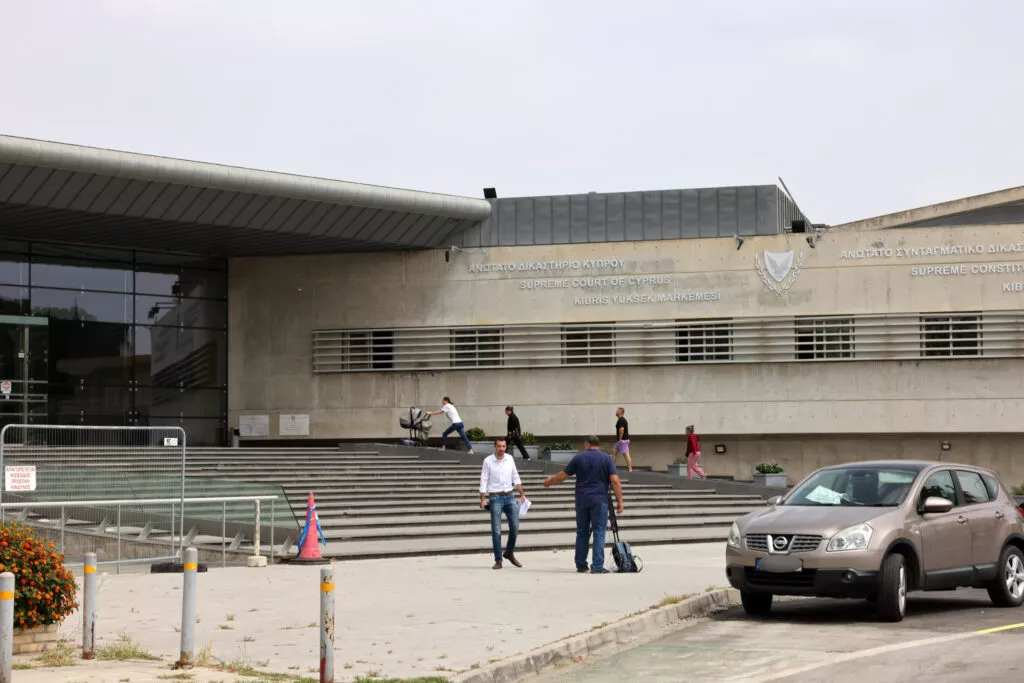
    The Supreme Court has awarded €37,700 to a woman fired by the Electricity Authority of Cyprus scientific staff union after she filed a sexual harassment complaint against one of its executive members.

    • The court upheld her appeal and overturned a previous Labour Disputes Court decision that had rejected her claim, ruling that the union failed to ensure a fair and impartial investigation process.
    • The Labour Disputes Court initially rejected her application, asserting that her dismissal was not due to the complaint itself but rather her behaviour during the investigation process.

    The court upheld her appeal and overturned a previous Labour Disputes Court decision that had rejected her claim, ruling that the union failed to ensure a fair and impartial investigation process.

    This case originated from an application filed in 2009 under the 1967 Annual Leave with Pay Law and the 2002 Equal Treatment of Men and Women in Employment Law. The woman, who was hired as a secretary in 2000, claimed she was unlawfully dismissed after being fired without notice on 31 July 2008.

    On 19 June 2008, she made a formal complaint stating that an executive committee member had been sexually harassing her for years. Following her complaint, the executive committee initiated an investigation on 23 June 2008, adhering to its code of practice for handling sexual harassment cases. The implicated official was informed he would not take part in the investigation.

    During the investigation meeting, the woman requested to have three supporters accompany her while giving testimony, a request that was granted. However, the minutes from the meeting indicated that her behaviour was perceived as confrontational, leading to her being placed on paid leave.

    After being given deadlines to present evidence to support her claims, the union concluded on 22 July 2008 that her complaint was “unfounded, unsubstantiated, and false,” and subsequently dismissed her on 31 July 2008, the same day she was summoned to respond but did not attend.

    The Labour Disputes Court initially rejected her application, asserting that her dismissal was not due to the complaint itself but rather her behaviour during the investigation process.

    Upon reviewing the case, the Supreme Court determined that the union had an obligation to conduct a fair and impartial investigation, particularly since one of its officials was the subject of the complaint. The court found that the principle of impartiality was not upheld, rendering the summary dismissal unlawful. As a result, the court did not explore other grounds for appeal, as the violation of impartiality was sufficient for the judgement.

    The court awarded the woman €37,700, along with legal interest from the date of the initial decision and costs in her favour for both the first instance and the appeal. No costs order was issued against the respondent, marking a significant ruling in her favour.

  • Koop bank — Koop Bank Strike Ends as Ruling Coalition Withdraws Austerity Measures

    Koop bank — Koop Bank Strike Ends as Ruling Coalition Withdraws Austerity Measures

    The recent strike by employees of the north’s Koop Bank and its subsidiaries concluded on Friday after the ruling coalition agreed to withdraw the planned austerity measures affecting workers. This decision followed intense negotiations aimed at addressing the workers’ concerns.

    Koop bank: Demands and Negotiations

    Workers had presented an eight-item list of austerity measures they wanted the ruling coalition and management to formally renounce. Key demands included halting work for pensioners, abolishing the 13th salary, suspending the cost-of-living allowance, and reducing Eid bonuses by half.

    Agreement Reached

    On Friday, Durali Guclusoy, the undersecretary to the prime minister, announced that he and ‘prime minister’ Unal Ustel would meet with union leaders to finalise a new collective labour agreement. This agreement aims to define the operational framework for the Koop Bank’s subsidiaries moving forward.

    Guclusoy confirmed that the previously considered measures, including the suspension of retirees’ work and salary deductions, have been put on hold until a new agreement is signed. He stated, “The suspension of retirees’ work and the deductions applies to workers, which were previously on the agenda, have been suspended until a new agreement is signed.”

    Future Plans with Union Leaders

    Mehmetali Guroz, leader of the Koop-Sen trade union, expressed optimism about the negotiations, stating discussions would commence on Monday to draft a protocol that would balance the income and expenses of the workers. Guroz emphasised that the workers would not shy away from previously signed agreements and ongoing negotiations.

    He also noted, “We intend to sign the new agreement within a week at the latest, although we have three months to finalise it.” This proactive approach aims to ensure that workers’ rights and benefits are safeguarded in the new contract.

    Tensions During Negotiations

    Earlier on the same day, Guclusoy was seen engaged in a heated discussion with striking workers outside Ustel’s office. This encounter caught the attention of a journalist, leading to a moment where Guclusoy attempted to take the journalist’s phone, insisting that there was nothing worth filming.

    This incident resulted in a backlash from the Cyprus Turkish journalists’ union, which condemned the act as an attack on press freedom. In their statement, the union asserted, “In societies where the press is not free, democracy is also in danger. We will not allow press freedom and democracy to be undermined.”

    The union further highlighted that public officials should not obstruct journalists from covering events occurring in public spaces. They remarked, “If [Guclusoy] did not want his discussion to be reflected in the public, he should not have initiated this dialogue in public.”

    Community Reaction

    The strike and subsequent resolution have sparked mixed reactions within the community. Many workers expressed relief at the ruling coalition’s decision to retract the austerity measures, viewing it as a significant victory for their rights. The outcome has reinforced the importance of collective bargaining and dialogue between workers and management.

    However, the incident involving Guclusoy and the journalist has raised concerns about the treatment of the media and freedom of expression in the region. Observers note that such actions could have broader implications for public trust in government officials.

    The Importance of Collective Bargaining

    This episode underscores the vital role of collective bargaining in protecting workers’ rights. With the labour market facing ongoing challenges due to economic pressures, the ability for workers to negotiate favourable terms is more crucial than ever. The swift resolution of the strike reflects a commitment from both the workers and the ruling coalition to find common ground.

    Looking Ahead

    As the union prepares to enter negotiations for the new collective labour agreement, stakeholders will be watching closely. The outcomes of these discussions could set a precedent for future dealings between workers and management across various sectors. The hope is for a balanced agreement that addresses the financial realities while ensuring fair treatment for all employees.