Tag: human rights

  • Threats Against Journalists Highlight Press Freedom Crisis

    Threats Against Journalists Highlight Press Freedom Crisis

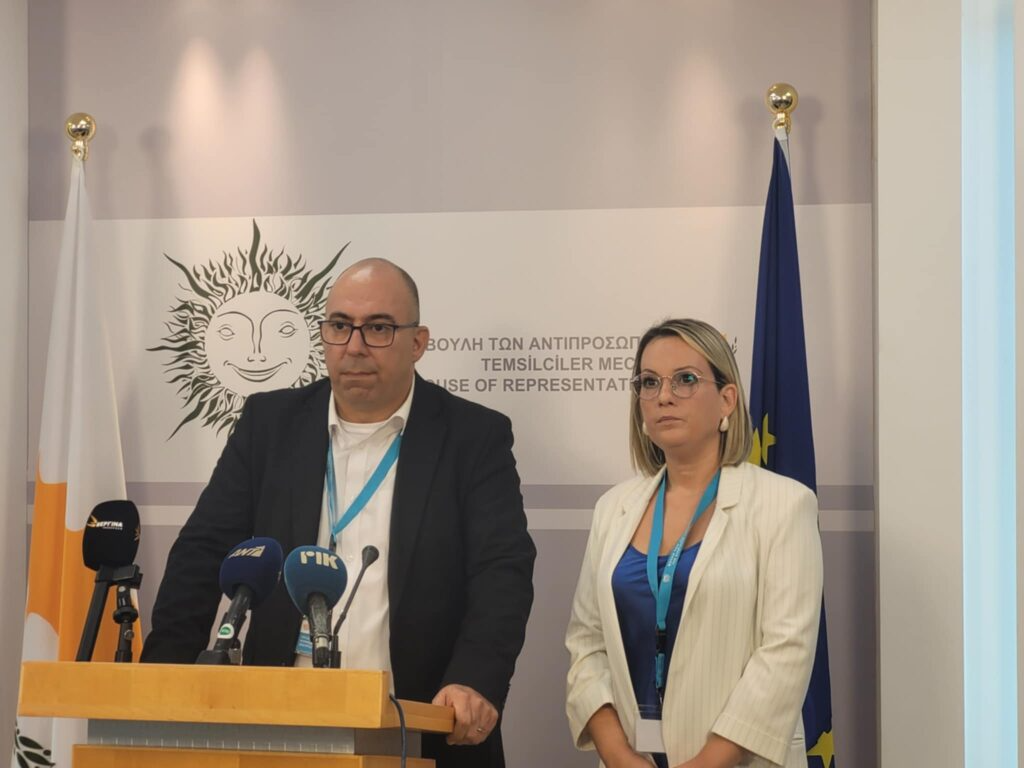
    press freedom — Press freedom is under attack as increasing threats against journalists and citizens emerge, aimed at suppressing freedom of expression and public criticism. During a recent session of the House Human Rights Committee, parliamentarians gathered to address these escalating concerns, prompted by a complaint from a citizen who claimed to have received threats from a police officer linked to the Cypriot Intelligence Service (CIS).

    MP Irene Charalambidou initiated the examination after Nikoletta Tsikkini reported that her rights were violated by a CIS member’s violent threats. Tsikkini stated, “We are dealing with the protection of my reputation, honour and safety,” emphasising the need for citizens to defend themselves against potential repercussions for exposing threats.

    Her lawyer, Alekos Argyrou, highlighted the severity of such threats, particularly when they originate from those in positions of authority. He remarked, “When officials misuse their power and access to sensitive data, it constitutes a serious interference with fundamental rights and a potential abuse of power.” This misuse raises pressing concerns about the erosion of trust in public institutions.

    Following the incident, the CIS member involved was removed from their role and reassigned, but uncertainties linger regarding any potential disciplinary actions, as the internal regulations governing the CIS remain opaque.

    Alongside individual threats, the committee chair emphasised a worrying trend of organised trolling campaigns targeting journalists. Charalambidou noted that she had received over five complaints from prominent journalists who faced intimidation for their reporting. Specific threats included alarming messages like, “You in the ground and me in prison,” aimed at one journalist, and a warning from a former CIS member to another citizen to “Shut up so I don’t have to expose your dirty laundry.”

    Giorgos Frangos, President of the Cyprus Journalists’ Union, voiced his alarm about these developments, stressing that a journalist’s capacity to critique is vital for the profession. He warned that pending legislation surrounding journalist protection and fake news could further jeopardise the safety of those who report on contentious topics. Frangos noted, “One in three journalists has received warnings or deterrence for reporting. Sixty-two percent experience job insecurity, meaning they don’t touch on topics that might leave them without work.”

    As discussions continued, several MPs expressed their suspicions regarding the coordinated nature of these threats, often executed through fake social media profiles. Charalambidou remarked, “It’s the first time fake websites are created and journalists receive threats for practising their profession.” She underscored the alarming pattern of identical language used in threats against various journalists.

    MP Giorgos Koukoumas underscored the intensifying misuse of power to stifle free expression, citing instances where dissenters faced severe repercussions. He recalled a minister sending police to a home over a satirical remark and highlighted the increasing frequency with which journalists are threatened. Koukoumas referenced declining scores in the Reporters Without Borders survey, noting that Cyprus drops ten points annually.

    Concerns about the implications of threats from political figures also surfaced. MP Christos Senekkis described messages threatening a journalist, as well as others aimed at inciting violence against specific groups. He urged caution, stating that revealing the identity of the CIS member would not serve any purpose and could further endanger free expression and personal privacy.

    In a bid to address these issues, MP Alexandra Attalides announced her intention to propose an amendment related to the CIS, aiming to bolster protections for free expression. Meanwhile, MP Rita Superman reiterated the necessity of safeguarding citizens’ rights to speak freely, while MP Demetris Demetriou suggested that the matter be examined by the Institutions Committee in a joint closed session.
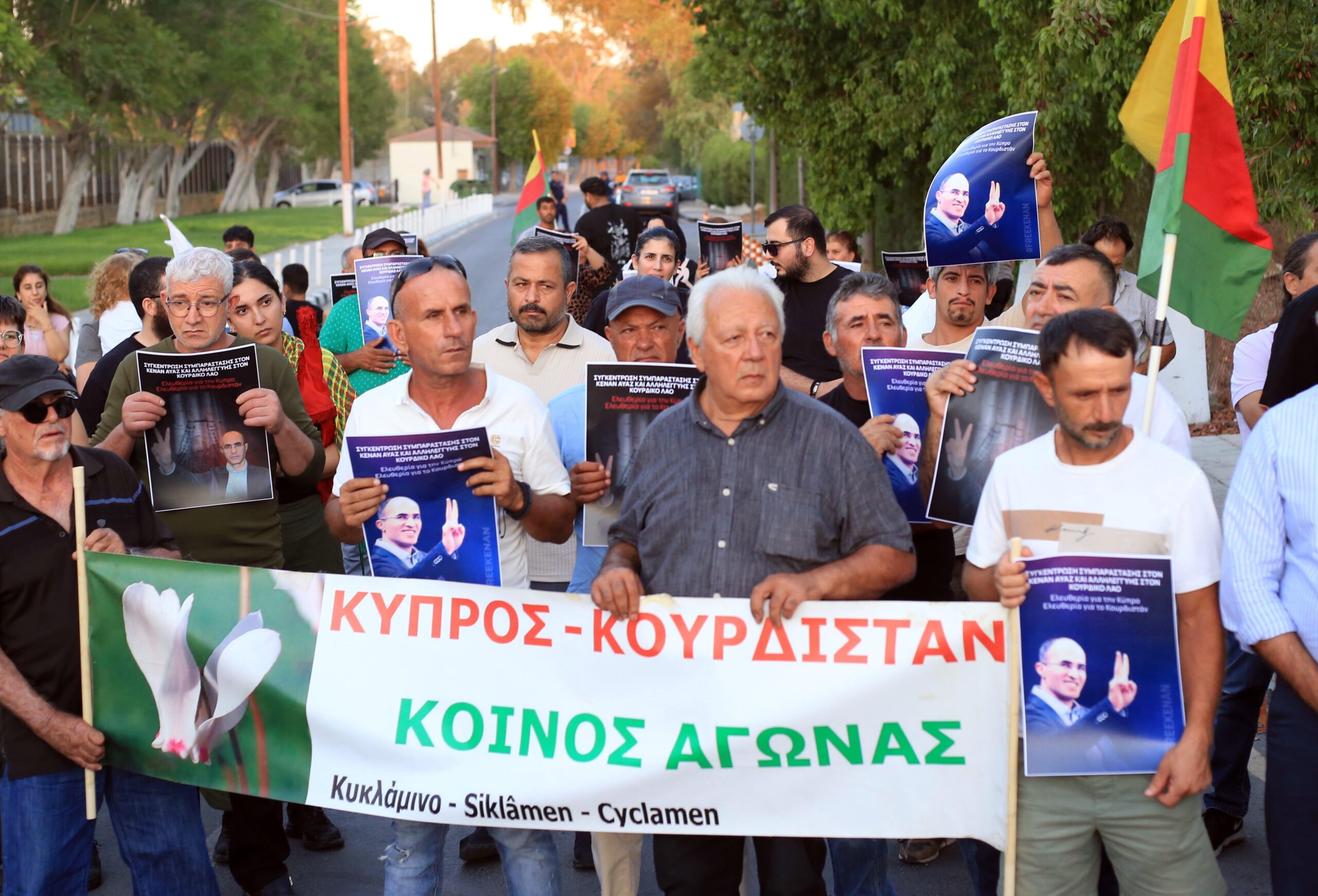
  • Kurdish Activist Kenan Ayaz Faces Calls for Release Outside Nicosia Prison

    Kurdish Activist Kenan Ayaz Faces Calls for Release Outside Nicosia Prison

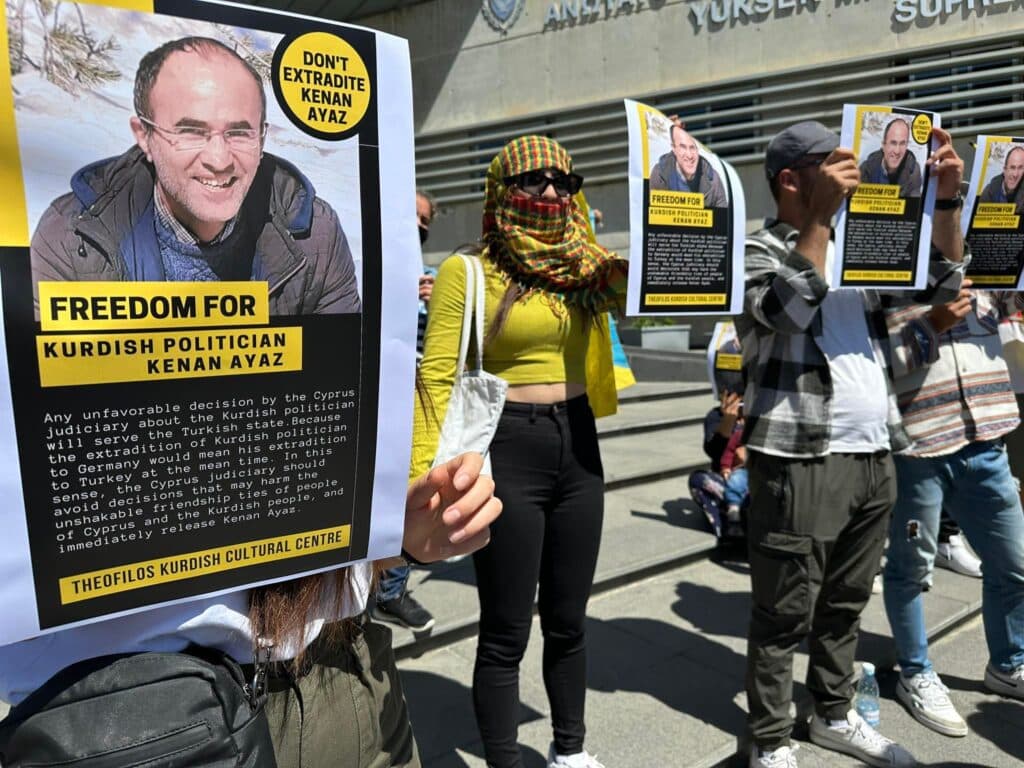
    kenan ayaz — A solidarity gathering took place on Wednesday outside the central prisons in Nicosia, with protesters demanding the release of Kurdish activist Kenan Ayaz. Supporters are urging for his freedom either through a presidential pardon or early release, citing that he has already served a significant portion of his sentence in Germany and Cyprus.

    Photo: cyprus-mail.com

    Recently transferred to the open prison section, Ayaz’s case has drawn considerable attention from both the Kurdish community and human rights advocates. His lawyer, Efstathios Efstathiou, remarked to the Cyprus News Agency that Ayaz’s return to Cyprus represents a continuation of the joint Cypriot-Kurdish struggle for freedom. Efstathiou elaborated that Ayaz has consistently linked his vision for Kurdish independence with the pursuit of Cypriot independence.

    Photo: cyprus-mail.com

    According to Efstathiou, Ayaz was convicted in Germany for actions that did not involve violence or terrorism, but rather for activities associated with freedom of assembly, which he argues are protected under the European Convention on Human Rights. Having served more than half of his sentence, his lawyer expressed hope for a swift release.

    The gathering was organised by the “Observatory for the Trial of Ayaz” in collaboration with the Kurdish community in Cyprus. Alecos Michaelides, a spokesperson at the event, reiterated the demands for immediate release, emphasising the role of the justice ministry and the president of the Republic in this matter.

    Michaelides highlighted that Ayaz spent over two years in German prisons prior to his transfer and noted that no criminal acts have been recorded against him in Cyprus. He also pointed out that Ayaz was recognised as a political refugee by the Republic of Cyprus 14 years ago. Recent communications from the deputy ministry of migration indicate that his case is under review, with a possibility of restoring his political protection status.

    Michaelides stressed that Cyprus has not accused Ayaz of terrorism, unlike the outcomes in German courts. Campaigners are hopeful that Cypriot authorities, including the president, will act to ensure his protection and eventual release.

    Ayaz was sentenced to four years and three months in prison, but with over two years already served in Germany, supporters contend that he has completed a significant portion of his sentence and qualifies for early release. They argue that a presidential pardon remains a viable option, as the president is not obligated to justify such a decision to German authorities.

    Supporters concluded the gathering by reminding authorities that Ayaz had lived in Limassol for years without posing a threat to Cypriot society. They called for decisions that reflect his positive standing within the community.

  • Greek cypriots — European Parliament to Address Detention of Greek Cypriots in Occupied North

    Greek cypriots — European Parliament to Address Detention of Greek Cypriots in Occupied North

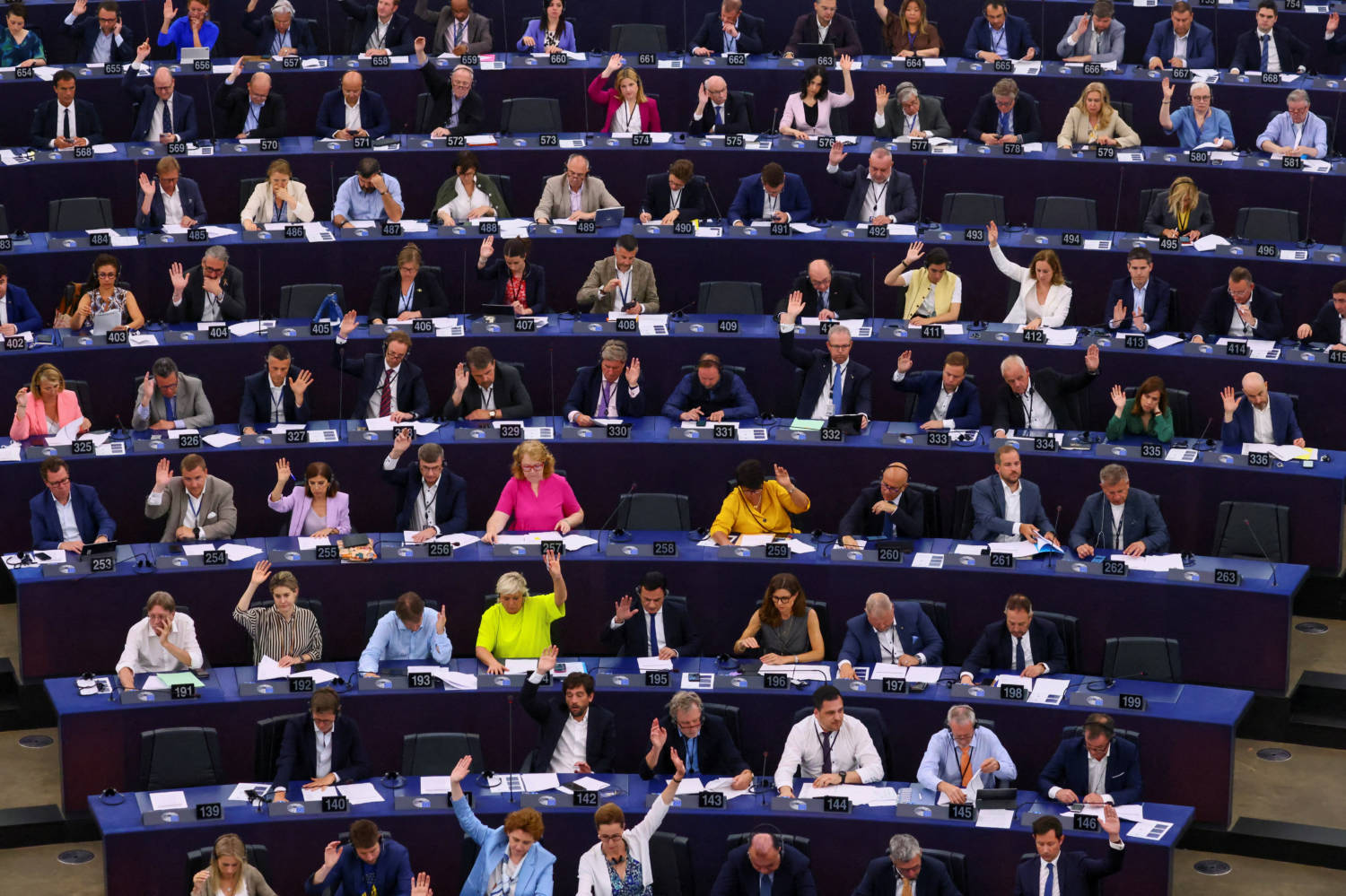
    The European Parliament will debate a resolution condemning the detention of five Greek Cypriots in the occupied north, a move led by Cyprus’s delegation to the European People’s Party. This initiative has been spearheaded by DISY MEPs Loukas Fourlas and Michalis Hadjipantela.

    Scheduled for Wednesday, 10 September, the debate titled “detention of European citizens in the occupied areas of Cyprus” marks a significant step in addressing the plight of these individuals. The resolution is expected to be approved on Thursday, 11 September, demanding their immediate and unconditional release.

    The text of the resolution will not only name the five detained Greek Cypriots but also reference the context of their arrests, which are viewed as retaliatory measures linked to the usurpation of Greek Cypriot properties. Statements from the MEPs in Strasbourg assert that the resolution will directly call upon Turkey to act for the release of these EU citizens, emphasising Turkey’s responsibility for their illegal detention as the authority behind the occupation.

    In its discussions, the European Parliament will explicitly condemn the politically motivated detainment of the five Greek Cypriots, highlighting that their continued imprisonment lacks credible evidence and is based on decisions from an unrecognised “court.” The health issues faced by the detainees and the absence of adequate medical care will also be addressed, framing their situation as inhumane treatment.

    The resolution’s demands are unequivocal; it seeks the immediate and unconditional release of the five Greek Cypriots, along with the cessation of all arbitrary prosecutions against them. Additionally, it will urge the European Commission to take diplomatic, political, and legal measures in collaboration with the UN and other international entities to facilitate their release.

    Furthermore, the resolution extends its support to the Republic of Cyprus in pursuing legal actions against Turkey, potentially at the European Court of Human Rights. It points out that Turkey bears full responsibility for the actions of the occupying regime, asserting that the ongoing occupation is a serious violation of international law and an impediment to peace, stability, and the EU-Turkey relationship.

  • Kenan ayaz — Kenan Ayaz Returns to Cyprus to Serve His Prison Sentence

    Kenan ayaz — Kenan Ayaz Returns to Cyprus to Serve His Prison Sentence

    Kenan Ayaz has returned to Cyprus to serve his remaining prison sentence after being convicted of being a member of a proscribed terrorist organisation. His return from Germany, where he had been detained for over two years, marks a significant moment for the Kurdish community in Cyprus.

    Ayaz, a Kurdish politician, faced a European arrest warrant and was arrested at Larnaca airport in March 2023. His situation escalated when a German court sentenced him in September 2024 to four years and three months in prison for his alleged membership in the Kurdish Workers’ Party (PKK). The PKK has been designated a terrorist organisation by the European Union since 2002, a classification that Turkey has long championed, viewing the group as a substantial security threat.

    The Observatory for the Trial of Kenan Ayaz, an advocacy group, celebrated his return as a “great day” for the Kurdish community, stating that Ayaz had come back “to continue his struggle with all of us, for a world without oppression, occupation and genocide.” They expressed that his prosecution in Germany was a “blow to human rights” and highlighted the adverse conditions he endured during his imprisonment.

    Ayaz’s case illustrates the complexities surrounding the Kurdish movement in Europe, where advocates argue that political motivations drive the criminalisation of individuals involved. The group noted Ayaz’s belief that the struggle of the Cypriot people against Turkish occupation aligns with the quest for Kurdish freedom, urging for the rule of law to prevail in Cyprus amidst what they termed “political hypocrisy.”

    In a notable turn of events, the PKK announced in 2025 that it would lay down its arms, marking an end to its 41-year-long armed struggle against Turkey. This development adds another layer to the ongoing discourse regarding the PKK and its members, especially in Europe, where various legal actions have been taken against individuals associated with the movement.

  • Greek cypriots — Parliament Speaker Appeals to EU Leaders Over Detained Greek Cypriots

    Greek cypriots — Parliament Speaker Appeals to EU Leaders Over Detained Greek Cypriots

    Parliament Speaker Annita Demetriou has reached out to European leaders regarding the detention of five Greek Cypriots in the occupied areas. In formal letters sent to European Parliament President Roberta Metsola and Council of Europe Parliamentary Assembly President Theodoros Roussopoulos, she expressed urgent concerns surrounding their continued imprisonment.

    Greek cypriots: Ongoing Diplomatic Efforts

    According to a parliamentary announcement, the Cyprus government is actively pursuing diplomatic channels to address this situation. Demetriou’s correspondence urges both Metsola and Roussopoulos to leverage their positions to facilitate the release of the detained individuals, while also calling for Turkey to comply with international obligations related to human rights.

    Allegations of Political Retaliation

    The parliament speaker has described the arrest and ongoing detention of the Greek Cypriots, which began on 19th July, as a premeditated political act of reprisals. This incident is allegedly linked to the Republic of Cyprus’s lawful prosecution of foreign nationals who have been appropriating Greek Cypriot properties in the occupied regions.

    Violation of International Law

    Demetriou emphasised that the actions taken by the regime in the north represent a flagrant violation of international law and infringe upon the fundamental human rights of displaced Greek Cypriots. Many of these individuals sought to visit properties that have been under Turkish military occupation since 1974.

    Intimidation Tactics

    The parliament speaker stated, “These tactics clearly aim to terrorise and prevent Greek Cypriots from visiting their properties and seeking restoration of their rights.” Her comments underscore the broader implications of these actions on the ongoing negotiations regarding the Cyprus issue.

    Impact on Negotiation Efforts

    Demetriou pointed out that the property issue is a fundamental component of a comprehensive solution to the Cyprus problem, as recognised under international and European law. She expressed concern that such actions undermine prospects for the resumption of negotiations aimed at resolving the longstanding conflict.

    Contradicting Confidence-Building Measures

    These intimidation tactics further complicate the creation of a climate of trust, which has been advocated by the UN Secretary-General. Instead, they appear to align with Turkey’s demand for a “two-state” solution and its ultimate goal of de jure partition of Cyprus.

    A Call for International Attention

    Demetriou’s letters represent Cyprus’s latest diplomatic endeavour to highlight what it perceives as systematic violations of the rights of displaced persons. The case of the five detained Greek Cypriots is emblematic of the ongoing challenges faced by property owners in the occupied areas, where their fundamental rights are at stake under international law.

  • Genocide palestine: Larnaca Protesters Call for an End to Genocide in Palestine

    Genocide palestine: Larnaca Protesters Call for an End to Genocide in Palestine

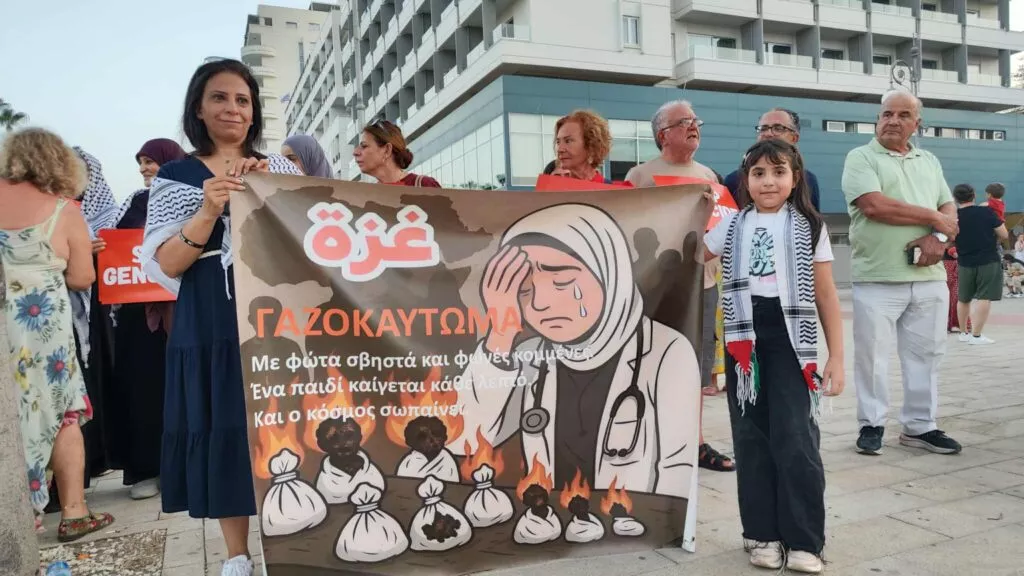
    genocide palestine — genocide palestine — Protesters in Larnaca gathered to demand an end to genocide in Palestine, expressing their solidarity with the Palestinian people. Organised by the group “FREE FREE PALESTINE,” the demonstration took place at Finikoudes beach, where participants waved Palestinian flags and carried banners advocating for urgent action.

    Photo: in-cyprus.philenews.com

    A notable sign read, “Stop the genocide in Palestine,” while another starkly stated, “A child is burned every minute, and the world is silent.” The event attracted a diverse crowd, including families with children, all united in their message against the ongoing violence.

    Photo: in-cyprus.philenews.com

    Genocide palestine: A March for Unity and Awareness

    The protest commenced at Europe Square on Athens Avenue in Larnaca. Participants gathered for speeches before marching along the avenue, culminating at Saint Lazarus Church. The entire event was scheduled to last approximately an hour and a half, allowing ample time for participants to voice their concerns.

    Police Presence and Regulations

    The demonstration saw a significant police presence, with officers on-site to ensure the event remained peaceful and to facilitate public order. In a statement, the Police noted their commitment to overseeing the gathering in accordance with the Public Gatherings and Parades Law 151(I) of 2025, which mandates that organisers cooperate with law enforcement to maintain peace.

    Attendees were urged to comply with police instructions, as the law empowers the Police to impose restrictions or disperse gatherings that threaten to become non-peaceful. This includes instances where individuals may conceal their identity or actions may risk public safety.

    Voicing Concerns for Palestine

    The protesters carried powerful messages aimed at raising awareness about the humanitarian crisis in Palestine. Each banner and chant echoed their urgent plea for global recognition and intervention, reflecting a growing frustration over perceived international inaction.

    As the crowd marched, the atmosphere was charged with emotion, highlighting the deep connections many participants felt towards the plight of Palestinians. The event emphasised not just the call for an end to violence but also a plea for solidarity and justice.