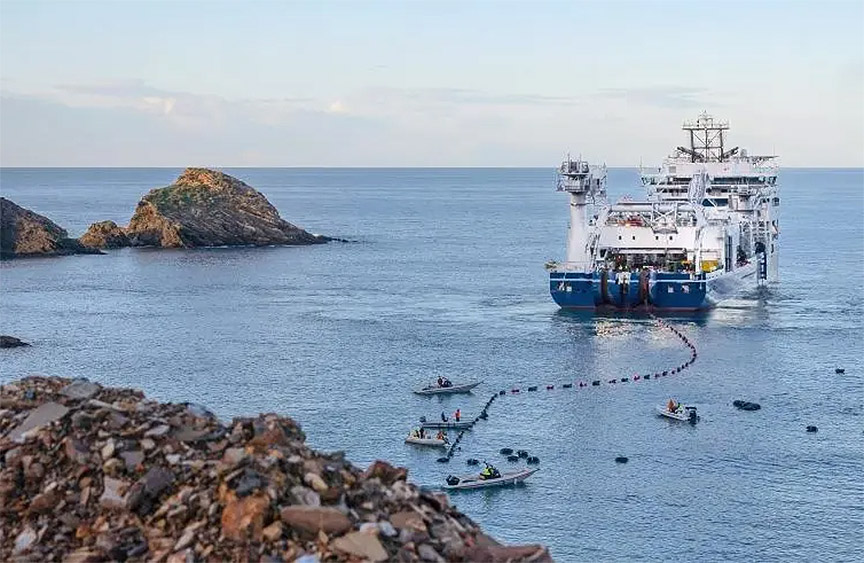
The Great Sea Interconnector’s future is shrouded in uncertainty as discussions about its cost intensify. Recent talks in Athens led to an agreement to ‘update the techno-economic’ parameters, a move interpreted by many as indicative of stalled progress on the project. While some view this as a necessary step forward, others see it as a sign that the interconnector is struggling to gain momentum.

Photo: cyprus-mail.com
Great sea: Debate Over Project Viability
Opinions on the interconnector diverge sharply. Critics argue that the announcement of a new feasibility study suggests a fundamental reassessment of the project. The GSI, which aims to connect the electricity grids of Cyprus and Greece via a subsea cable, currently faces a significant funding gap, estimated to be around €1 billion. Those sceptical of the project highlight that the necessity of further studies indicates a lack of confidence in its financial viability.
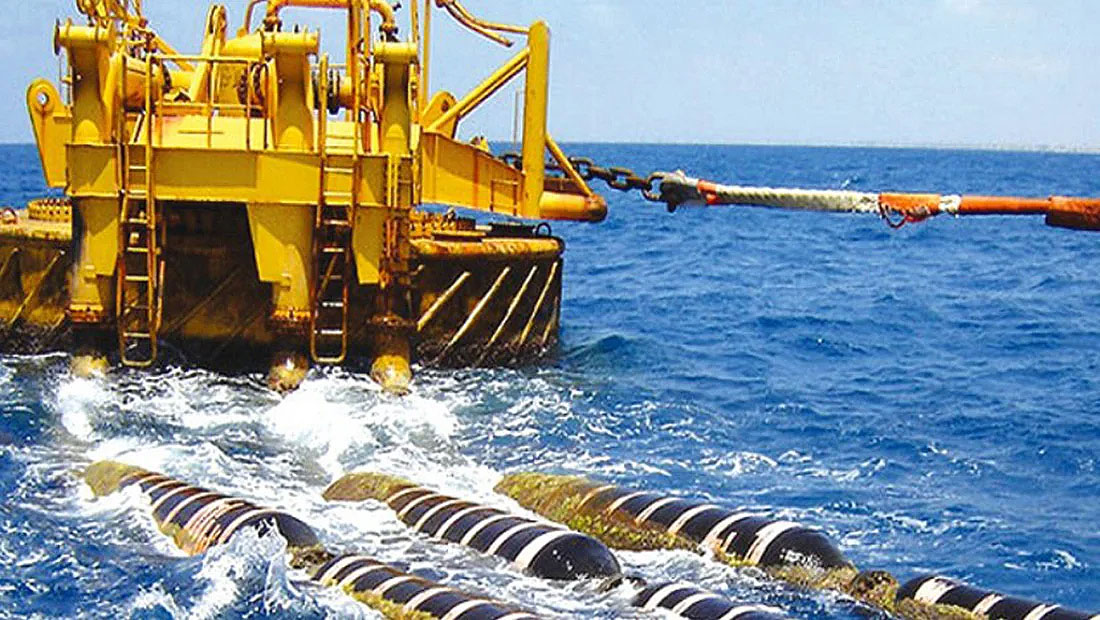
Photo: cyprus-mail.com
Funding Challenges
Despite optimistic claims from Admie, Greece’s independent transmission operator and the project’s promoter, evidence of substantial investment interest remains elusive. Claims that the United States International Development Finance Corporation is considering involvement lack concrete backing. Currently, Admie has capital estimated between €250 million and €300 million and has also secured €650 million in grants from the European Commission. However, the projected cost of the interconnector stands at approximately €1.9 billion, leaving a significant funding shortfall.
Government Statements and Investor Interest
Following the Athens summit, Greek Energy Minister Stavros Papastavrou asserted that genuine interest from American investors exists. He stated, “Interest has been exhibited from the Americans, from American companies. We are in an exploratory phase. The Americans, as well as anyone else desiring to invest in a long-term project, they want the numbers, they want the data to understand the what, the how, and the where.”
This perspective suggests that the feasibility study’s purpose is to provide clarity on costs, which will be critical for attracting potential investors. The study aims to determine whether the project can yield a healthy return on investment and if financial institutions will be willing to back it.
Concerns Amidst Optimism
However, sceptics raise valid concerns about the potential ramifications of the feasibility study. They question what would occur if the findings indicate that the interconnector is not financially viable. Would the governments of Cyprus and Greece proceed with a project deemed unfeasible? This uncertainty complicates the already precarious situation surrounding the GSI.
Further complicating matters, the Turkish navy has deployed gunships to halt depth surveys required for the subsea cable, raising questions about the project’s feasibility if these critical surveys cannot be completed. A source familiar with the situation revealed that there is currently no clear understanding of the GSI’s total cost, contradicting positive outlooks from some officials.
Historical Context and Previous Studies
The interconnector project has a complicated history. Initially undertaken by EuroAsia Interconnector Ltd., the project was passed to Admie in October 2023. The Cypriot finance ministry previously submitted a cost-benefit analysis to the European Investment Bank (EIB) when EuroAsia was still involved, seeking an opinion rather than a loan application. The EIB’s recommendation advised Cyprus to invest in energy storage solutions instead.
Admie later engaged the same consultancy that evaluated EuroAsia’s analysis to perform a second cost-benefit study, which indicated a more favourable outcome for the interconnector, albeit based on several optimistic assumptions.
Political Perspectives and Future Prospects
In light of the uncertainty, some remain steadfast in their belief that the GSI is essential for Cyprus’s energy security. Pavlos Liasides, who formulates energy policy for the Disy party, stated, “The GSI is a project that must be done, and will be done. It cannot be otherwise.” Liasides emphasised the interconnector’s significance in the broader context of regional energy needs, connecting Cyprus to the Middle East and Europe.
He also highlighted the geopolitical implications of the project, noting that plans for interconnectors have been influenced by various international stakeholders, excluding certain nations, including Turkey. This exclusion adds a layer of complexity to the project’s implementation.
Cost Implications for Consumers
Addressing concerns about the project’s costs, Liasides pointed out that even if the GSI were to be completed without being utilised, the financial impact on consumers would be minimal, estimating an increase of only €15 per year on their bills over 25 to 30 years.
Future Collaboration Between Cyprus and Greece
Despite any perceived tensions between Cyprus and Greece regarding the interconnector, Liasides expressed confidence in the collaboration between the two nations. He noted the leaders’ public commitment to the project during their recent meeting in Athens, suggesting that both governments remain aligned in their objectives.
As discussions continue, Liasides cautioned against inflammatory rhetoric that could undermine their efforts. He stated, “The GSI has adversaries; they are out there, lurking to poison relations between us and the Greek government. We mustn’t give them any ammunition.” This sentiment underscores the delicate balance that both countries must maintain as they navigate the complexities surrounding the Great Sea Interconnector.