
Tag: funding

  • Horizon programme — Protesters Demand Israel’s Expulsion from EU Horizon Programme

    Horizon programme — Protesters Demand Israel’s Expulsion from EU Horizon Programme

    Protesters are calling for Israel’s expulsion from the EU’s Horizon Programme during demonstrations across Europe, including a gathering in Nicosia, Cyprus. On Friday evening, around 30 to 40 activists braved the cold outside the EU Commission building, joining a wider campaign that spanned over 20 cities.

    Photo: cyprus-mail.com

    The Horizon Programme, a €95 billion initiative aimed at funding research and innovation, has been a focal point of criticism. Activists argue that Israel, with its privileged status allowing participation equivalent to that of EU member states, has been the recipient of substantial funding since 2014, totalling around €300 million annually.

    Photo: cyprus-mail.com

    One activist voiced concerns about the implications of this funding, stating, “€3 billion of EU funding going directly to a genocidal state.” The speaker condemned specific projects funded by Horizon, highlighting connections to Israeli aerospace industries and military technologies, including drones and interrogation techniques purportedly linked to human rights violations.

    As temperatures dropped, the protesters raised their voices against what they termed the EU’s hypocrisy. Chants like “EU Horizon, you can’t hide, we charge you with genocide!” echoed in the evening air. The gathering also served as a poignant reminder of the humanitarian crisis in Gaza, with one speaker noting the tragic deaths of three children due to the cold weather, underscoring the severity of the situation.

    The activists expressed frustration over the European Commission’s handling of Israel’s participation in the programme. They pointed out that since October 7, discussions of a suspension have been minimal, with proposals suggesting only a partial reduction in collaboration. This, they argue, falls short of the decisive action taken against Russia in April 2022, when the European Commission suspended its involvement in Horizon entirely.

    With calls for accountability and action resonating through the crowd, the protests in Nicosia reflect a growing sentiment among students and researchers in Europe. As the campaign unfolds, it seeks to challenge existing partnerships and highlight the ethical considerations surrounding funding in light of ongoing conflicts.
  • Cyprus wildfires: EU Allocates €2.3 Million for Cyprus Wildfire Recovery

    Cyprus wildfires: EU Allocates €2.3 Million for Cyprus Wildfire Recovery

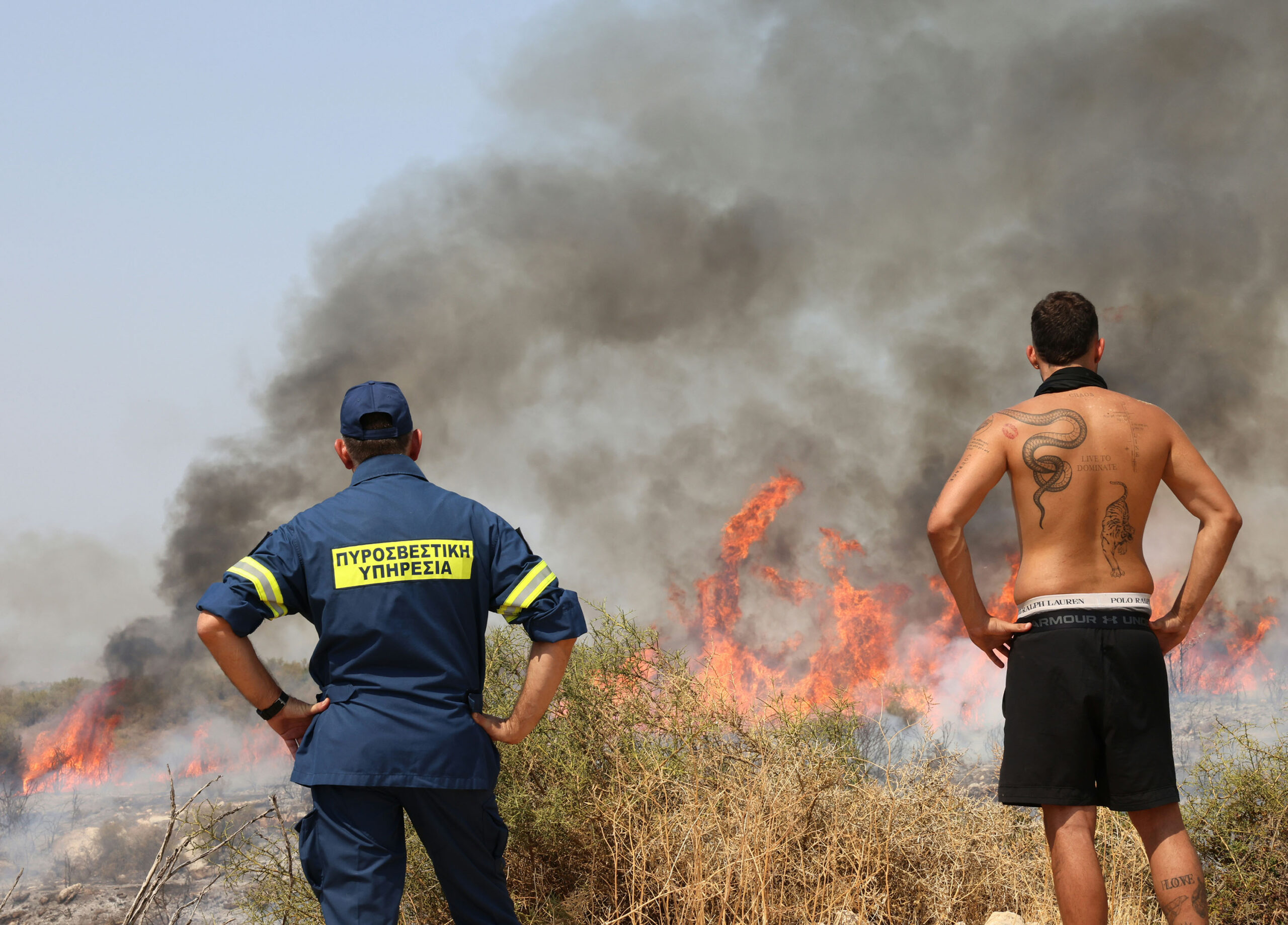
    cyprus wildfires — cyprus wildfires — The European Commission has allocated €2.3 million from the European Union solidarity fund to aid Cyprus in recovering from the devastating wildfires that swept through the Limassol and Paphos districts in July.

    Raffaele Fitto, the commission’s executive vice-president for cohesion and reforms, announced the funding on social media, detailing that the money will be used for “emergency operations, infrastructure, housing, and restoration.” These wildfires not only ravaged the landscape but also tragically claimed the lives of two individuals and destroyed over 700 structures, burning an area of 124 square kilometres.

    Earlier this year, Cypriot members of the European Parliament had voiced their concerns, calling for increased EU assistance to combat wildfires, which have become an alarming trend across the region. Giorgos Georgiou from the Akel party was particularly vocal, critiquing European Commissioner Hadjia Lahbib for her comments regarding wildfire management. Georgiou lamented the lack of timely support, pointing out that Cyprus has experienced significant losses, stating, “Cyprus unfortunately holds the lead, in a negative way, for the proportion of its total territory burned in the last decade.” He highlighted the EU’s shortcomings, referencing a delayed request for firefighting planes from Spain that took three months to respond.

    Geadis Geadi from the Elam party echoed these sentiments, asserting that the rescEU mechanism has left many countries, including Cyprus, vulnerable to the devastating impacts of wildfires. He proposed reforms to enhance the EU’s response capabilities, aiming to avoid future tragedies.

    In response to the summer’s catastrophic events, European Commission President Ursula von der Leyen expressed the necessity for a robust solution during her State of the European Union address in September. She proposed the establishment of a new European firefighting hub in Cyprus, noting, “This summer, we all saw the pictures of Europe’s forests and villages on fire. The scale of the damage is enormous. And we know it is not a one off. Climate change is making each summer hotter, harsher, and more dangerous.” President Nikos Christodoulides welcomed this proposal, describing it as “momentous” and “hugely important” for the region’s future safety.

    The EU solidarity fund, created in 2002, provides crucial financial support for regions affected by disasters. Member states may access this funding when the estimated costs of a disaster exceed €3 billion or 0.6 per cent of their gross national income, enabling them to recover and rebuild after such catastrophic events.

  • Cyprus Delays Launch of EU Helpline for Gender Violence Victims for Five Years

    eu helpline — Five years on, Cyprus is still without the EU helpline 116016 aimed at supporting victims of gender violence. Despite the government’s repeated commitments, financial and procedural barriers have hindered its launch.

    Eu helpline: Long Wait for a Lifeline

    The 116016 helpline is already operational in several European countries, including Germany, France, Ireland, Sweden, and Austria, where it provides free and specialised support for individuals affected by gender-based violence. However, victims in Cyprus are still left without this crucial resource.

    Recent Developments Highlight Ongoing Delays

    The issue resurfaced in a parliamentary session where Justice Minister Marios Hartsiotis responded to MP Giorgos Koukoumas, as reported by Politis. Minister Hartsiotis confirmed that the project has faced delays primarily due to budget restrictions and administrative hurdles, but emphasised that expertise in handling domestic violence cases is not lacking, as the NGO Spavo has significant experience in this area.

    Initial Steps and Financial Commitments

    Cyprus first expressed interest in establishing the helpline in 2021, leading to the justice ministry signing an agreement with Spavo. The agreement included a pledge of €45,000 to cover initial costs such as staff training and equipment. The budget allocation was made for both 2022 and 2023, with hopes that the helpline would be ready for a national launch.

    Cost Estimates and Budget Challenges

    In September 2023, the justice ministry submitted its proposal for the helpline to the finance ministry for approval. During the discussions, Spavo was asked to provide a detailed breakdown of costs associated with operating the helpline. Two months later, the NGO reported that the annual operating cost would reach €120,000, with an expected 5 per cent annual increase. This figure is nearly triple the initial estimate and far exceeds the €45,000 already earmarked for the project, effectively stalling the launch.

    New Strategies for Implementation

    In light of the escalating costs, the justice ministry has opted for a public tender approach. A special committee has been tasked with drafting technical requirements to ensure that the helpline can provide quality services while maintaining value for money.

    Future Budget Provisions

    The state budget for 2025 includes €45,000 allocated for the project, with an increase to €60,000 planned for 2026. The ministry now anticipates that the helpline will be operational during the first half of 2026, provided that the funding and logistical issues are resolved.

    Exploring EU Funding Options

    In addition to local funding, officials are exploring the possibility of EU funds to help cover part of the helpline’s operational costs. The national coordinating body for the prevention and combating of violence against women is working closely with the European Commission to identify opportunities for co-financing. This collaboration is seen as essential, especially given the rising demand for support services and the limited resources available domestically.

    The Importance of the Helpline

    The establishment of the helpline is deemed critical not just for providing immediate support to victims but also for raising awareness about gender-based violence in Cyprus. As the demand for such services continues to grow, the urgency for a functioning helpline becomes increasingly apparent.

    While the delays have been frustrating for advocates and victims alike, the upcoming plans and potential funding avenues offer a glimmer of hope. The commitment to addressing gender violence through dedicated support services is vital for creating a safer environment for all citizens.