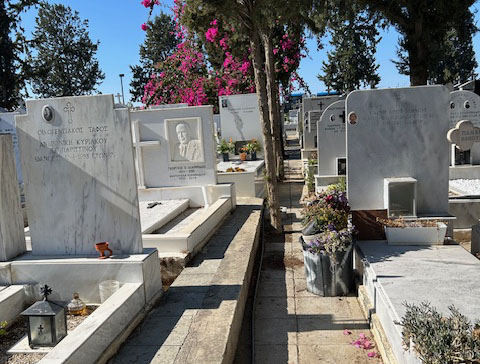
Neglect and overcrowding in Cyprus cemeteries highlight the stark contrasts with grave management in other countries, particularly in Europe. A recent visit to a cemetery in Nicosia revealed a disheartening scene: narrow pathways and overgrown graves, many of which have been unattended for decades.

Photo: cyprus-mail.com
Overcrowding: Contrasting Cemetery Experiences
In stark contrast, cemeteries in countries like Germany are often designed as serene parks, where people not only pay respects but also enjoy leisurely walks. A local resident from Dortmund remarked, “The main cemetery in Dortmund is where most people walk their dogs. It is a place where you feel at peace.” This sentiment speaks volumes about the cultural integration of cemeteries into daily life in northern Europe, a stark difference from the experience in Cyprus.

Photo: cyprus-mail.com
The Role of Land Ownership
One key factor contributing to the overcrowding in Cypriot cemeteries is land ownership. The Church in Cyprus owns vast amounts of land, which raises questions about prioritisation. While they have the capacity to develop luxury housing, it prompts the question: why not allocate more land for peaceful resting places? A local visitor pondered if the Church might consider enhancing these spaces for the living, as well as the deceased.
Cultural Influences on Grave Management
Graveyards reflect societal values and traditions. According to an AI analysis, “Differences exist in cemetery design and grave space management, which can be influenced by region, climate, and cultural traditions.” In Cyprus, older cemeteries are often overcrowded, with perpetual rights to grave plots meaning families can reserve a space indefinitely. This contrasts sharply with the practice in Germany, where graves are typically leased for a set period, often ranging from 20 to 30 years. After this time, families are contacted to remove headstones and belongings.
The Value of Perpetual Rights
Perpetual rights to graves in Cyprus cater to a society that cherishes long family traditions. This arrangement allows families to return to visit graves of their loved ones over the years. However, challenges arise when there are no surviving relatives to maintain these graves, leading to neglect and abandonment. As the island’s population ages, the cycle of care for these graves may dwindle.
Reluctance Towards Cremation
Another layer to this issue is the cultural reluctance towards cremation in Cyprus. In northern Europe, cremation is widely accepted, with approximately 779,100 cremations in Germany in 2022, accounting for about 78 per cent of total deaths. The preference for burial in Cyprus requires more space and maintenance, yet there remains no crematorium on the island, further exacerbating the space limitations in cemeteries.
Looking Ahead
As discussions about cemetery management continue, the differences between northern and southern European attitudes towards death and remembrance become increasingly apparent. It raises crucial questions about the future of burial practices in Cyprus and the potential for change in how communities honour their deceased.
Leave a Reply