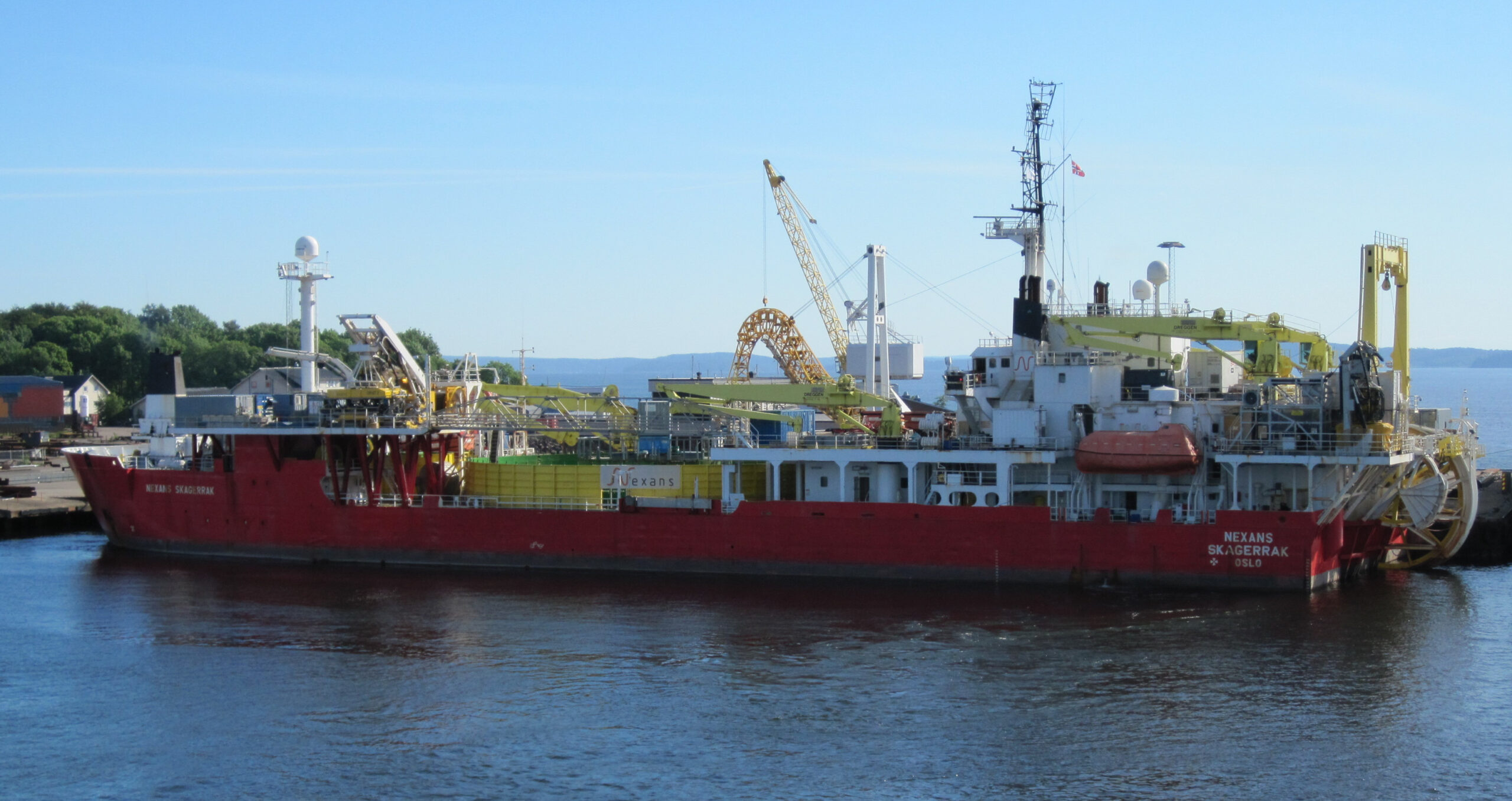
great sea — The Great Sea Interconnector project is still on track, according to Nexans CEO Julien Hueber, who recently affirmed that there is “no Plan B” for the cable that has been constructed thus far. The subsea cable aims to link the electricity grids of Cyprus and Greece, a crucial development in enhancing energy cooperation between the two nations.
During a conference call with analysts discussing the company’s Q3 earnings, Hueber stated, “Regarding the GSI project, as I said, the project is ongoing. Extremely good relationship and collaborative work with Ipto, our customer. For us, there is no plan B.”
Ipto, or Admie by its Greek acronym, serves as Greece’s independent power transmission operator and plays a key role in the GSI initiative. Nexans has already received €250 million in payments in various tranches for the project.
Hueber highlighted the collaborative nature of their work, noting, “We are in discussion at this moment in terms of the next steps of this project, and the milestone of payment is part of it.” He also confirmed that there are ongoing discussions at the political level, backed by the European Commission, regarding the project’s future.
Responding to concerns raised about the potential cancellation of the interconnector, Hueber firmly stated, “First of all, the project is not canceled. We are still working on it. There are extremely close discussions on the relationship with our customers.” He reassured stakeholders that there is no perceived risk to the project’s continuation.
Vincent Dessale, a Senior Executive at Nexans, provided further insight by mentioning that the total cost of the GSI project is €1.4 billion, of which €250 million has been received from Admie so far. However, complications have arisen as Cyprus has withheld a €25 million payment to Greece’s Admie for the year 2025, leading to tensions between Nicosia and Athens.
In a recent teleconference, the energy ministers of Cyprus and Greece, along with the EU energy commissioner, discussed the matter. Following their meeting, a joint statement was released, affirming that both governments are committed to collaborating “in a spirit of unity and mutual trust.”
The EU’s involvement in the GSI project is significant, with a pledge of €657 million in grants out of the total €1.9 billion project cost. This funding underscores the importance of the interconnector not only for Cyprus and Greece but also for the broader European energy landscape.
Leave a Reply