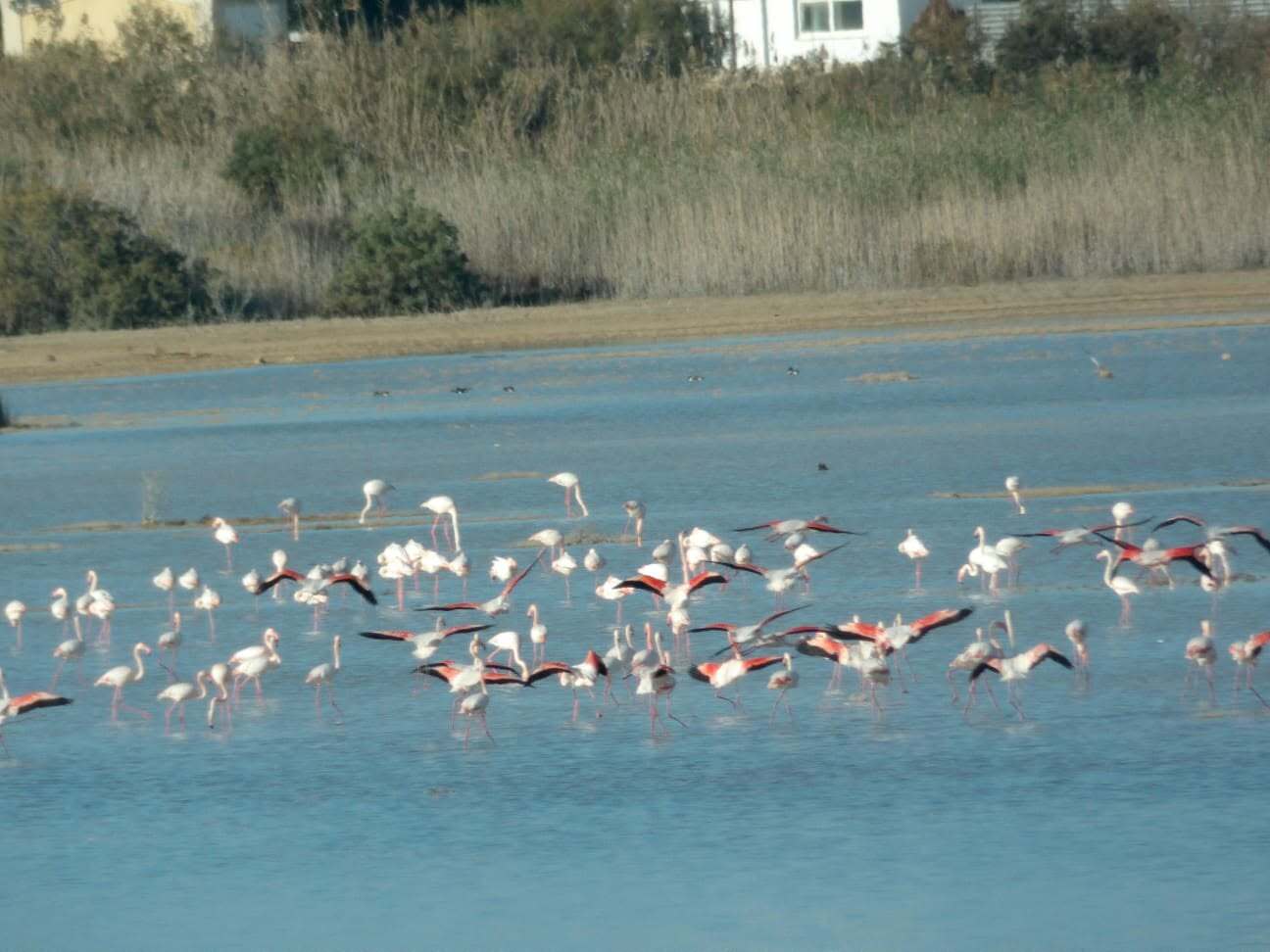
Migratory flamingos have begun their seasonal arrival at Paralimni Lake, bringing a stunning display of pink and black plumage to the winter wetlands of Cyprus. This annual event is crucial for the island’s biodiversity, though it unfolds against a backdrop of worrying long-term population declines.

Photo: in-cyprus.philenews.com
According to data from BirdLife Cyprus and the Game and Fauna Service, flamingo populations across the island have seen a significant drop of between 14% and 31% over the past decade. This decline raises concerns regarding the stability of their migratory routes and the future of these vibrant birds.

Photo: in-cyprus.philenews.com
While larger wetland sites such as Larnaca Salt Lake and Akrotiri traditionally host the majority of the wintering population, Paralimni Lake is emerging as a vital “refuge” this season. Currently, the lake offers the shallow, brackish waters ideal for flamingos to feed on brine shrimp, particularly when conditions at other sites are not conducive. Drought has led to lower water levels at some locations, while others are too flooded for the birds to find suitable footing.
The return of the flamingos is not just an aesthetic occurrence; it signals the importance of maintaining and protecting these habitats for the future of migratory species. As environmental challenges continue to impact these areas, the sight of flamingos at Paralimni Lake serves as a reminder of the delicate balance within the ecosystem.
Local wildlife enthusiasts and conservationists are hopeful that the presence of these birds will draw more attention to the need for conservation efforts. The seasonal influx of flamingos also provides an opportunity for citizens and visitors alike to engage with nature, highlighting the importance of wetlands in supporting diverse wildlife.
As the winter progresses, observers will be keen to monitor the flamingos at Paralimni Lake. Their presence not only enriches the local landscape but also acts as a barometer for the health of Cyprus’s natural habitats. Protecting these crucial environments is essential to ensure that future generations can continue to witness the beauty of migratory flamingos.
Leave a Reply