Water management: Long-Standing Issues Persist
Cyprus’s water management is at breaking point, with many problems highlighted in a 2016 audit remaining unresolved nearly a decade later. A recent report from the Audit Office has raised alarms about the delays and inadequacies that threaten the sustainable use of the island’s water resources. As climate change intensifies and water scarcity becomes a pressing issue, the findings underscore the urgent need for reform.
- Concerns also arise from the absence of marker buoys for underwater pipes used for brine discharge or water transport, which poses risks for passing vessels and coastal activities.
Audit Findings Raise Serious Concerns
The follow-up audit conducted by the Water Development Department uncovered various issues with the management of water resources. Auditor General Andreas Papaconstantinou emphasised that the situation is critical, noting, “the prolonged period of drought our country is experiencing provides an opportunity for the best possible preparation and taking of measures, for example maintenance of dams.”
The report pointed to administrative weaknesses, project delays, dam safety challenges, significant water loss, poor aquifer conditions, and inadequacies in water quality management as ongoing failures that require immediate attention.
Stalled Water Projects and Financial Oversight
Out of 60 planned water projects outlined in the 15-year Water Development Plan (2016-2030), only 14 have been completed. With €767 million allocated from the state budget, the lack of adequate monitoring raises questions about the sufficiency of funding and whether additional resources are needed. The delayed submission of the River Basin Management Plan and Flood Risk Management Plan to the European Commission has also led to a reasoned opinion for violating European legislation.
Ageing Dams and Safety Risks
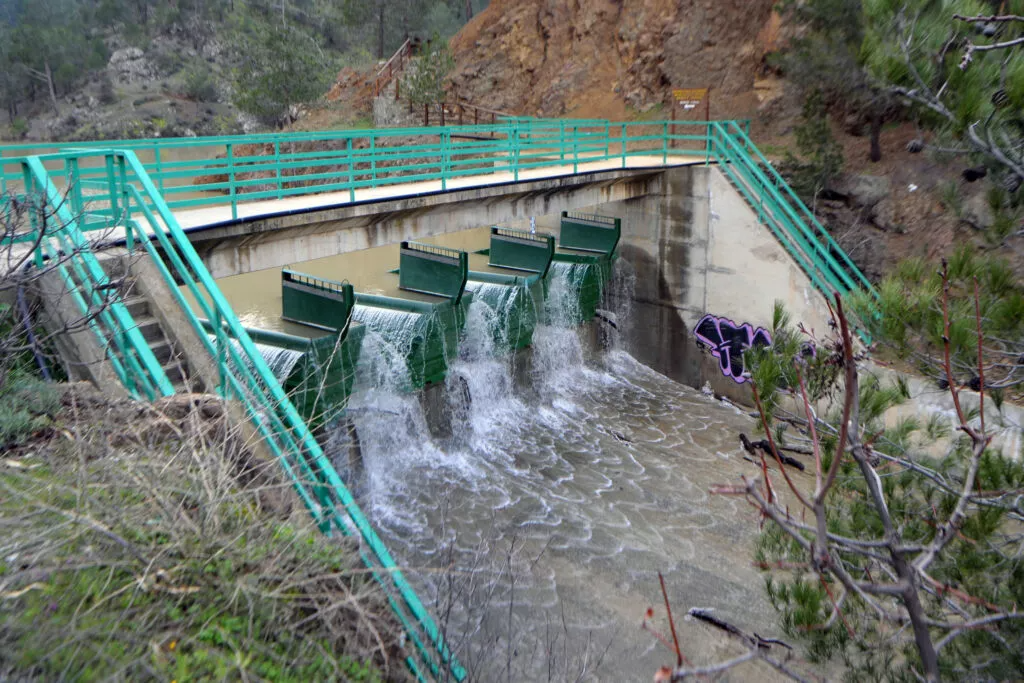
Cyprus operates 104 large dams, 56 of which are registered with the International Commission on Large Dams (ICOLD). Many of these facilities are ageing and lack comprehensive maintenance plans and safety certificates. Alarmingly, there has been no independent inspection of large dams, and not a single final certificate has been issued for private dams. Most dams have exceeded their designed lifespan without ensuring compliance with reservoir safety regulations.
The audit highlights the absence of operation and maintenance manuals for all dams and the failure to conduct timely inspections by independent engineers. It also stresses the importance of preparing inundation maps in case of dam failure, particularly for those near populated areas such as Kouris Dam. In January 2025, a leak at Mavrokolymbos Dam, caused by pipe failure, exposed critical issues regarding accessibility and preventative maintenance.
Environmental Concerns from Desalination Plants
Desalination plants have been pivotal in meeting Cyprus’s water supply needs, but the report raises serious concerns about their environmental impact and the economic burden on consumers. The brine produced by these plants is discharged into the sea, affecting marine vegetation near discharge points at the Larnaca and Dhekelia plants. As of the audit date, only two plants had secured necessary waste discharge permits.
Additionally, the corrosive properties of desalinated water have led to significant issues for pipework and household installations, including water heaters. The report suggests interventions such as enriching desalinated water with calcium or carbon dioxide to alleviate these problems.
Concerns also arise from the absence of marker buoys for underwater pipes used for brine discharge or water transport, which poses risks for passing vessels and coastal activities.
Critical State of Aquifers
Cyprus’s aquifers are in critical condition, with approximately 64% classified as chemically compromised. The primary causes include nitrate pollution, salinisation, and inadequate controls, making it challenging to estimate available water quantities and undermining effective planning.
Widespread Water Loss
Water loss remains a significant issue, with unaccounted-for water rates in Local Water Boards reaching or exceeding 29%. Total water losses across Cyprus are estimated to exceed 200 million cubic metres annually, largely due to ageing infrastructure. Most Local Water Boards do not conduct systematic monitoring of drinking water quality, and only 26% of boreholes have designated Protection Zones.
Need for Stronger Institutional Framework
The Advisory Committee for Water Management meets infrequently, only once or twice a year, and has not provided substantial guidance to Local Water Boards despite suggestions for a more active role since 2016. The Audit Office calls for strengthening the institutional framework through clear strategic planning, effective resource allocation, and better coordination among authorities.
Leave a Reply